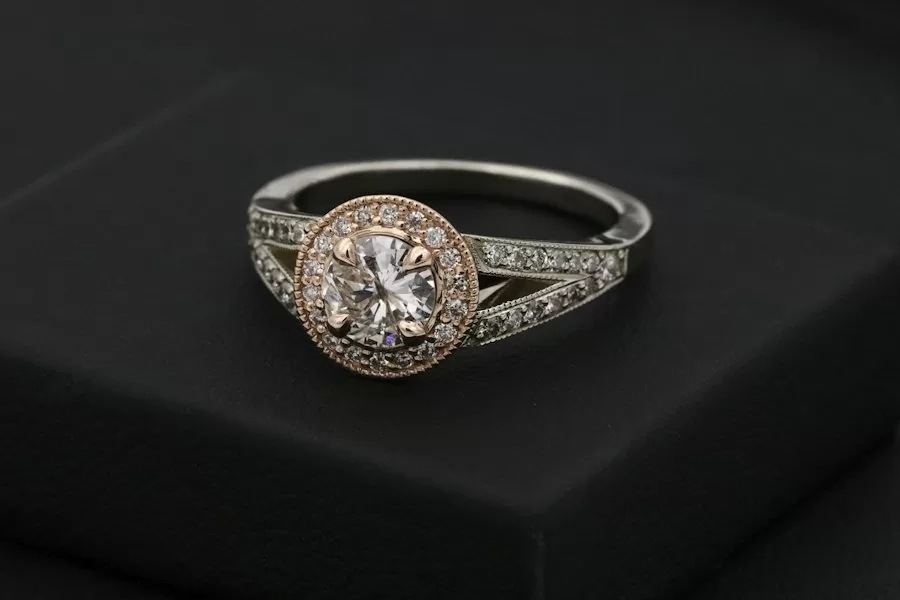
Two people can wear the exact same stone and walk away with two completely different looks. The difference rarely comes down to carat weight or metal colour. It usually comes down to whether the shape of the stone plays nicely with the shape of the wearer's face. Choosing an engagement ring shape is partly about personal taste, but if you want the ring to feel balanced and flattering, a little geometry goes a long way.
The idea is simple. Contrasting shapes create balance, while matching shapes amplify what is already there. A round stone on a round face can look like more of the same, whereas an elongated stone stretches the line of the face. This is the same logic stylists use when they pick earrings, necklines and glasses frames. Rings sit on the hands, but people look at your whole body when you gesture, so the proportions still matter.
The main face shapes shoppers ask about
Most faces fall into one of five broad categories: round, oval, square, heart and oblong (long). You can work it out at home by pulling your hair back, looking straight into a mirror and tracing the outline of your face on the glass with a lipstick dot. Compare the width of your forehead, cheekbones and jaw, then note whether your face is longer than it is wide or roughly equal.
Round faces have soft curves and a width close to their length. Oval faces are longer than they are wide with a gently rounded jaw. Square faces have a strong jaw and forehead of similar width. Heart faces are wider at the temples and taper to a narrow chin. Oblong faces are noticeably longer than they are wide.
Best shapes for round faces
If your face is round, your goal is to add length and lean lines. Elongated cuts such as oval, pear and marquise do this naturally because they draw the eye up and down rather than side to side. An oval oval-cut moissanite in a slim solitaire setting will read long and graceful. A pear shape, with its point facing toward the fingertips, extends the line of the hand. Stay away from chunky square cuts that stop the eye and widen the visual footprint.
Best shapes for oval faces
Oval faces are considered the most versatile because they already have balanced proportions. You can wear almost any shape and it will look at home. A round brilliant keeps the look classic and even. A cushion or princess cut adds modern structure. If you want to add a touch of width to a very long oval, a wide halo or a shorter emerald cut can do that without throwing the balance off.
Best shapes for square faces
Square faces have strong, angular lines. Softening those angles is the move. Round brilliant stones, ovals and pear shapes introduce curves that contrast with a squared jaw. A cushion cut works well because it has the structure of a square but with rounded corners. On the flip side, a sharp princess cut can echo a strong jaw too literally, so many stylists suggest avoiding a hard square-on-square match unless the wearer loves that bold, intentional look.
Best shapes for heart faces
Heart-shaped faces are wider at the top and narrower at the chin. The aim is to widen the lower half of the face visually. Stones that are broader at the base, such as pear (point up, wider end down) or a rounded cluster, can create that effect. An oval or round solitaire also softens the taper. Very narrow marquise cuts can exaggerate the point of a chin, so handle those with care.
Best shapes for oblong faces
If your face is long, you want to add width and break up the vertical line. Shorter, broader cuts do this: round brilliants, cushions, princess cuts and wide halos all spread the eye horizontally. An emerald cut with a wide setting can also add breadth. Very long marquise or pendulum-style drops tend to lengthen things further, so most advisors steer long faces toward compact shapes.
Setting tricks that change the effect
Shape is only half the story. A halo adds a ring of sparkle around the centre stone and visually enlarges it, which helps smaller faces feel proportionate. A bezel setting widens the stone's outline. Thin cathedral prongs lift the stone and lengthen the finger. The setting style you choose can either reinforce or soften the geometric effect of the cut.
The bottom line
These are guidelines, not rules. If someone with a round face has always dreamed of a princess cut, that dream wins. Face-shape advice exists to help first-time buyers narrow a huge field of options, not to police personal style. The most flattering ring is the one the wearer reaches for every morning without hesitation. Use this guide to shortlist two or three shapes, then try them on and let your own eyes decide.
For third-party reference, the Wikipedia article on moissanite details moissanite’s discovery, optical properties and use in jewellery.
Related Reading
- HPHT vs CVD Lab-Grown Diamonds: The Basics Buyers Ask
- When Your Ring Size Changes: Day to Day, Season to Season
- How Lab-Grown Diamonds Are Priced
Frequently Asked Questions
What ring sizes can you supply in bulk?
US sizes 5–12 including half sizes. Send a size breakdown with your order and we cast to that curve; comfort-fit inner bands reduce resize requests.
Can I order a mixed size run instead of one size?
Yes. Mixed runs are standard for wholesale: specify quantity per size and we pack and label by size at no extra labor cost.
What is the MOQ for custom ring designs?
50 pieces per design for existing molds; 100–300 pieces when a new mold or CAD model is required.
How should I price rings for retail margin?
Most partners use a 3–4x markup on FOB cost for sterling and 2.5–3x for moissanite solos, which keeps landed cost under 30% of retail.


