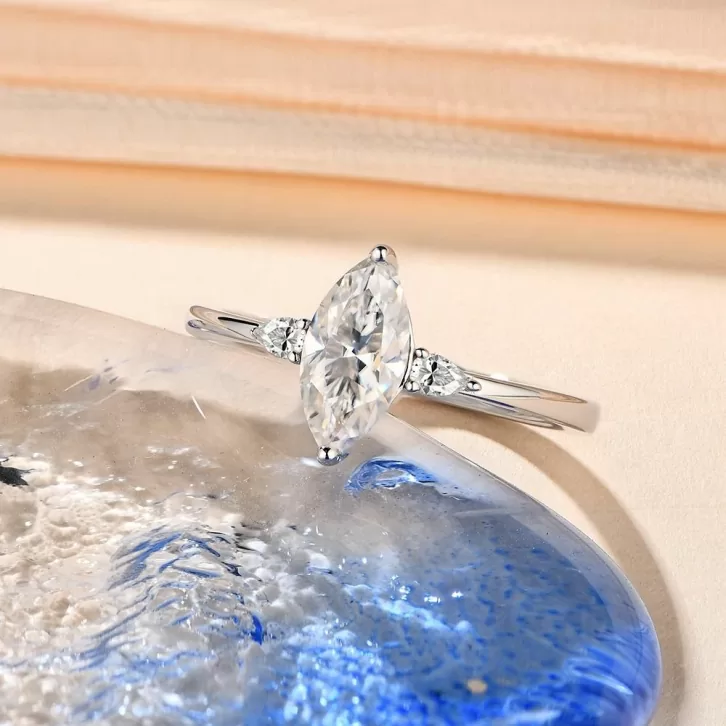
A birthstone ring sounds like the most personal gift in the world. It can also be the most disappointing one, if the stone chosen is too soft to live on a hand that types, opens cans and carries groceries. The list of modern birthstones was standardized in the 1910s by the American National Association of Jewelers, and it includes stones at every point on the durability scale. Before you buy, check which side of that scale your month lands on.
How to read durability: the Mohs scale
The Mohs scale rates mineral hardness from 1 (talc) to 10 (diamond). For a daily-wear ring, aim for a stone at 7 or above. Below 7, dust (which contains quartz at 7) will scratch the surface over months. Below 5, the stone can chip from normal bumps. Hardness is not the only factor: toughness matters too. Emerald is 7.5 to 8 on hardness but fractures easily because it is naturally included. Ruby and sapphire are 9 and extremely tough. Read our moissanite durability guide to see how a modern lab-grown stone fits in.
The durable birthstones: safe for rings
January garnet (6.5 to 7.5) is fine in a ring, especially in a bezel setting. April diamond (10) is the standard for any cut or setting. July ruby (9) and September sapphire (9) are excellent daily ring stones. November topaz (8) and citrine (7) are ring-safe, though blue topaz can fade in strong sunlight over decades. December blue topaz is durable, but turquoise and tanzanite are softer or light-sensitive and belong on a pendant.
The softer birthstones: pendants and earrings only
February amethyst (7) is technically ring-safe but scratches and fades over years of hand wear. March aquamarine (7.5 to 8) is hard but sensitive to heat and light; a bezel-set ring works, avoid thin prongs on a busy hand. May emerald (7.5 to 8) is the classic trap: it looks glamorous but is fractured and oil-filled, so it chips and the oils dry out. June pearls and moonstone (2.5 to 6) are ring-risky. August peridot (6.5 to 7) is brittle and better in earrings than on a hand. Wear these as statement pieces, not daily rings.
Setting choice protects soft stones
A bezel setting wraps a thin rim of metal around the stone and shields its edges from knocks. A prong setting leaves the stone exposed. If you love a softer birthstone like emerald or aquamarine, choose a bezel or a halo that adds a protective rim. Read prong versus bezel versus pave before you commit. Pair the setting with a sensible metal; band metal choice affects how easily the stone can be reset later.
Treat the birthstone like a gift plan, not a one-off
Many couples start with a birthstone pendant for the softer months and upgrade to a ring version in a harder equivalent stone later. That is the logic behind our anniversary upgrade guide; a birthstone theme can grow with the wearer instead of ending up damaged in a jewelry box. When you buy, ask the jeweller whether the stone has been treated. Many birthstones are routinely enhanced: emeralds are oiled, rubies are heated, blue topaz is irradiated. Treatments change how the stone should be cared for and how it ages. A heated sapphire is stable; an oiled emerald is not. A natural-color ruby commands a premium over a heated one, but for everyday wear the heated stone is perfectly durable. The key is to know what you are buying, so you do not accidentally expose a treated stone to heat or chemicals that undo the treatment. Read the certificate, ask about treatment, and choose a setting that protects whatever stone you pick. When in doubt, ask for the Mohs hardness and the treatment type before you buy.
Frequently asked questions
Which birthstones are safe for everyday rings?
Diamond, ruby, sapphire, topaz, citrine and garnet. These all sit at 7 or above and tolerate hand wear.
Is emerald a good birthstone ring choice?
For occasional wear, yes. For a daily ring, no. Emerald fractures easily and the clarity oils dry out over time.
Can I put my birthstone in a prong setting?
For hard stones like ruby and sapphire, yes. For softer stones like emerald or aquamarine, prefer a bezel or halo that protects the edges.
Will amethyst scratch on a ring?
Over months, yes. Dust is quartz at Mohs 7, and amethyst is 7. It will dull faster than a sapphire. Earrings age much better.
Do birthstones need special cleaning?
Hard stones take warm soapy water. Soft or porous stones like pearl, opal and turquoise only take a damp cloth. Read our household cleaning guide.
Wholesale clients stocking birthstone lines can request bezel-set versions of softer stones from HOLYCOME, cut for daily-wear durability rather than max carat.


