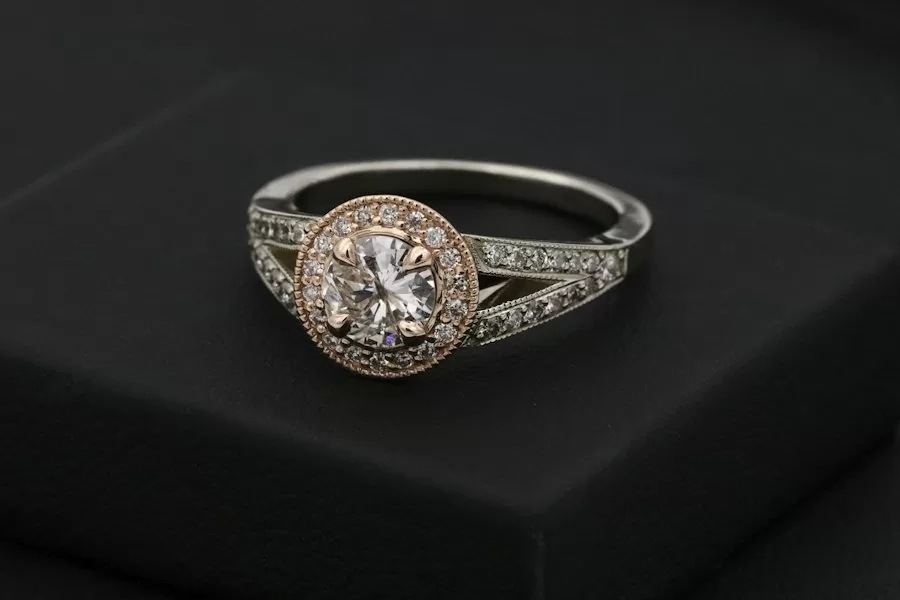
The setting is not just how a diamond attaches to the band. It decides how much light reaches the stone, how protected it is from knocks, how often you need maintenance, and how the ring feels on your hand. Two of the most common choices are the bezel and the prong setting. They are almost opposites, and the right call depends on how you live.
The prong setting
Prongs are the little metal claws—usually four or six—that grip the diamond around its girdle. The stone sits up and open, which lets light enter from the sides and bottom as well as the top. That maximizes brilliance and fire, and it makes the center stone look larger because it stands proud of the band. It is the classic solitaire look for a reason.
The cost is exposure. Prongs catch on hair, fabric and gloves, and over years the tips can wear thin, bend, or snap—which is how stones go missing. That is why we recommend checking your claws at home twice a year, as covered in our guide to inspecting prongs yourself. Six prongs hold a round stone more securely than four; four prongs show more of the stone for cushion, oval and pear shapes.
The bezel setting
A bezel wraps a band of metal all the way around the stone's rim, holding it in from the side rather than gripping it from points. The stone sits low, almost flush with the band. There are no claws to catch, bend, or snap, and the metal rim protects the girdle and corners from accidental knocks. It is the most secure setting made.
The trade-off is light. The metal rim blocks some side light, so a bezel-set stone can look slightly less brilliant than the same stone on prongs. It also tends to hide a little of the stone's outline, which can make it look marginally smaller. Modern bezels compensate by using slim, polished rims and raised inner edges, so the loss of sparkle is usually subtle.
Durability and active lifestyles
If you work with your hands, play sport, garden, or simply want a ring you never think about, the bezel is the safer pick. A closed or partial bezel shrugs off bumps that would chip a cornered step-cut stone or loosen a prong. Our piece on engagement rings for active lifestyles makes the same case. Prongs are fine for most office-and-everyday wearers, but they need that periodic check-up and the occasional re-tip.
Style and comfort
Visually, prongs read classic, bridal and light; bezels read modern, sleek and architectural. A bezel also sits flush, so it slides easily next to a wedding band and does not snag knits. Prongs, especially six-prong solitaires, can sit high and require a contoured band to sit flush. Comfort-fit interiors and rounded bands matter more than most buyers expect once the ring never comes off.
The quick decision
Choose prongs if you want maximum sparkle and the classic solitaire look, you are comfortable checking and servicing claws occasionally, and you do not work heavily with your hands. Choose a bezel if security, low profile and snag-free wear matter more than extra fire, if you have a cornered or step-cut stone you want to protect, or if you simply want to stop worrying about a loose stone. Either way, the setting you choose today should match the life you will actually live in the ring, not the ring you imagine in a showroom. Try both styles on with the same hand cream and gloves you use every day, and the right one usually announces itself within a minute.
Partial bezels, V-prongs and other middle grounds
You do not have to pick only between a full rim and four claws. Many settings split the difference. A partial or half bezel runs metal across two sides of the stone and leaves the other two open—protective, but with more light entry than a full bezel. V-prongs cup the pointed tips of pear, marquise and heart shapes specifically to protect the vulnerable corners. Cathedral settings lift the stone on shoulders of metal for drama without adding claws. Browse our broader setting styles guide to see how these variants change both security and look.
Cleaning and maintenance by setting type
Maintenance also differs. Pronged settings trap soap, lotion and dust under the claws, so they benefit from a soft brush every couple of weeks and a professional steam once a year. Bezels hide a seam under the rim where grime can collect, so a gentle brush around the inside edge matters too. The one universal rule: never submerge the ring in cleaning solution for long periods, and take it off before applying hand cream, perfume or household chemicals. Whichever setting you choose, a two-minute monthly check and a yearly jeweller visit will keep the stone exactly where it should be.
The International Gem Society moissanite guide explains how moissanite performs in daily wear compared with diamond.
Authoritative References
For buyers who need to verify the technical and regulatory basis of this guide, the following independent institutions publish authoritative reference data:
- ISO 9001 Quality Management - the international standard for consistent production quality.
- Wikipedia: Jewellery - manufacturing processes, materials and global trade background.
Related Reading
- HPHT vs CVD Lab-Grown Diamonds: The Basics Buyers Ask
- When Your Ring Size Changes: Day to Day, Season to Season
- How Lab-Grown Diamonds Are Priced
Frequently Asked Questions
How do I verify a factory before placing a bulk order?
Request a production video, business license, export records and a paid sample run. A factory that accepts a 50-piece test order is usually a real manufacturer.
What payment terms do you offer?
30% T/T deposit with the balance against the bill of lading. This protects both sides on first orders and can move to net terms after a track record.
What is your normal reject rate?
3–5% under 10x loupe inspection for cast and set pieces. Defective units are replaced free in the next shipment.
Where is the factory located?
Wuzhou, Guangxi, China—the core lab-grown and moissanite manufacturing cluster. Shipments go via Guangzhou or Shenzhen ports.


