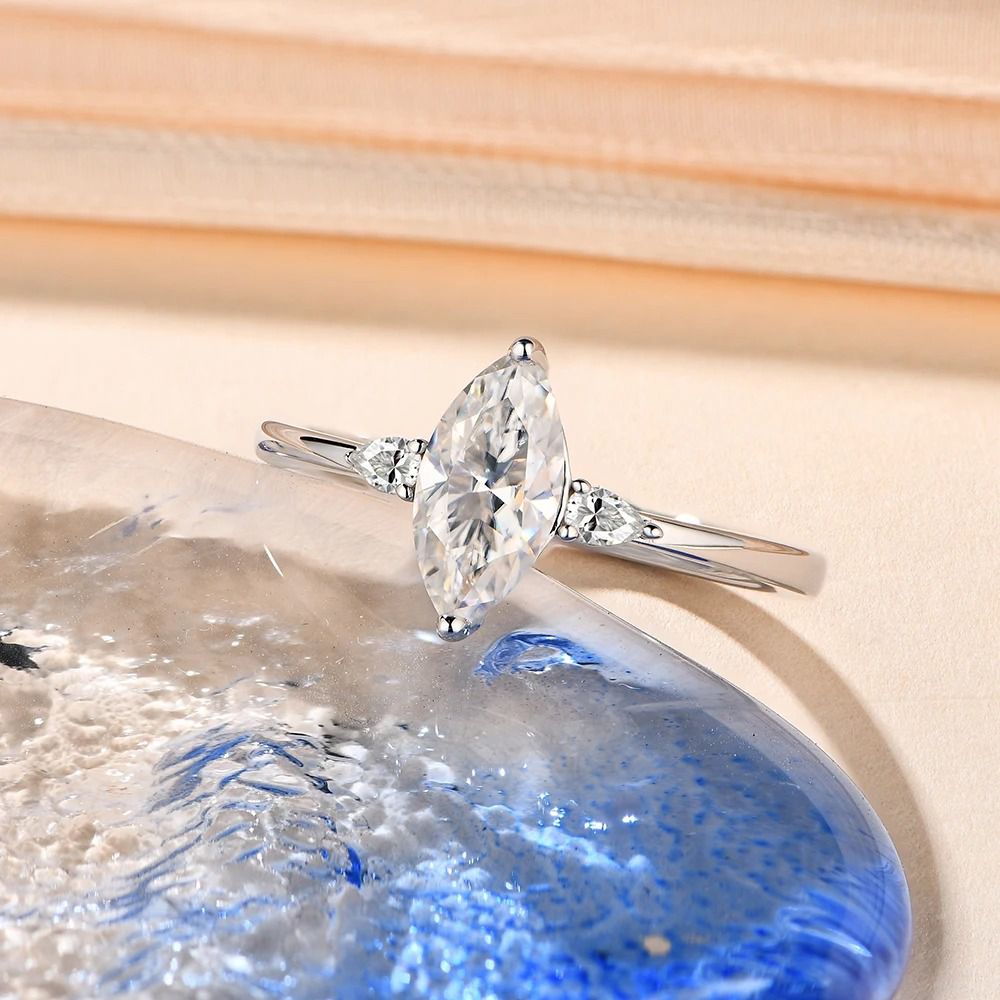
Almost every engagement ring purchase goes smoothly. The ones that do not almost always have one thing in common: the buyer did not read the return policy before paying the deposit. A ring that does not fit, a shape she does not love, or a stone that looks duller than expected — these are manageable if you have a returns window, and a nightmare if you do not. This is the checklist to run before you pay.
The five things to ask in writing
- How long is the returns window? 14 days is normal; 30 days is generous. Anything under 7 is a warning sign.
- Is there a restocking fee? Some shops charge 10–20% on returned rings. Get it in writing.
- Is the ring returnable if it has been sized? Many shops will not take back a ring they have already resized.
- What about custom or made-to-order settings? Bespoke rings are often non-returnable once made.
- Is the centre stone exchangeable if she wants a different shape? Some shops offer a shape swap within 90 days.
| Policy term | Good | Avoid |
|---|---|---|
| Returns window | 14–30 days | Under 7 days, or 'no returns' |
| Restocking fee | None | Over 10% |
| Sized ring return | Yes, within window | No |
| Custom setting | Deposit refundable pre-make | Non-refundable deposit |
The deposit is the trap
When you place a bespoke order, the shop asks for a deposit — often 30–50%. Ask, in writing, what happens to that deposit if you change your mind before making starts. Reputable shops refund deposits before the jeweller begins work; some keep them regardless. If the ring has been made, the deposit is usually lost, because the work and the stone are committed. This is why ordering well before the proposal matters — it leaves time to change your mind while the deposit is still refundable.
Inspect on arrival
Ready-made vs bespoke: different rules
A ring on the shop shelf, bought off-the-peg, is usually returnable within the window. A bespoke ring — a setting designed around your chosen diamond — is a different contract. Once the jeweller starts making the setting, the work is committed, and deposits are typically non-refundable. This is why ordering bespoke well before the proposal matters: it leaves time to change the design while the deposit is still refundable, rather than three days before the big day.
A worked example
Imagine you spend £2,500 on a solitaire online, with a 14-day returns window and no restocking fee. The ring arrives, she tries it and prefers a slightly smaller, lower-profile setting. Because you are inside the window and the ring is unworn, you send it back and re-order the shape she likes. That process is painless. Now imagine the same ring from a shop with a 3-day window and a 15% restocking fee. The return costs you £375 and a week. The difference between the two shops is not the ring — it is the policy you checked before paying. Spend ten minutes on the terms before you commit; it is the highest-value minute of the whole purchase.
Keep the paperwork
Whatever the policy, keep the receipt, the certificate and the return label in one place until the returns window has passed. People who lose the paperwork lose the return option. A single email to yourself with the order details is enough.
The size question inside the return window
If the ring needs resizing, find out whether that counts as 'used' for the return policy. Some shops will not take back a ring they have already sized, because the next buyer wants to choose their own size. If you are unsure of the size, ask whether you can resize within the window and still return. The safest approach is to buy a ring you can resize after the proposal, and only commit to the resize once you are sure she loves it. A plain band resizes cheaply; a pavé band may not, which is another reason to check the policy before you pay.
When the ring is ready, inspect it in the shop. Check the claws are tight, the stone sits straight, and the size feels right. If anything is off, say so there and then. Once you leave the shop wearing it, the clock on the returns window starts, and wear-and-tear ends the return option. The same principle applies to online purchases, covered in our online buying guide. Ten minutes on the terms now is worth more than a hundred minutes arguing later. A shop with a generous, written return policy is also usually a shop that stands behind its ring — the two things go together. Read the terms before you pay the deposit, not after the proposal. A 30-day window on paper is worth more than a smile across the counter, and it is the difference between a regret you can undo and one you cannot. Ask for the return policy in writing before the deposit clears.
The history and conventions of engagement rings are outlined in the Wikipedia entry on engagement rings.
Related Reading
- HPHT vs CVD Lab-Grown Diamonds: The Basics Buyers Ask
- When Your Ring Size Changes: Day to Day, Season to Season
- How Lab-Grown Diamonds Are Priced
Frequently Asked Questions
What ring sizes can you supply in bulk?
US sizes 5–12 including half sizes. Send a size breakdown with your order and we cast to that curve; comfort-fit inner bands reduce resize requests.
Can I order a mixed size run instead of one size?
Yes. Mixed runs are standard for wholesale: specify quantity per size and we pack and label by size at no extra labor cost.
What is the MOQ for custom ring designs?
50 pieces per design for existing molds; 100–300 pieces when a new mold or CAD model is required.
How should I price rings for retail margin?
Most partners use a 3–4x markup on FOB cost for sterling and 2.5–3x for moissanite solos, which keeps landed cost under 30% of retail.


