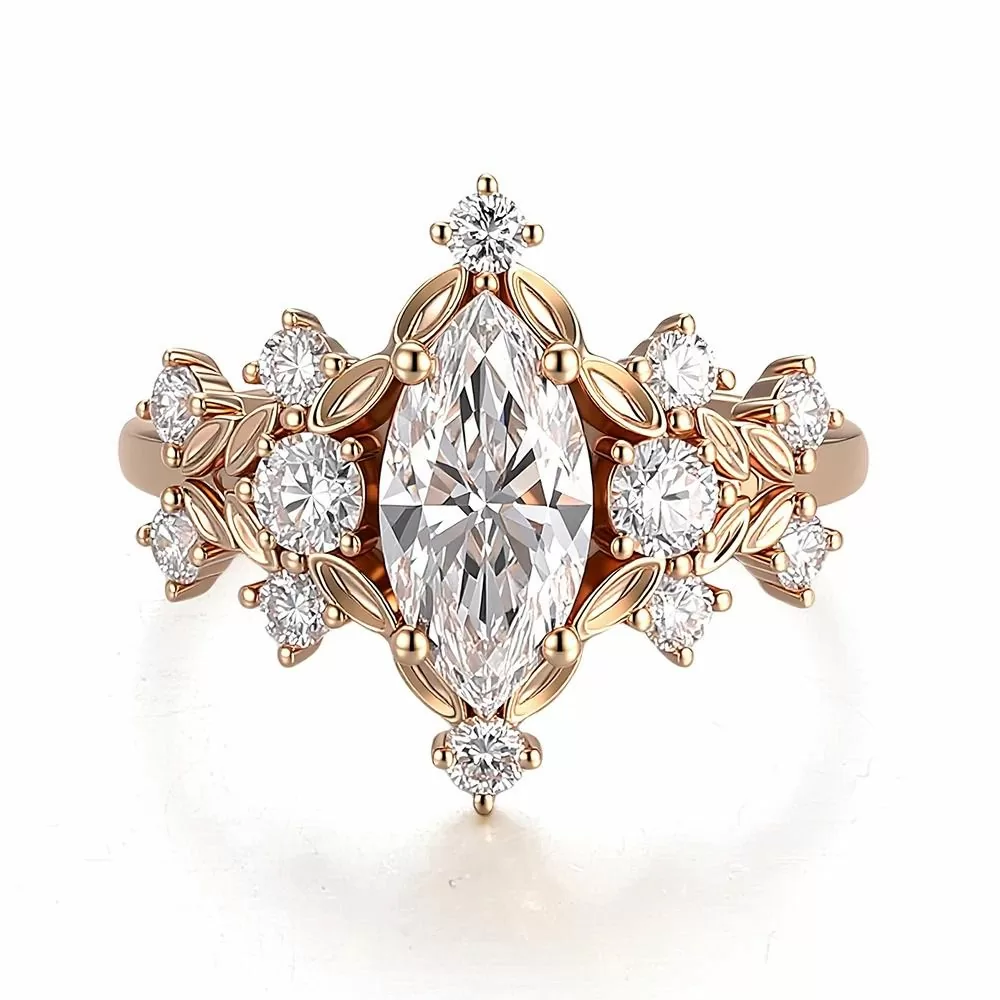
A three-stone engagement ring—often called a trilogy—carries one of the richest stories in jewellery. The most common interpretation is that the three diamonds represent a couple's past, present, and future together. That narrative is why the style feels romantic in a way a simple solitaire does not. But beyond the meaning, a three-stone ring is also a more complex piece of engineering, and the practical side deserves just as much attention as the symbolism.
The meaning behind the design
The three-stone concept gained popularity as a sentimental take on the engagement ring, giving each stone a role in the relationship timeline. The larger center stone anchors the ring and usually represents the present; the two side stones represent the history the couple shares and the life ahead. Some wearers adapt the meaning to family, faith, or milestones. Whatever the personal reading, the design itself—one dominant center flanked by two smaller stones—creates a wide, substantial look on the finger.
How the look is built
A three-stone ring is defined by its proportions. The center stone is the largest, and the side stones are chosen to complement it without competing. A common ratio pairs a center stone with two side stones that total roughly a third to a half of the center's weight. Shape choices vary: matching round sides are classic and safe, while tapered baguettes or shield-shaped sides give a more modern, architectural feel. Mixing an oval center with round sides, or a cushion center with tapered sides, creates contrast that draws the eye across the whole ring. For context on how shapes differ, see diamond shapes compared.
Cost factors
Because you are buying three stones instead of one, the price climbs—but there is a budget strategy. A slightly smaller center stone paired with well-chosen sides can cost less than a single large solitaire of the same total visual weight. The side stones do not need to be top-grade because they are smaller, which lets you save there while investing in the center's cut. That said, setting a three-stone ring takes more labour than a solitaire, and the extra prongs mean more prongs to inspect over the years.
Practical care and pairing
The same design that makes a three-stone ring dramatic also makes it less low-profile. The side stones sit higher and can catch on gloves and knits, and the wider head changes how a wedding band fits. Many couples choose a bridal set with a contoured band, or an eternity band that sits flush against the shape. Cleaning takes a little more effort because of the extra gaps between stones, and the two side stones' prongs should be checked at the same annual visit as the center.
Who the trilogy suits
Center and side stone choices
The center stone carries most of the visual weight and most of the budget, so it deserves the best cut you can afford. The side stones are where you save: they are small enough that a slightly lower color or clarity grade will not show, and they exist to frame and extend the center. Many buyers choose matching shape sides for a harmonious look, while others contrast a round center with tapered baguettes for a more architectural, vintage feel. Tapered sides in particular make the ring look longer on the finger, which suits buyers who want a slender, elegant line rather than a wide, blocky head.
Resizing and restyling considerations
Because three-stone settings have more metal and more stones, resizing is a little more involved than on a solitaire. The jeweler has to stretch or shrink the band without disturbing the side stones, and the center head may need to be checked after sizing. That is not a reason to avoid the style, but it is a reason to buy from a jeweler who does their own work rather than sending the ring away. Over time, the two side stones' prongs wear at the same rate as the center's, so they get included in the same annual inspection. Emotionally, the trilogy is one of the easiest rings to explain to a partner or to a future child: each stone has a meaning, and that story grows richer as the marriage ages. For how stacking works with a wider head, see fitted band height.
A three-stone ring is ideal for someone who wants a ring with a story, a wider presence on the finger, and a design that feels intentional rather than minimal. It pairs beautifully with mixed-metal and vintage-inspired settings. If you prefer a low, easy, no-maintenance band that stacks flush, the solitaire remains the simpler choice. But if the symbolism—past, present, future—resonates, the trilogy delivers a meaning a single stone simply cannot, and with a little planning it can fit the budget as well. For couples who want a ring that means something the moment they slip it on, the trilogy is hard to beat.
The history and conventions of engagement rings are outlined in the Wikipedia entry on engagement rings.
Related Reading
- Gold vs Platinum Weight: The Density Numbers Buyers Ask About
- Everyday Rings: Which Metal Lasts the Longest
- Platinum vs Sterling Silver Wears
Frequently Asked Questions
What ring sizes can you supply in bulk?
US sizes 5–12 including half sizes. Send a size breakdown with your order and we cast to that curve; comfort-fit inner bands reduce resize requests.
Can I order a mixed size run instead of one size?
Yes. Mixed runs are standard for wholesale: specify quantity per size and we pack and label by size at no extra labor cost.
What is the MOQ for custom ring designs?
50 pieces per design for existing molds; 100–300 pieces when a new mold or CAD model is required.
How should I price rings for retail margin?
Most partners use a 3–4x markup on FOB cost for sterling and 2.5–3x for moissanite solos, which keeps landed cost under 30% of retail.


