A retailer launched with thirty-eight wedding band SKUs and sold 62 percent of the revenue from nine of them. The other twenty-nine held stock for a full year, and the buy that should have funded depth went into width nobody asked for.
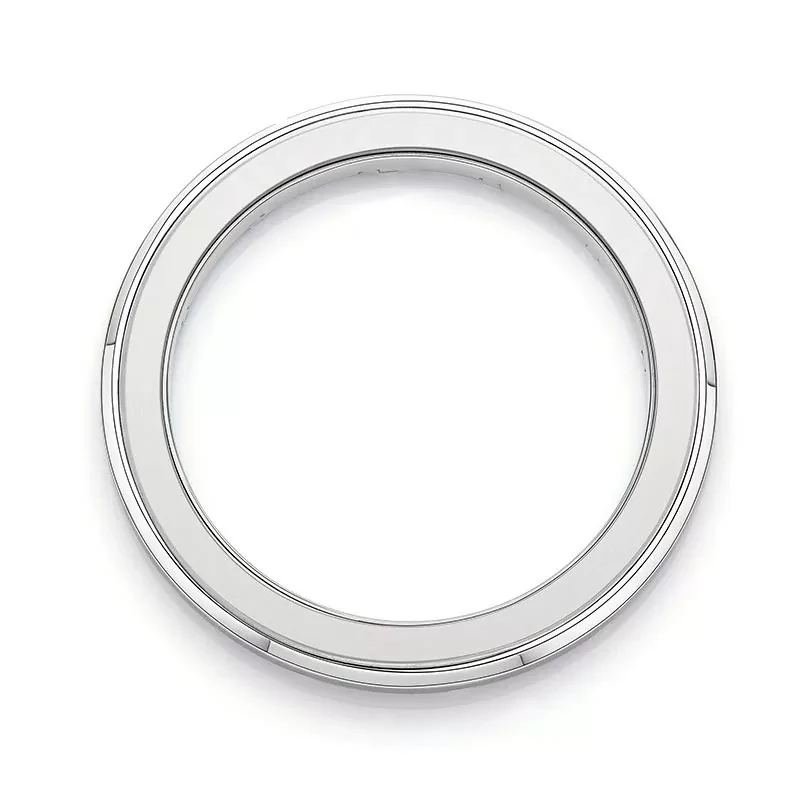
A core range is a small set chosen to cover the demand curve, with the remaining catalogue built as an order-on-request layer. Twelve SKUs is enough to cover width, metal and finish without splitting the buy.
What a core range is for
A core range exists to convert traffic and to hold stock deep enough that a customer can buy today. That is a different job from a catalogue, which exists to show variety.
Depth over breadth
Twelve SKUs with four sizes each supports a walk-in purchase. Thirty-eight SKUs with one size each supports an order and a wait, which loses the impulse buyer and the second visit.
The order-on-request layer
Everything outside the core becomes the request layer, quoted from the factory with a stated lead time. The customer sees variety and the retailer carries no stock on it.
Choosing the four axes
A wedding band varies along four axes that customers actually shop: width, metal, finish and size. A core range is a structured sample of those axes rather than a random selection.
| Axis | Options in core | Rationale |
|---|---|---|
| Width | 2 mm, 4 mm, 6 mm | Three points cover the demand curve |
| Metal | Silver, gold tone | Two price tiers |
| Finish | Polished, matte | Two dominant looks |
| Size | Five to seven | Middle of the market |
Three widths by two metals by two finishes gives twelve combinations before sizes. That is the whole core, and each combination is a SKU.
Why not add a third finish
A brushed finish is the third look most customers ask for, and it is the first addition once the core proves out. Adding it to the initial core pushes the count to eighteen and splits the depth.
Why metal is a price axis rather than a look
Silver and gold tone read differently to a customer, but the buying decision is usually price-led. Two metals give two price points, which is what a range needs to serve two budgets.
The stock arithmetic
A core range is a stock commitment, and the arithmetic is simple enough to run before the buy rather than after.
Units per SKU
Four units per SKU gives 48 pieces for a twelve SKU core. That is one depth step: enough to sell today, not enough to cover a size gap for long.
Size distribution
Wedding band sizes cluster in the middle. A four unit buy should weight the middle sizes rather than spread evenly, because an even spread puts stock in the tails.
| Sizes per SKU | Units per SKU | Total for 12 SKUs |
|---|---|---|
| 4 | 1 each | 48 |
| 4 | 2 each | 96 |
| 6 | 1 each | 72 |
A first buy of 48 pieces is a test. A second buy of 96 is a commitment. The gap between them is what the first season's sell-through tells you.
Reading sell-through
Sell-through by SKU is the only data that matters for the second buy, and it is available within one season if the range is small.
What good looks like
A core SKU that sells four units in a season is turning. One that sells none in a season is either the wrong combination or the wrong size placement, and the two causes need different fixes.
Separate the causes
Check whether the SKU sold in the sizes stocked. A 6 mm band that sold nothing in size 7 but sold out in size 10 is a size problem, not a width problem.
- No sales at any size: drop the combination
- Sales concentrated at one size: re-weight the size split
- Sales steady but shallow: add a depth step
- Sales lost to wait: move the SKU to the request layer
Pricing the range
Twelve SKUs need a price ladder that a customer can read in one glance. Three rungs are enough.
Entry, core and premium
The 2 mm silver polished band is entry. The 4 mm is core and should carry the volume. The 6 mm gold tone is premium and anchors the top of the range.
Keep the ladder wide enough
A ladder where the top rung is 20 percent above the entry does not read as a ladder. A top rung at two to three times the entry gives the customer a real choice and gives the retailer a real upsell.
Making the range look deliberate
A core range displayed as twelve near-identical bands reads as a commodity. Presentation is part of the range design.
Group by width
Grouping by width lets a customer compare like with like, which is how they actually shop a band. Grouping by metal forces a price comparison first, which slows the decision.
Pair with a stone band
A plain band next to a stone set band sells both, because the customer sees the set rather than the single piece. That pairing is the highest return change in a wedding display.
Sizing and exchanges
A wedding band range lives or dies on sizing. A customer who cannot get the size walks out, and a customer who exchanges costs the retailer twice.
Stock the middle, order the tails
Five to seven sizes in the middle covers most buyers. The two extreme sizes are ordered, with a stated lead time of three to five days on stock designs.
Free first resize
A free first resize within 60 days is cheap and it converts a hesitant buyer. It is also the term that makes a narrow size stock workable.
What our core range terms look like
We supply plain and stone set wedding bands in 2, 4 and 6 mm, in silver and gold tone, polished and matte. Minimum order is 50 pieces per design, and sizes can be mixed within a design to reach it.
Stock ships in three to five days and bulk in fifteen to twenty days under 500 pieces, with a volume step at 200 and 500 pieces. Payment is a 30 percent deposit with the balance before shipment, by T/T, PayPal or Western Union. A twelve SKU core with four units each reaches the MOQ in one order.
Timing the buy against the season
Wedding bands sell on a calendar that is not the retail calendar. Engagement season drives band demand three to five months later, and a range that arrives in the wrong month sells at the wrong depth.
The lag between engagement and band
Most couples buy the engagement ring first and the bands closer to the date. A band range that lands four months before the peak wedding months is in stock for the highest traffic period; one that lands after it holds cash for a year.
Order the core early, the tails later
The core twelve should be in stock before the season, and the request layer can be ordered against actual demand during it. That split is what keeps the cash commitment low while the shelf still looks full.
Plan the second buy in season
A second buy placed mid season covers the sizes that sold out and the combinations that turned. Waiting until the season ends means the restock arrives when traffic has gone.
- Core stock in place four months before peak
- Restock decision at the midpoint of the season
- Request layer quoted per order, no stock held
- Range review after the season, one swap at a time
Supplier terms that make a core range work
A small core lives on fast restock. A supplier who needs eight weeks for a plain band makes the twelve SKU structure unworkable, because every stockout becomes a lost sale.
Stock versus bulk lead time
Stock designs should ship in three to five days, and bulk in fifteen to twenty under 500 pieces. A plain band in a standard width belongs in the stock category, and a stone set band belongs in bulk.
Size mixing inside the MOQ
A twelve SKU core at four units each is 48 pieces, which sits just under a 50 piece minimum. A supplier who allows sizes to mix within a design lets a retailer reach the minimum in one order rather than padding the buy with sizes nobody wants.
Frequently Asked Questions
Should the core include a two tone band?
Not in the first twelve. Two tone is a strong seller in some markets and a slow one in others, and it belongs in the request layer until the local data says otherwise.
How often should the core change?
Once a season, and only by swapping the weakest combination rather than rebuilding. A range that changes shape every season never accumulates the sell-through data that justifies the buy.
Does width affect the price much?
Metal weight drives it, so a 6 mm band costs noticeably more than a 2 mm in the same metal. The price ladder should reflect the weight difference rather than a round step.
What about men's bands?
Men's bands cluster at 6 mm and above, often in matte. A core that tops out at 4 mm loses the men's buyer, which is why the 6 mm belongs in the first twelve.
Next step
Send us your current sell-through by width and we will suggest the twelve that cover your demand. Start with our wholesale desk, and the guide index covers sizing and comfort fit.


