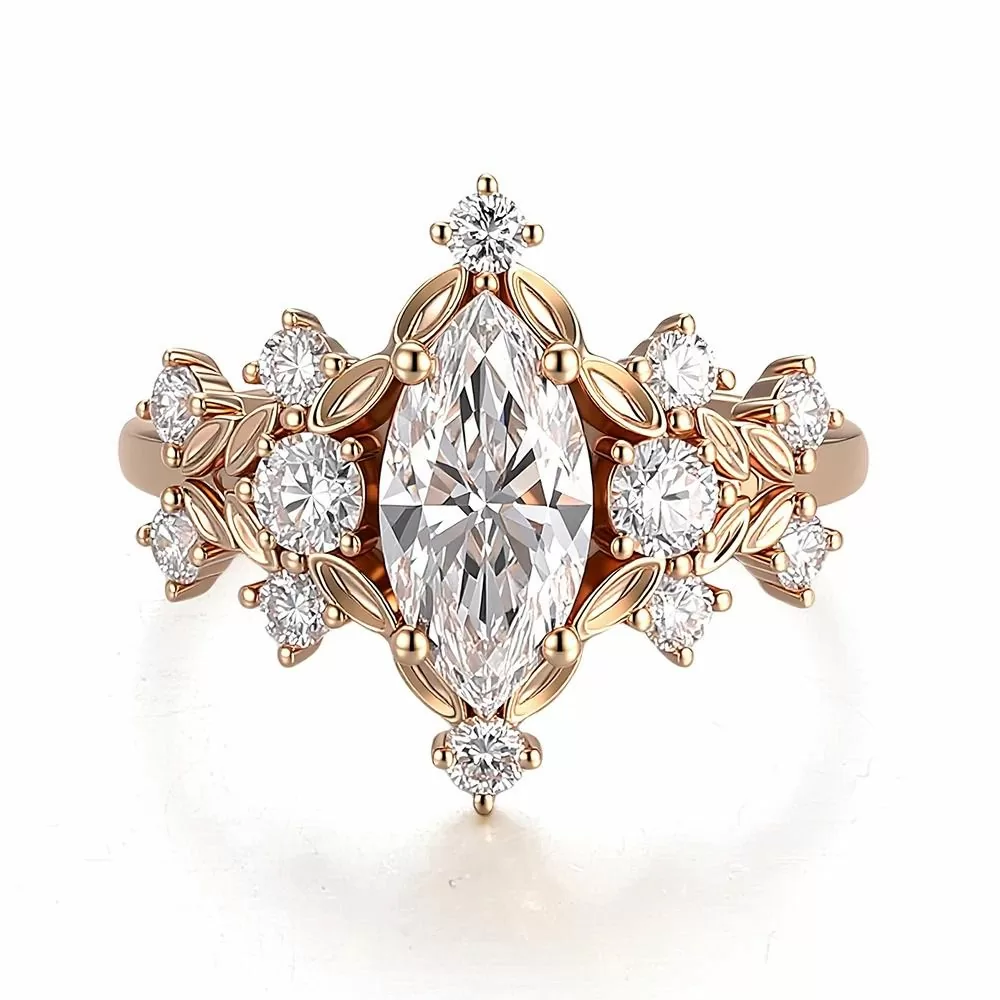
The wedding band is chosen second, but it is worn just as often as the engagement ring, and the two have to live on the same finger. Five metals dominate wedding bands: yellow gold, white gold, rose gold, platinum and, less commonly for a lifetime band, sterling silver. The karat system defines the gold purity levels, and the ISO 9202 standard sets the fineness grades for gold and silver jewelry.
Yellow gold: the traditional band
14K yellow gold (58.3% gold, alloyed with copper and silver) is the classic wedding band: warm in tone, durable enough for daily wear, and easy to resize. 18K yellow gold (75%) is richer in color but softer and shows scratches more readily. Yellow gold pairs naturally with a yellow-gold engagement ring, but it also works as a deliberate color contrast against a white-metal engagement ring; the mixed-metal look is now common rather than a mismatch. Gold does not tarnish, which is why it has been the default band metal for centuries.
White gold and platinum: the silver-white pair
White gold bands use rhodium plating to look bright white, and the plating wears off over years, revealing a slightly warm alloy. Platinum bands are fully white without plating and develop a patina rather than a yellow edge. If your engagement ring is platinum, a platinum wedding band sits flush and wears at the same rate. If your engagement ring is white gold, a matching white gold band means both rings will need re-plating on the same schedule. Mixing platinum and white gold looks fine side by side, but the harder platinum band will slowly wear against the softer white gold over decades. Read platinum versus white gold for the full aging comparison.
Rose gold: on trend, with copper considerations
Rose gold is gold alloyed with copper, which gives the pink tone. It is durable and currently fashionable. Two caveats: the copper content makes it slightly more likely to irritate very sensitive skin, and the color pairs best with a plain engagement ring or one set in rose gold; mismatching rose gold with a cool white solitaire can look accidental rather than chosen. It also costs about the same as yellow gold of the same karat.
Sterling silver: not a lifetime band
Sterling silver (92.5% silver) tarnishes, scratches and wears thin within a few years of daily wear. It is fine for a promise ring or a fashion band, but it is not recommended as a wedding band that will be worn every day for decades. The ISO 9202 standard defines the 925 fineness grade for silver. If budget pushes you toward silver, a 10K or 14K gold band is a better long-term choice.
Width, profile and how the rings sit together
A wide band (4mm or more) next to a thin engagement ring can look unbalanced; a narrow, contoured band sits flush against a high-set solitaire. If your engagement ring has a pave halo or a curved profile, ask the jeweler for a notched or "contour" wedding band so the two rings touch fully instead of rocking against each other. The setting style you chose dictates this; see prong, bezel and pave bands for how each pairs. Finally, decide whether you will wear both rings together always, or the band alone on rough days; that decision affects whether you want a matching set or a band chosen for its own character.
Comfort and width over decades
A band that feels fine for an hour may feel bulky after eight hours at a desk. Narrow bands (2mm to 3mm) sit comfortably under gloves and beside a thin solitaire; wider bands (4mm to 6mm) look substantial but can catch on things and feel heavier. If you will wear the two rings stacked daily, try them on together for an hour before deciding. Rounded inner edges (called a comfort fit) make the band easier to slide on and off, which matters if you ever need to remove the ring for manual work. The goal is a band you forget you are wearing, not one you notice all day.
Frequently asked questions
Do the wedding band and engagement ring have to be the same metal?
No. Mixed metals are a deliberate, popular look. The practical rule is to pair similar hardness levels so one band does not wear away the other.
Which wedding band metal lasts longest?
Platinum and 14K gold both last for decades. Platinum patinas rather than wears thin; 14K gold resists scratches slightly better and never yellows.
Is rose gold more expensive?
No. It is priced close to yellow and white gold of the same karat, because the difference is alloy composition, not rare material.
Can I upgrade my wedding band later?
Yes. Bands are easy to swap, resize or stack; many people add a second anniversary band years later rather than replacing the first.
Plan the pair together: read metal wear and engagement ring budget guide for a budget that covers both rings.


