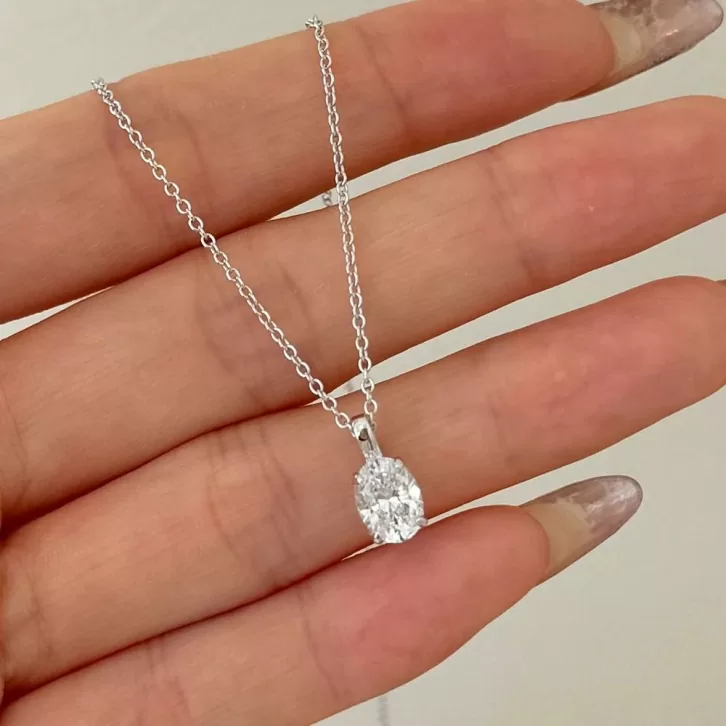
Lost, stolen, or airline-scrubbed: travel is the environment where most fine jewelry damage actually happens, not the shower or the kitchen. A solitaire knocked on a hotel doorknob, a ring left on a cruise ship sink, a necklace tangled in checked luggage. For retailers, the post-purchase travel advice is part of the product. Customers who lose a two-thousand-dollar solitaire on vacation blame the brand that sold it to them, not the airport.
What to actually wear on the trip
The safest travel jewelry is the piece you never take off in public: a simple band, a small pair of studs, a thin chain. Leave the heirloom engagement ring, the pave eternity, and the family necklace at home or in a hotel safe. A cheap silicone band or a ten-dollar moissanite lookalike for the trip is a common workaround for travelers who do not want to explain an empty ring finger. For what is safe to wear daily, see what is safe to wear every day and our travel storage guide.
Packing: carry-on, not checked
Checked luggage gets loaded, unloaded, and transferred; jewelry in a checked bag is statistically the most likely to disappear. Put fine jewelry in your carry-on, in a hard case, inside socks or a pouch so it does not rattle. Never put a jewelry pouch through an X-ray tray loose; it slides. A small pill case with a foam insert works for rings. If you are checking a bag that happens to contain a jewelry roll, photograph the contents first for insurance. The FTC jewelry guides and labeling rules are summarized on the FTC jewelry care compendium; useful if you are writing your own care labels.
Hotel and destination habits
The single most common lost-ring scenario is the I-took-it-off-to-wash-my-hands moment. Hotel sinks, gym showers, restaurant bathrooms. The habit that fixes this is a fixed place: a small jewelry dish that lives on the hotel desk, not on the sink edge. At the beach, sunscreen, sand, and saltwater combine to dull stones and corrode prongs; take rings off before applying SPF. At the gym, barbells and yoga mats chew through thin bands. For care details, see avoiding scratches in storage and which cleaners are safe.
Insurance and documentation before you leave
Take timestamped photos of each piece, keep receipts, and confirm your insurance schedule covers loss abroad. A separate jewelry floater rider usually costs 1 to 2 percent of the value per year and covers disappearance, not just theft. The jewelry insurance guide walks through what a schedule should list. If you are traveling with a piece you are still making payments on, check that the fine print does not exclude loss outside the home country.
Should I wear my engagement ring on a beach?
Most jewelers advise against it. Sand is abrasive, sunscreen can cloud small stones, and wet fingers make the ring slip. A silicone travel band solves the I-want-to-wear-something urge without risking the real one.
Can I wear my ring through airport security?
Yes. Wedding bands and most jewelry go through the metal detector without issue. Thin pave eternity bands can trigger a hand-wand; keep them in a tray you watch until it is back in your pocket.
What if my ring is lost abroad?
File a police report (needed for most claims), notify the hotel lost-and-found, and contact your insurer the same day. Photograph the empty spot in the case. The faster you report, the more likely the claim pays.
Do I need to take my ring off at the gym?
For weights, pull-ups, and boxing, yes. Thin bands dent on barbells and pave catches on mats. Yoga is usually fine for a plain solitaire, but a bezel set is safer than prongs.
The numbers behind lost jewelry claims
Insurance industry data on jewelry claims consistently points to three scenarios: home bathroom (about 30 percent of claims), hotel or rental bathroom (about 25 percent), and gym or pool area (about 15 percent). The common thread is wet hands and a flat surface near a drain. The jewelry dish habit, the carry-on habit, and the silicone travel band habit are the three cheapest interventions that cut this risk. They cost almost nothing to adopt, and they are the three points worth putting on a printed care insert that ships with every ring over $500.
The other habit worth mentioning is the hotel safe. Most travelers either leave the ring on the nightstand the whole trip or lock it in the safe and forget it. The safer middle is to use the safe for the days you are not wearing the ring, and to photograph the safe door after closing it so a housekeeping dispute has evidence. It sounds fussy, but it costs ten seconds and removes the most common he-said-she-said claim scenario.
A short travel-care insert shipped with the ring is the kind of detail that turns a one-time buyer into a repeat customer. If you are a retailer or designer and want a ready-to-print travel care card plus calibrated silicone travel bands to pair with your solitaire listings, our wholesale team can bundle both. Ask about care inserts.
US federal rules for describing metals and gemstones in jewellery advertising are set out in the FTC Guides for the Jewelry, Precious Metals and Pewter Industries (16 CFR Part 23).
Frequently Asked Questions
What ring sizes can you supply in bulk?
US sizes 5–12 including half sizes. Send a size breakdown with your order and we cast to that curve; comfort-fit inner bands reduce resize requests.
Can I order a mixed size run instead of one size?
Yes. Mixed runs are standard for wholesale: specify quantity per size and we pack and label by size at no extra labor cost.
What is the MOQ for custom ring designs?
50 pieces per design for existing molds; 100–300 pieces when a new mold or CAD model is required.
How should I price rings for retail margin?
Most partners use a 3–4x markup on FOB cost for sterling and 2.5–3x for moissanite solos, which keeps landed cost under 30% of retail.


