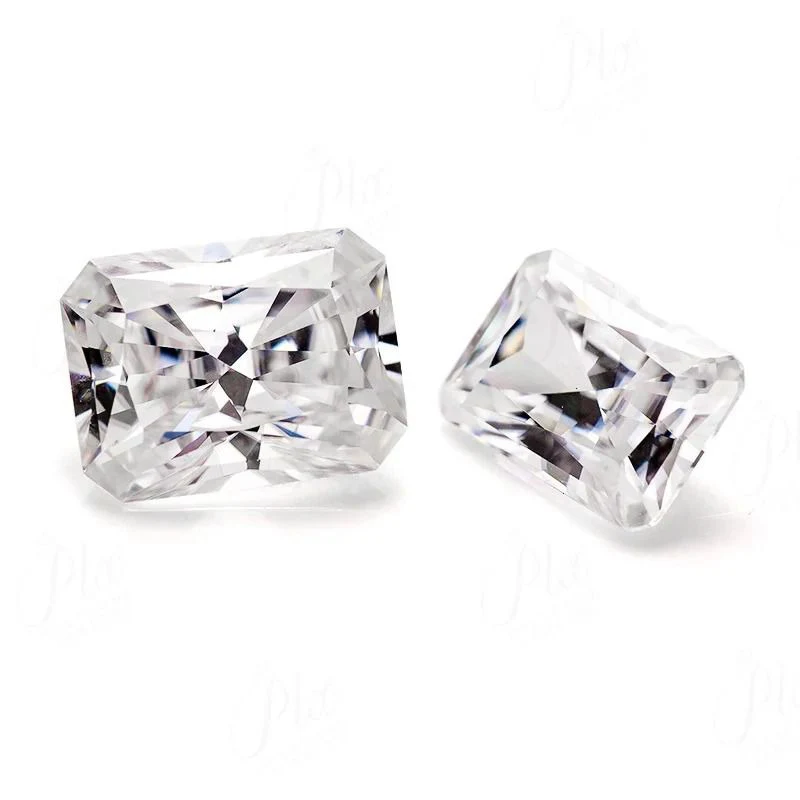
A shopper looking at diamond reports sees "SI1" and "SI2" and immediately assumes the stone is flawed. In reality, SI is the sweet spot for most engagement rings: the inclusion is there, but the buyer cannot see it without magnification. Understanding what SI actually contains is the key to buying well without overpaying.
Where SI sits on the clarity scale
GIA clarity runs from FL (flawless) down through IF, VVS1/2, VS1/2, SI1/2, I1, I2, I3. SI stands for "Slightly Included." The inclusions are visible under 10x magnification and may be visible to the naked eye in some cases, depending on size, position, and type. The full grading scale and how inclusions are mapped are explained on the GIA diamond clarity guide. SI1 is the more consistent of the two; SI2 carries more risk of a visible inclusion, especially in larger stones. Our broader scale walkthrough in diamond clarity grades from IF to I1 puts SI in context.
"Eye-clean" is the real target
The grade on paper matters less than whether the inclusion is visible at arm's length. A well-placed SI1 inclusion under the girdle or near the culet can be completely invisible face-up, making it look like a VS stone. Conversely, a white feather in the center table of an SI2 can be obvious. Ask for an eye-clean certificate statement or a high-resolution photo. The nature of the inclusions themselves is covered in what gemstone inclusions mean. When you combine this with color, the matrix is in color and clarity grades explained.
When SI makes sense, and when it does not
SI1 is the value choice for stones under 1.5 carats, where inclusions are small and the face-up area hides them. Above 2 carats, the larger face-up surface makes inclusions easier to spot, so many buyers step up to VS2. For solitaire rings where the stone is the whole story, SI1 eye-clean is the standard recommendation; for halo or pave settings, the busy setting hides more imperfections. The 4Cs tradeoff logic is in the 4Cs for first-time buyers.
What to check on the report
Look at the plotted diagram. A single black crystal near the pavilion edge is usually fine. Multiple feathers or a crack reaching the surface ("feather, surface-reaching") raises durability concerns. The shape and position of the inclusion matter more than the grade letter alone, which is why two SI1 stones can differ a lot in price.
How to confirm eye-clean before you buy
Do not rely on the grade letter alone. Ask the seller for a high-resolution face-up photo or a short video at arm's length, and ask directly whether the stone is eye-clean to a trained eye under 10x. A legitimate wholesaler will answer in one sentence and send the file. If the inclusion is a black crystal, its position matters most; if it sits under a prong or near the outer girdle, the setting will hide it. If it is a white feather in the center table, pass on it even if the grade says SI1.
Remember that mounting also hides imperfections. A pave or halo ring surrounds the center stone with small diamonds, drawing the eye away from minor inclusions, and a bezel covers the outer edge. A clean solitaire leaves the stone fully exposed, so the same SI1 that looks perfect in a halo may draw closer scrutiny on a solitaire. For budget buyers, the value trick is to pair an eye-clean SI1 with a setting that distracts, and to step up to VS2 only when the ring is a large, solo stone. That tradeoff typically saves 15 to 30 percent off a VS stone with identical face-up appearance.
Keep in mind that fluorescence can soften the look of an SI stone under daylight. A faint blue fluorescence on a near-colorless stone can actually hide a slightly warm tint, which is a bonus value many buyers overlook when comparing certificates side by side.
FAQ
Is SI clarity good for an engagement ring?
Yes, when the stone is eye-clean. SI1 is the most popular value grade because the inclusion is not visible to the naked eye and the price is meaningfully lower than VS.
Can you see SI2 inclusions?
Sometimes. SI2 inclusions are near the boundary of naked-eye visibility. In larger stones, especially with a dark or centered inclusion, they can be visible.
Does SI clarity affect diamond value?
It affects price per carat significantly compared to VS or VVS, but only modestly affects appearance when the stone is eye-clean. That gap is where buyers save money.
Should I choose SI1 or VS2?
If a certified eye-clean SI1 looks identical to a VS2 in the photos, the SI1 is the better buy. If the budget allows and you want certainty, VS2 removes the placement risk.
Our wholesale diamonds are hand-checked for eye-clean before listing, and we share clarity plots and video for any SI stone. Ask for a curated SI selection.


