Two 1.02 ct stones, both G, VS1, both excellent polish and symmetry, both with a GIA report. One quoted at 3,180 USD per carat, the other at 2,640. The buyer assumed the cheaper one was a mispriced opportunity and asked for both on memo. The difference was in two lines the buyer had not read.
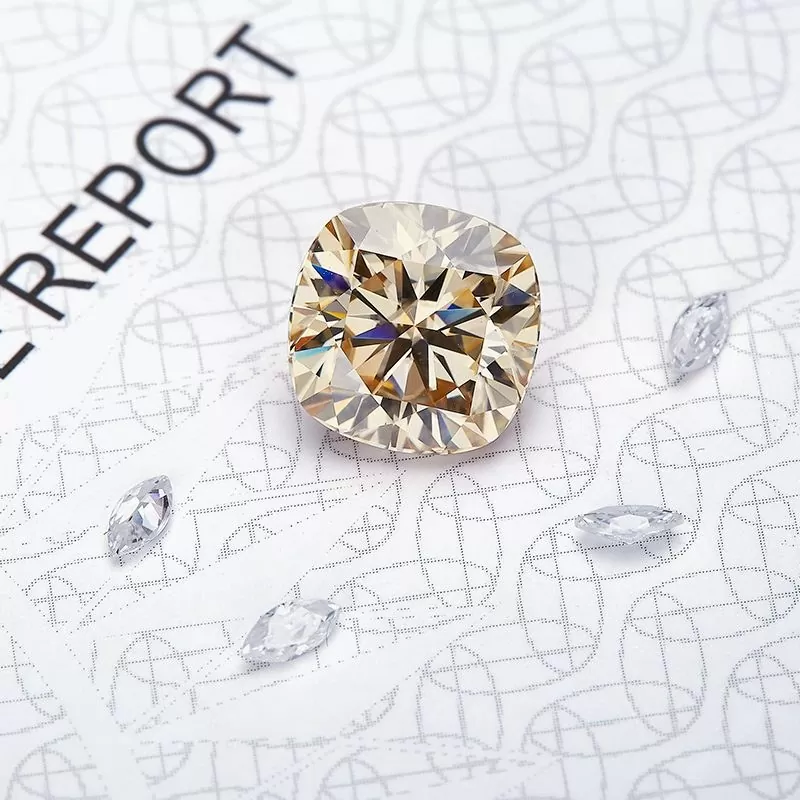
A grading report contains four headline grades and about a dozen fields that carry price. Wholesale buyers who trade on headline grades leave money on the table in both directions: paying too much for a stone, or rejecting a good stone because a number looked unfamiliar.
The four headline grades and what they leave out
Colour, clarity, carat and cut grade are a summary. They describe a stone in a way that lets two people agree quickly, and they deliberately compress information that a buyer may need.
| Field | Where it appears | Price effect |
|---|---|---|
| Cut grade | Headline, when assigned | Largest single driver after carat |
| Fluorescence | Separate line | Discount or neutral, market dependent |
| Proportions | Diagram with angles | Explains light return |
| Comments | Bottom of report | Treatment, clarity characteristics |
| Measurements | Top line in mm | Spread versus weight |
The table is short and the consequences are not. Each row is a separate negotiation.
Cut grade: the driver buyers underestimate
A stone graded excellent cut returns more light than a very good cut of the same colour and clarity. On a 1 ct stone, the difference is visible at arm's length and it is priced.
Spread versus weight
Measurements tell you whether the stone is spread or deep. A 1.02 ct stone measuring 6.20 mm looks smaller than a 0.95 ct stone measuring 6.45 mm. In a retail setting where face-up size sells, the lighter but wider stone can be worth more per carat despite fewer carats.
Compare millimetre diameter against carat before you compare price per carat. A "cheap" parcel of deep stones is cheap because the customer sees a smaller stone.
Cut grade on fancy shapes
GIA does not assign a cut grade to most fancy shapes. The absence is not a defect; it means the buyer must read the proportions diagram and judge for themselves. Sellers exploit this gap by quoting fancy shapes against round-brilliant pricing logic.
Fluorescence: a discount with conditions
Strong blue fluorescence appears as a separate line on the report. In natural diamonds it often carries a discount, because some buyers worry about a hazy or milky appearance.
The discount is not uniform. It varies by colour grade, by size and by market. In the US trade, strong fluorescence on an H or lower colour stone is often treated as a small negative or neutral. On a D colour stone, the same fluorescence can be a larger discount because the contrast with the colour grade is more visible.
When fluorescence is an advantage
In markets where customers value a blue tint under daylight, mild fluorescence can support a sale. Some buyers in Asia actively seek faint to medium fluorescence for that reason. The point is that the field is not a fixed penalty; it is a market judgment.
- Check the fluorescence line before quoting a price
- Ask which market the supplier prices against
- Do not apply a blanket discount without checking colour grade
Comments: where treatments and characteristics live
The comments section is the most skipped part of a report and the most expensive to ignore. It carries treatment statements, clarity characteristics that affect durability, and notes on things the grade letters cannot express.
Common entries and what they mean
Chips or cavities near the girdle reduce durability in a setting. An internal graining note may explain a clarity grade that looks generous. A treatment note changes the category of the stone entirely.
Read the comment before you set a stone in a tension or bezel setting. A feather that reaches the surface behaves differently under stress than one enclosed in the pavilion.
The "clarity based on clouds not shown" note
This entry means the clarity grade rests on cloud features that the plotting does not map. It is not a defect, but it does tell you the stone's appearance depends on diffuse rather than discrete inclusions, which affects how it photographs.
Why two dealers quote differently for the same report
A report number identifies a stone, not a price. Three commercial factors explain most of the gap.
- Inventory position: a dealer holding an ageing stone discounts it; a dealer filling an order prices it up
- Channel: a memo price to a retail account differs from a cash price to a trade buyer
- Terms: payment terms, return rights and shipping cost are embedded in the quoted number
When comparing two quotes for the same report number, normalise the terms first. A quote that includes a return right is not comparable with one that does not.
There is a fourth factor that rarely appears in writing: the dealer's confidence in the report. A stone with an older report, or one issued by a laboratory the trade treats as conservative, may be priced differently from an identical stone with a fresh report from a stricter lab. Buyers who ignore this treat a document difference as a price error.
Memo culture and how it changes the price
Much of the trade runs on memo: stones are shipped for inspection without immediate payment, and the buyer settles or returns within an agreed window. Memo pricing is not the same as cash pricing, and comparing the two produces bad decisions.
What memo costs the supplier
Memo carries capital, insurance and return risk. A supplier offering memo terms typically prices 5 to 10 percent above a cash price for the same stone, and that premium is a financing cost rather than a margin grab.
What memo costs the buyer
Memo feels free and carries a hidden risk: the stone is in the buyer's safe, on the buyer's insurance, and the buyer is responsible if it is damaged while there. A memo stone that sits for weeks waiting for a customer decision also blocks the buyer from buying a better stone at a lower price.
How to compare memo against cash
Ask for both prices on the same report number, then add the cost of carrying the stone for the expected holding period. If the cash discount exceeds the carrying cost, buying beats memoing; if the buyer cannot fund the purchase, memo is the only route.
- Always ask for the cash price and the memo price
- Confirm the return window and who insures in transit
- Note the date the memo starts, not the date it arrives
- Return unused memo stones promptly, because holding them costs the relationship
Building a comparison sheet
The practical fix is a comparison sheet with the fields that carry price, not just the four grades.
| Column | Why it belongs |
|---|---|
| Report number | Confirms the stone, not the description |
| Diameter in mm | Face-up size versus weight |
| Fluorescence | Discount or premium driver |
| Comments | Durability and treatment flags |
| Terms | Memo, cash, return right |
Five columns are enough to explain most price gaps. When a gap remains unexplained, ask the dealer which field they are pricing.
Where lab-grown changes the logic
Lab-grown reports carry the same fields with different weightings. Because supply is produced rather than mined, the price of a given grade falls over time, and inventory age becomes a larger factor than in natural goods.
A lab-grown stone held for six months may be worth less than the same grade bought today. That makes turnover, not grade, the primary pricing risk in this category.
Frequently Asked Questions
Should I always buy the highest cut grade?
No. Buy the cut grade your product can show. A well-cut very good stone in a bezel with a small table view can outperform an excellent stone buried in a heavy setting, at a lower price.
Is a report without a cut grade worth less?
Not automatically. Fancy shapes rarely carry a cut grade. Judge the proportions diagram and the face-up appearance, and price the stone on what it shows.
How do I verify a report number?
Use the laboratory's verification service and compare the returned details with the document. A report number that resolves to a different weight or grade is a red flag.
Do I need a report on every stone?
No. Report the centre stones and any stone above the value threshold your customer expects. Melee is usually sold on parcel specification rather than individual reports.
That variance is worth budgeting for rather than arguing about. A buyer who expects a ten to fifteen percent spread across suppliers will negotiate from a position of knowledge, and a buyer who expects one price for one grade will spend the first order learning the market rather than buying from it. The comparison sheet is the tool that makes the second order cheaper than the first.
Next step
Send us a report number and the terms you are being quoted, and we will benchmark it against current trade levels for the same field set. Start with our stone desk, or read the guide index for setting and metal decisions.


