A retailer sent back forty rings from a single season with the same complaint: the white colour had gone warm at the shank. The plating had been applied at 0.08 micron, which is enough to look correct on the day of sale and not enough to survive a year of wear. The replating cost more than the plating upgrade would have.
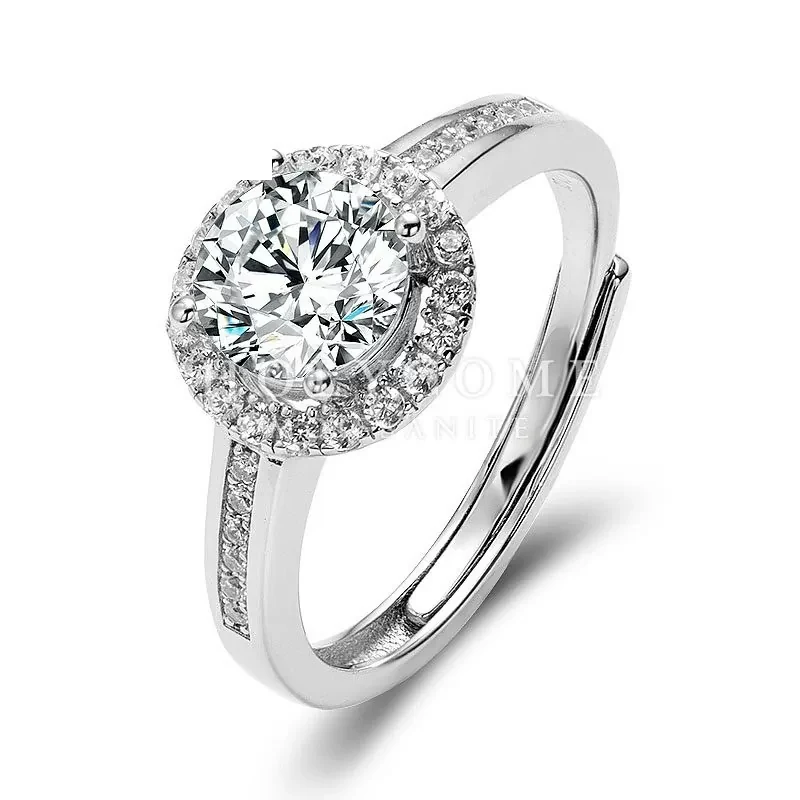
Rhodium plating is the part of silver jewelry that decides whether a piece returns. It is priced in microns and promised in months, and the two numbers are usually set by habit rather than by wear data.
What rhodium plating actually does
Rhodium is a platinum-group metal applied by electroplating over a prepared surface. On sterling silver it serves two purposes: it gives a bright white colour, and it slows the tarnish that silver develops in air.
Colour, not just protection
Silver is white but warm. Rhodium is cooler and brighter, and the difference is visible when two rings sit side by side. That is why a white-metal programme plates the whole piece rather than only the exposed faces.
Tarnish barrier
Rhodium is chemically inert in normal use, so a continuous plating layer keeps sulphur away from the silver beneath. The barrier fails at the edges first, which is where tarnish begins on a plated piece.
Thickness and the service interval
Plating thickness is measured in microns, and the interval before visible wear scales roughly with it. The relationship is not linear because wear concentrates at high points.
| Thickness | Typical interval | Where it is used |
|---|---|---|
| 0.05-0.08 micron | 3-6 months | Low price fashion |
| 0.10-0.15 micron | 6-12 months | Standard fashion and bridal |
| 0.20-0.25 micron | 12-18 months | Mid-tier bridal |
| 0.30 micron and above | 18-24 months | Premium and warranty programmes |
The intervals assume daily wear and normal hand contact. A pendant worn twice a week sits at the long end; a ring worn through manual work sits at the short end.
Why thickness is not the only variable
A 0.15 micron layer on a smooth band wears more slowly than the same layer on a textured surface, because the high points on a texture carry concentrated contact. A pavé band wears at the stone edges before the shank shows anything.
Wear zones and what they tell you
Plating fails in a predictable order. Knowing the order lets a service desk diagnose a return without inspecting the whole piece.
Zone one: shank edges
The palm side of the shank contacts hard surfaces and other jewelry. It loses plating first, and the loss shows as a warm line along the edge.
Zone two: prong tips and stone edges
Prong tips catch on fabric and on other metal. A ring with tall prongs loses plating at the tips within months, and the loss exposes silver around the stone seat.
Zone three: the face and the gallery
The face is protected by its position and usually retains plating longest. A ring that shows wear on the face has been worn hard or polished with an abrasive cloth.
- Shank edge wear: expect a replating claim inside a year on thin plating
- Prong tip wear: a sign of tall prongs, worth reviewing the setting design
- Face wear: usually caused by abrasive cleaning, and worth a care note
Setting the interval for a programme
The interval a brand promises should be the interval its plating supports, minus a margin. Promising the maximum is how a warranty becomes a cost centre.
Match the promise to the price tier
A 40 USD ring cannot carry a two-year free replating promise; the service cost exceeds the margin. A 400 USD ring can, and the promise is part of what justifies the price.
State the interval in months, not in vague terms
Twelve months is a promise. As long as needed is not, because it has no boundary and every claim becomes a negotiation. Write the number into the warranty card.
What replating costs
Replating is labour plus chemistry plus handling. At volume, the labour dominates.
| Cost element | Notes |
|---|---|
| Strip and polish | Removes old plating and prepares surface |
| Plating bath time | Scales with thickness |
| Handling and freight | Often the largest line for a single piece |
| Stone protection | Some stones need masking or removal |
For a single ring shipped across a border and back, handling and freight can exceed the plating cost three times over. That is why brands with distant customers prefer a local plating partner over a return-to-factory service.
Protecting stones during replating
Most moissanite and diamond material tolerates the process. Pearls, opals, turquoise and some treated stones do not, and they need removal or masking before the bath. A service desk that plates a pearl-set ring without masking returns a damaged piece.
Design choices that extend the interval
Plating life is partly a design decision, and three choices make a measurable difference.
Rounded shank edges
A rounded edge carries a thicker effective layer than a sharp edge, because the plating covers a curve rather than a corner. Sharp edges also concentrate wear, so the same thickness lasts longer on a rounded profile.
Lower prong height
Tall prongs lose plating at the tips and catch on fabric. A lower prong with a well-set stone keeps the tip out of the wear zone and reduces both plating loss and snagging.
Recessed detail
Recessed grooves and milgrain retain plating because they sit below the contact surface. Raised detail wears first, so a design that relies on raised beads should expect earlier replating.
What to tell the customer
The care note decides whether a replating claim arrives at six months or at eighteen. Three sentences are enough.
- Plating is a finish and it wears with contact; the interval depends on wear
- Avoid abrasive polishes and chlorine; both shorten the interval
- Replating is available as a service, with a stated price and turnaround
The third sentence is the one most brands omit. A customer who knows replating exists and what it costs treats wear as maintenance rather than as a defect.
What our plating terms look like
We plate white-metal pieces at 0.15 micron as standard and offer 0.25 micron on request, with the thickness stated on the packing list. Minimum order is 50 pieces per design, and mixed programmes can carry different thicknesses by SKU.
Stock ships in three to five days and bulk in fifteen to twenty days under 500 pieces. Payment is a 30 percent deposit with the balance before shipment, by T/T, PayPal or Western Union. For warranty programmes we supply a plating thickness note that the retailer can attach to the warranty card.
Warranty wording and claim handling
The warranty card decides how a plating claim is handled. Two sentences change the outcome: what the warranty covers, and what it does not.
Cover and exclusion
Cover: plating defects such as patchiness, blistering or a colour that differs from the reference on delivery. Exclude: wear from normal use, contact with chlorine, abrasive cleaning and resizing by a third party.
That split is fair and it is enforceable. A warranty that covers wear is a warranty that pays for the customer's habits, and no plating thickness survives that.
The first twelve months
A free first replating inside twelve months is a reasonable term on 0.15 micron plating and above. It costs one service per piece in the worst case and it removes the argument that drives a chargeback.
Documentation
Record the plating thickness on the invoice and on the warranty card. When a claim arrives, the thickness statement is the reference point for whether the wear is normal or premature.
A thickness statement also protects the supplier, because a piece plated to the agreed thickness cannot be accused of under-plating after the fact.
- State thickness on the invoice
- State the covered defect types
- State the excluded causes
- State the service price after the free window
Frequently Asked Questions
Does yellow gold plating wear the same way?
Gold plating wears faster than rhodium at the same thickness because it is softer. A 0.15 micron gold layer on a ring often shows wear inside six months, so gold programmes usually specify 0.25 micron or above.
Can plating hide a porosity problem?
It can mask surface porosity for a short time, and the porosity reappears as pits when the plating wears. A casting with visible porosity should be rejected rather than plated over.
Is replating the same as re-polishing?
No. Polishing removes metal and restores shine; replating adds a metal layer and restores colour. A worn piece usually needs both, in that order.
How do I check thickness from a supplier?
Ask for a thickness statement on the packing list, and confirm on a sample with a coating thickness gauge. A supplier who measures will state the number; one who does not will describe the colour.
Next step
Tell us the price tier and the warranty you intend to offer, and we will quote the thickness that supports it. Start with our production desk, or read the guide index for setting and metal context.


