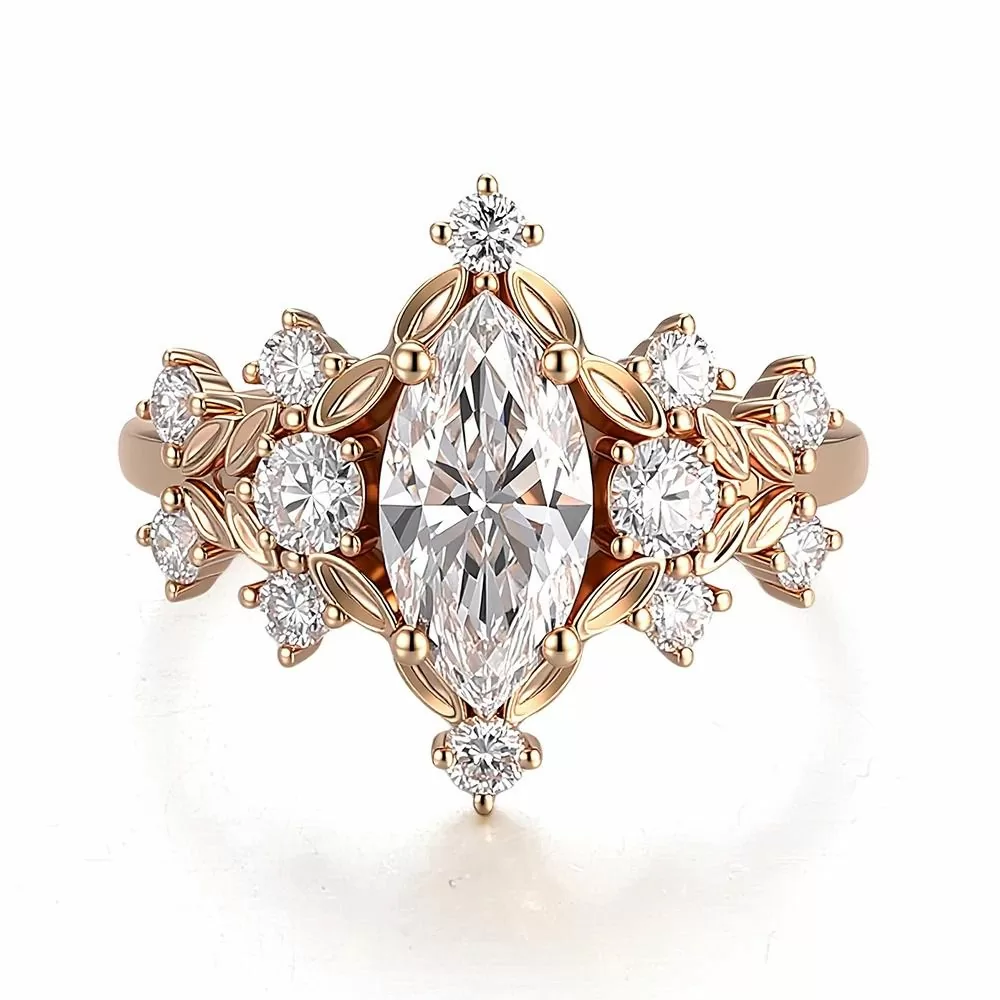
The diamond or moissanite gets all the attention, but the setting does three jobs: it holds the stone on the finger, it decides how much light reaches the facets, and it determines how often you need a jeweler. Three designs, prong, bezel and pave, cover the large majority of engagement rings sold today. The same GIA 4Cs framework applies regardless of setting, but the setting changes how the stone is lit and protected.
Prong settings: maximum light, maximum care
A prong setting uses three, four or six small metal claws to grip the stone's girdle. Because most of the stone is exposed, light enters from the top, sides and bottom, which makes the center stone look larger and brighter. This is why solitaire rings, the classic engagement style, almost always use prongs. The tradeoff is that exposed corners can chip on impact, and prongs bend or wear thin over years. Six prongs spread the grip and are slightly safer than four; four prongs show more stone. Budget for a prong check and retipping every year or two, especially if you work with your hands. See how the 4Cs interact with this in our 4Cs buyer's guide.
Bezel settings: protection-first
A bezel wraps a thin rim of metal around the entire outer edge of the stone. The stone sits inside the rim, fully shielded from side knocks. Bezel settings are the safest choice for an active lifestyle, for parents of young children, and for anyone who does not want to think about prongs catching on sweaters. The tradeoff is less light from the sides and a slightly smaller-looking stone, because the metal covers part of the girdle. A half-bezel (open on two sides) is a compromise that protects the corners while letting more light in. For metal choice, platinum versus white gold explains how each ages differently in a bezel.
Pave settings: the sparkle band
Pave (pronounced "pah-vay") is not a way to hold a single center stone; it is a style where many tiny stones are set closely together across the band, held by tiny beads of metal. The effect is a continuous line of sparkle down the sides of the ring, often combined with a halo around the center stone. The tradeoff is maintenance. Each tiny stone has tiny prongs, and over years one or two can loosen and drop out. A pave band needs a jeweler visit every year to check the small stones. It also collects lotion and soap film between the stones, so clean it more often than a plain band; our home cleaning guide walks through how.
How to choose among them
Start with lifestyle. Hands-on work, sports, or small children point toward a bezel or a sturdy six-prong. A desk job and a desire for maximum sparkle point to a four-prong solitaire or a pave band. Think also about the wedding band: a high-set prong solitaire sits flat against a plain band, while a bezel or pave band may need a shaped, contoured wedding ring to sit flush. We cover the pairing in wedding band metal guide. If you are set on a halo or pave, accept the annual jeweler visit as part of the ownership, not as a sign the ring was built poorly.
Maintenance by setting type
A plain prong solitaire needs the least upkeep: an annual prong check and the usual home wash. A bezel needs almost nothing, because there are no prongs to catch; inspect the rim for dents and have it trued if it gets bent. A pave band is the high-maintenance option, with its many tiny stones and tiny beads; expect a yearly check to tighten loose micro-prongs, and expect to brush between the small stones more often. Choosing a setting is as much about how much maintenance you want to schedule as it is about how the ring looks from across the room.
Frequently asked questions
Which setting is the safest for a diamond?
A full bezel, because the metal rim absorbs side impacts that would chip an exposed corner. Among prong settings, six prongs grip more securely than four.
Do prongs actually break?
They bend and wear thin over years; a retired prong is the leading cause of a lost center stone. An annual check catches this before it happens.
Does pave make the center stone look bigger?
Pave on the band adds overall sparkle but does not enlarge the center stone. A halo of small stones around the center does increase its visual size.
Can I switch settings later?
Yes. The stone can be removed and reset into a different design, which is common when upgrading a simple solitaire into a halo or pave style.
Once the setting is chosen, finish the pair with our wedding band metal guide and keep the metal bright with home cleaning guide.


