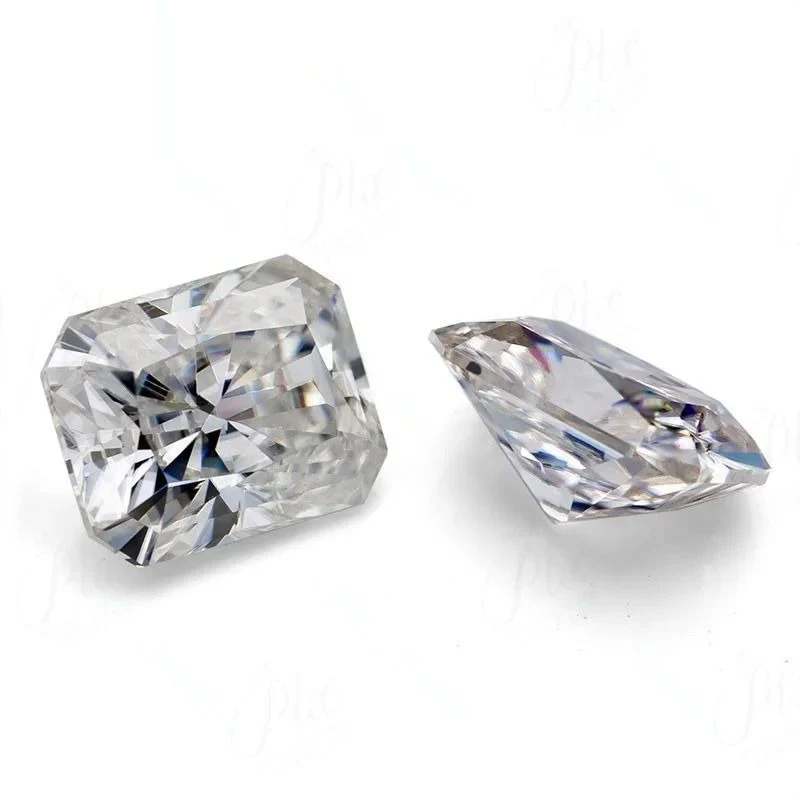
Will a jeweler's diamond tester say my moissanite is fake is one of the most common questions from buyers who are nervous about being judged at a cleaning appointment. The honest answer: a basic thermal diamond tester will often flag moissanite as a diamond, and that surprises people on both sides of the counter. Understanding why, and what newer testers actually do, prevents awkward conversations at the jewelry store and helps retailers describe the stone confidently.
How a classic thermal tester works
The standard diamond tester pen measures thermal conductivity: how fast heat moves through the stone. Diamond is one of the most thermally conductive materials on earth, far above glass, cubic zirconia, or white sapphire. Moissanite, however, has thermal conductivity in the same range as diamond, which is why a basic pen can light up green on a moissanite. This is not a loophole; it is a real material property. The physics is documented in the moissanite thermal conductivity entry.
Why modern testers added an electric mode
Once moissanite entered the market in the 1990s, tester makers added a second circuit that measures electrical conductivity. Diamond is an electrical insulator, except for type IIb blue diamonds; moissanite is a semiconductor. A two-mode tester first checks thermal, then electric, and spits out Moissanite on the screen. Most retail counters today have these dual-mode pens. The days of a confused clerk calling moissanite a diamond are mostly over, but you will still find single-mode testers at smaller shops, at pawn counters, and in online detector listings.
What this means for your customers
Buyers should expect a trained jeweler to correctly identify moissanite, and there is no shame in that. Moissanite is a real, grown gemstone with its own Mohs hardness, its own fire, and its own price story. Telling customers a basic pen may read it as diamond while a dual-mode tester will correctly call it moissanite sets realistic expectations and avoids a moment where they feel caught out. Pair this honesty with how moissanite looks next to other simulants and whether moissanite looks fake.
What about smartphone diamond-scanner apps?
Phone apps that claim to test diamonds from a photo are unreliable. They look at color, brightness, and a few pixel features, and they regularly misclassify moissanite, CZ, and even glass. A customer who tests their ring with an app and then doubts the result should be redirected to a trained jeweler with a thermal-and-electric pen. For context on how stones are actually distinguished, see moissanite vs cubic zirconia and moissanite vs white sapphire.
Will a jeweler judge me for wearing moissanite?
No. Jewelers see all kinds of stones daily. The ones who care about diamond versus moissanite are usually trying to quote a resale value, which is a different conversation than cleaning or repair.
Can a diamond tester be wrong about a real diamond?
Rarely. Type IIb blue diamonds conduct electricity and can trigger the moissanite side of a dual-mode tester, so a trained operator knows to double-check with a loupe and the laser inscription on the girdle.
Does moissanite need to be disclosed at insurance?
Yes. Insurance schedules should list the stone honestly as moissanite with carat weight and mounting. Over-declaring it as a diamond can void a claim. The policy side is covered in our jewelry insurance guide.
Do moissanite stones come with a certificate?
Reputable moissanite producers ship with an in-house certificate and a laser inscription matching a report number, though GIA and IGI do not grade moissanite as a diamond. Ask your supplier for the certificate deck before listing.
Why a tester result is not a value judgment
A tester that says moissanite is simply reporting what the stone is. It is not calling the stone fake, worthless, or inferior. Moissanite has its own retail market, its own wholesale tiers, and its own certificate deck. The awkward moments happen when a customer walks in expecting the jeweler to say diamond and the jeweler says moissanite, and the customer assumes that means the piece is bad. The way to avoid that moment is to sell the stone honestly from day one: your product page says moissanite, your certificate says moissanite, and the customer arrives already comfortable with that.
If a customer is worried about the tester, the honest answer is to sell the stone under its own name. Moissanite has a clear price story, a clear durability story, and a clear fire story. The customers who come back unhappy are usually the ones who bought expecting an unidentifiable diamond simulant and felt the jeweler caught them. The ones who come back happy bought moissanite because they wanted the look at the price, and the tester result is a footnote.
Answering the tester question honestly on your product page builds trust and filters out buyers who expected an unidentifiable stone. If you stock loose moissanite or mounted pieces and want certificates, inspection reports, and a copy-ready FAQ for your own site, our wholesale team supplies the docs with every order. Ask about certificate decks.
Frequently Asked Questions
Is moissanite a good diamond alternative for retail buyers?
Yes for price-sensitive customers who want brilliance and hardness. Moissanite ranks 9.25 on the Mohs scale, holds up to daily wear and costs a fraction of a natural diamond of the same size, so it resells fast in bridal and fashion lines.
What is the minimum order for wholesale moissanite?
MOQ starts at 50 pieces per design for stock items. Custom cuts and private-label settings usually start at 100–300 pieces depending on the mold.
Do you provide certificates with moissanite stones?
Yes. Every parcel ships with GRA or IGI documentation listing carat weight, color grade and cut. We recommend passing the certificate to your end customer for trust.
How long does sample and bulk production take?
Samples ship in 3–5 days. Bulk runs take 15–20 days under 500 pieces, and 25–30 days for custom work.


