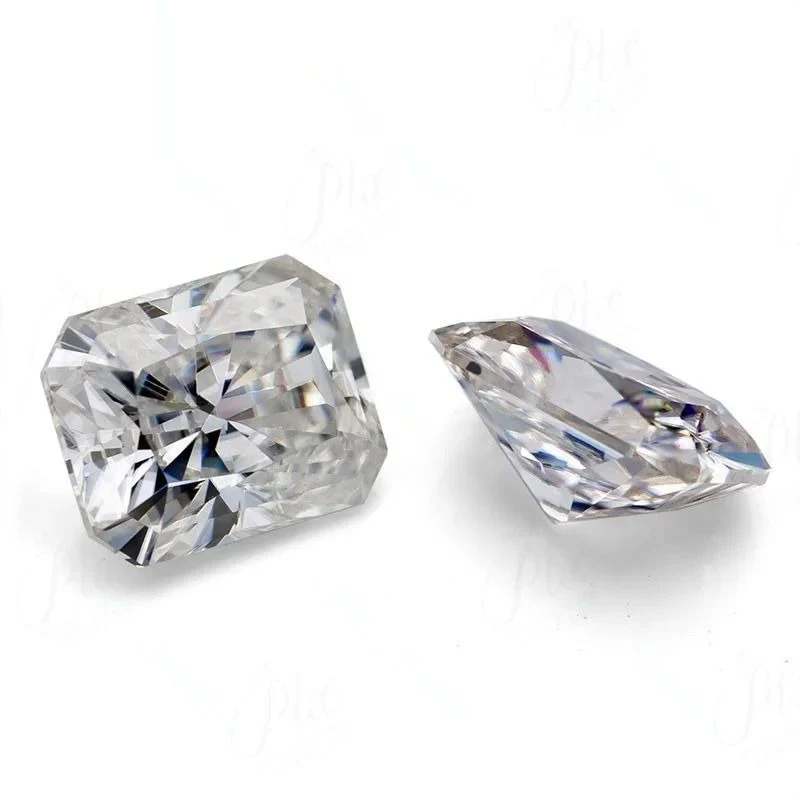
She shows you the ring under a store spotlight and it throws little rainbows across the ceiling. "That's the moissanite fire," the jeweler says, and she is not sure whether that is a selling point or a warning. Moissanite fire is the rainbow flashes that split out of the stone as it moves in the light. Some people love the extra sparkle; others find it too much next to a diamond's subtler flashes. The Wikipedia moissanite reference explains the optical constants behind the effect.
What "fire" actually means
Fire is the gemology term for dispersion: the way white light splits into its component colors as it passes through a faceted stone. When a beam of white light enters a gem, the different wavelengths bend by slightly different amounts, and the result is little flashes of red, orange, green and blue that dance as the stone turns. Diamond has dispersion around 0.044. Moissanite has dispersion around 0.104, more than double. Cubic zirconia sits around 0.058, between the two. That number, not marketing, is why moissanite throws more rainbow color than diamond. See the optics compared in moissanite versus CZ.
Why moissanite throws more rainbow
The higher the dispersion, the more the stone splits white light into color. Moissanite also has a higher refractive index (around 2.65 to 2.69 versus diamond's 2.42), which means more light enters and more light bounces around inside the stone, giving dispersion more chances to show. Under a bright overhead light, a well-cut moissanite looks almost like it is throwing colored sparkles, which is the look people either love or find distracting. In softer daylight, the flashes are subtler, and the stone reads as a bright, white diamond-bright center.
Double refraction: the other optical quirk
Moissanite is doubly refractive, which means light entering the stone splits into two rays. Under a 10x loupe, the back facets look slightly doubled through the table. To the unaided eye at normal viewing distance, this is invisible; to a trained jeweler, it is one of the giveaways that separates moissanite from diamond. It does not affect how the ring looks on the hand, but it is part of the optical package that makes moissanite behave differently from diamond in photographs. If you have seen moissanite rings that look "too rainbow" in product photos, double refraction and dispersion together are why. Our moissanite brand look comparison shows how different cuts tame the effect.
How the cut changes the fire
Cut matters as much as the stone itself. A round brilliant moissanite, with many small facets, throws fire evenly. An emerald or cushion cut moissanite, with larger open facets, shows larger blocks of color and less tiny sparkle. Oval and pear shapes flash differently again. If you love the rainbow look, go for a round brilliant; if you want moissanite's brightness with a subtler, more diamond-like fire, choose an emerald or radiant cut. The shape decision is as much about fire preference as about finger shape. For how cut changes wear and light return, read moissanite durability and daily wear.
Is too much fire a problem?
It is a preference, not a defect. Buyers who come from diamond expect a quieter, whiter sparkle, and moissanite's doubled fire can initially look "too much." Most owners get used to it within weeks, and many come to prefer the livelier look. If you are on the fence, look at the ring in three light conditions: store spotlight, soft indoor light, and natural daylight. The fire that looks like too much in a bright store may look just right in daily life. If you want a quieter diamond-bright alternative at a similar price tier, compare lab-grown diamonds, which match diamond's subtler dispersion.
It helps to remember that fire is not a quality ranking. A diamond with strong fire and a moissanite with quieter fire are both well-cut stones; they just split light differently. The right choice is the one you want to look at every morning for the next decades, not the one that matches a chart. When in doubt, wear the ring home for a day or two on approval and see how the fire feels in your own office, your own kitchen, and your own evening light before you decide.
Frequently asked questions
Is moissanite fire a sign the stone is fake?
No. Moissanite is a real, distinct gemstone; its higher dispersion is a material property, not a flaw. Diamond and moissanite look different because they are different materials.
Can I reduce the rainbow flashes?
Partially, by choosing an emerald, radiant or cushion cut rather than a round brilliant. The material still disperses more than diamond, but larger facets show bigger, calmer blocks of color.
Does moissanite fire fade over time?
No. The dispersion is a property of the crystal and does not change. A duller look over the years is soap and lotion film on the surface, which washing removes.
Will a jeweler be able to tell it's moissanite?
Yes, with a thermal tester or by spotting the double refraction under magnification. The fire itself is not the giveaway; the optical constants are.
If you are weighing the look: read moissanite versus CZ and lab-grown diamonds to see which optical style fits you.


