A 500-stone lab-grown parcel was offered as "1.5 ct equivalent, F colour, VS". The report listed a sieve range of 2.60 to 2.90 mm, which is a band, not a size. The colour line read F to H. The clarity line read VS to SI1. The buyer who read the headline bought a mixed lot at a single-grade price.
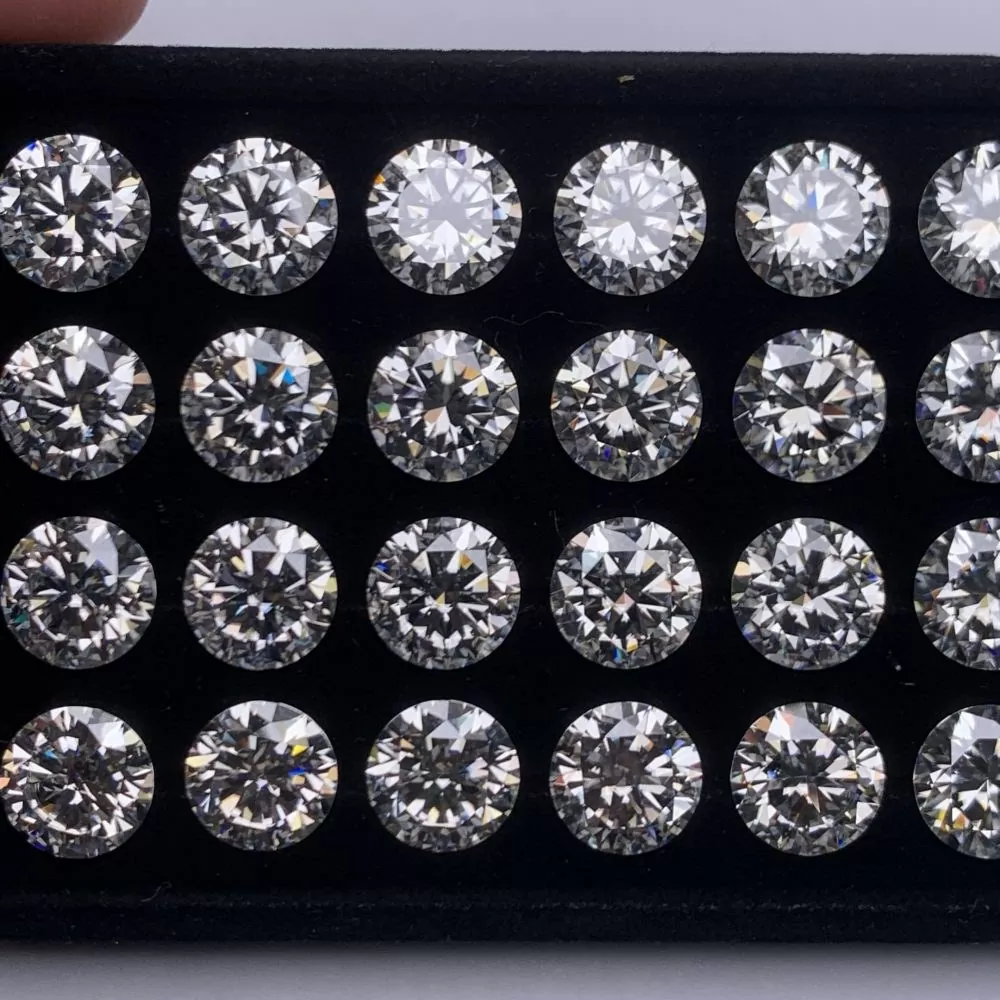
Parcel reports compress a lot into a few lines, and those lines are the whole negotiation. Learning to read them takes less time than learning to read a certificate, and it protects a much larger amount of money.
The five lines that define a parcel
Every usable parcel report answers five questions. If any line is missing, the report is a summary rather than a specification.
| Line | What it states | Why it matters |
|---|---|---|
| Sieve range | Diameter band in mm | Setting fit and perceived size |
| Colour distribution | Grades and percentages | Price and visual consistency |
| Clarity distribution | Grades and percentages | Eye-clean yield |
| Cut and symmetry | Grade or proportion range | Light performance and rejection rate |
| Growth method | CVD or HPHT, with type | Detection, strain and price band |
A report with these five lines can be compared with another report. A report with one blended grade line cannot.
Sieve range: why diameter beats carat
Melee stones are set by diameter, not by weight. A 2.60 mm stone and a 2.90 mm stone differ by 30 percent in face-up area but both might be described as "0.06 ct to 0.09 ct". The difference is visible in a halo and it changes the setting labour.
When a parcel states a sieve range, ask for the count per sub-range. A lot split evenly across 2.60-2.70 and 2.80-2.90 is two inventories, not one, and the price should reflect the usable portion for your design.
The calibrated lot question
Calibrated melee is sorted to a tight diameter band, usually plus or minus 0.05 mm. It costs more per carat and saves setting time and rejection. For a production halo where 40 stones must sit level, calibration is usually worth the premium.
Colour distribution: read the percentages
A lot described as "F to H" can be 80 percent F and 20 percent H, or 20 percent F and 80 percent H. The headline is identical and the value is not.
Ask for the split. If the supplier cannot provide it, price the lot at the lower end of the range, because that is the grade you will be setting most of.
Why lab-grown colour bands behave differently
Lab-grown production can drift in colour across a growth run, so parcels assembled from several runs carry a wider band than natural parcels of the same nominal grade. A tight band in lab-grown is a sorting cost, and sorting cost appears in the price.
Clarity distribution: the eye-clean yield
Clarity in a parcel is really a yield statement. VS to SI1 means some stones will have inclusions visible at 10x and a few may show at arm's length in certain cuts.
Estimate the yield before you bid. If 20 percent of the lot is SI1 and your design has an open bezel that exposes the pavilion, that 20 percent is your reject rate, not your inventory.
- Closed settings tolerate SI1 better than open settings
- Step cuts show inclusions more than brilliant cuts
- Small stones under 3 mm hide clarity issues that larger stones reveal
Growth method and what it changes
CVD and HPHT stones are both lab-grown diamonds with the same chemistry, but they behave differently in production and in detection.
CVD
CVD growth is typically Type IIa and can show strain patterns under cross-polarised light. Strain matters for fancy shapes and for stones that will be set in tension settings, because strain can interact with heat during repair.
HPHT
HPHT can produce a broader colour range and is often used for melee. Some HPHT stones carry boron-related blue fluorescence that a UV lamp will show, which matters if your retail partner tests stones under UV in front of customers.
Neither method is better in the abstract. The question is whether your design, your retail channel and your service process can absorb the characteristic each method brings.
The three figures that decide the bid
Price per carat is a headline. Three other figures decide whether the headline is a good deal.
- Usable carat weight. Total carat minus the stones outside your sieve or clarity requirement. This is the number you actually buy.
- Setting-adjusted cost. Add the labour premium for off-size stones and the rejection cost for clarity failures.
- Certificate coverage. Which stones carry a report, and what a report costs per stone at your volume.
A lot at 340 USD per carat with 80 percent usable is effectively 425 USD per usable carat. Compare that with a tight lot at 410 USD per carat and 96 percent usable, and the tight lot is cheaper.
Setting risk: how a parcel choice becomes a production cost
Parcel quality is usually discussed in carat terms and paid for in labour. A lot that looks cheap per carat can cost more once the setting bench has handled it.
Off-size stones and seat rework
A halo seat is cut for a specific diameter. When a parcel carries a 0.15 mm spread, the setter either re-cuts the seat or leaves the stone sitting proud. Re-cutting adds minutes per stone, which at 40 stones per ring is a measurable labour line. Leaving it proud creates a defect that shows up in QC, not in the invoice.
Clarity failures at the bench
Setters reject stones that show a black inclusion under the bench light, even when the grade is technically within the lot's stated range. Every rejection costs a replacement stone and a re-queue. A lot with 15 percent SI1 in an open setting is not 15 percent cheaper; it is 15 percent slower.
The calibrated premium as a labour hedge
Calibrated melee usually costs 8 to 15 percent more per carat than a sieve-range lot. If that premium removes two minutes of setting time per ring at a labour rate of roughly 2 USD per hour, it pays back on rings with more than about 20 melee stones.
- Under 10 melee stones: sieve-range lots are usually the better buy
- 10 to 30 stones: compare the labour saving against the premium
- Above 30 stones: calibrated is almost always the cheaper total
Run the comparison on one real design rather than on a category. The stone count, the setting style and the labour rate decide the answer, and those three numbers rarely match across two buyers looking at the same parcel.
Inspection terms to agree before bidding
A parcel bid should carry a return right for stones outside the stated range. Ask for the following in writing.
| Term | What to require |
|---|---|
| Range tolerance | Return right on stones outside stated sieve, colour or clarity band |
| Inspection window | Seven to fourteen days from receipt, with a defined evidence method |
| Restocking | Percentage applied to returned stones, stated up front |
| Mixed-lot remedy | Price adjustment rather than full return for a small out-of-band share |
Most suppliers accept a return on out-of-band stones and resist a return on the whole lot. That is a reasonable position if the band was stated clearly, which is why the report matters before the bid, not after.
Our supply terms in context
We quote lab-grown melee and calibrated lots with the sieve range, colour split and clarity split stated per lot, and we mark which stones carry reports. Minimum order is 50 pieces per design for jewelry and one parcel for loose stones, with lead times of three to five days for stock and fifteen to twenty days for bulk under 500 pieces.
Payment follows the standard structure: 30 percent deposit and the balance before shipment, by T/T, PayPal or Western Union. For loose parcels, the inspection window is stated on the invoice so the return right has a date attached to it.
Frequently Asked Questions
Is a parcel report the same as a certificate?
No. A certificate grades one stone. A parcel report describes a lot, and it is a commercial document rather than a gemological one.
Can I request a sample of ten stones before buying the parcel?
Yes, and you should for any lot above a few thousand dollars. Ask for a sample drawn across the stated range, not from the best end of it.
How do I check that the growth method is what the report says?
Send two or three stones to an independent lab for a growth-method check. The cost is small and the answer is definitive, which a supplier statement is not.
Do lab-grown parcels hold value like natural parcels?
No. Lab-grown prices have fallen as production capacity grew, so inventory should be bought against near-term demand rather than held as a store of value.
Next step
Ask for a parcel sheet with the five lines above and a sample drawn across the range. Our stone desk can quote against your sieve and clarity requirement, and the guide index covers how those choices interact with setting design.


