A halo programme quoted at 0.055 ct per stone arrived with stones spanning 2.55 to 2.75 mm. The seat was cut for 2.60 mm. Forty stones per ring, and the setter spent an extra six minutes per ring re-seating stones that did not fit. At 200 rings, that was twenty hours of unbudgeted labour.
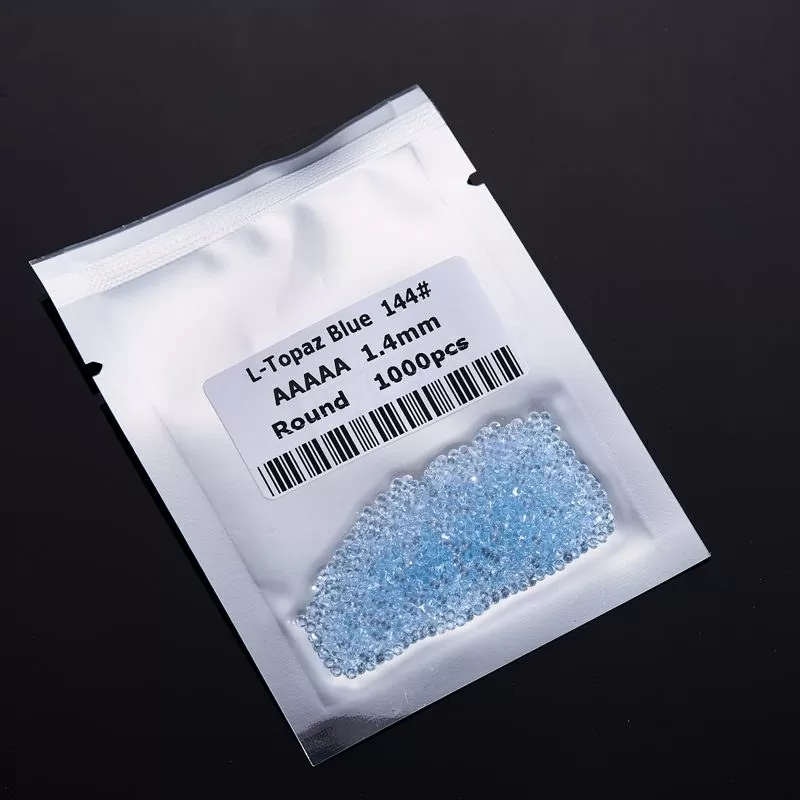
Melee is the least examined part of most jewelry cost sheets and the part that quietly determines setting throughput. It is bought by diameter, priced by carat, and lost in sorting, and those three facts rarely appear together on a quotation.
Sieve size versus carat weight
Sieve size is a diameter band expressed in millimetres or in sieve fractions. Carat weight is a mass. For a round stone, the two are related but not interchangeable, because depth varies.
| Nominal size | Typical diameter | Approx carat each | Common use |
|---|---|---|---|
| 1.00 mm | 0.95-1.05 mm | 0.005 ct | Micro pavé |
| 1.30 mm | 1.25-1.35 mm | 0.01 ct | Pavé bands |
| 1.70 mm | 1.65-1.75 mm | 0.02 ct | Halo inner row |
| 2.00 mm | 1.95-2.05 mm | 0.03 ct | Halo main row |
| 2.50 mm | 2.45-2.55 mm | 0.06 ct | Cluster centres |
The carat figures are approximations because depth varies between cuts. That is exactly why setting specifications should be written in millimetres.
Why suppliers quote carat and set by diameter
Carat is the trading unit and diameter is the working unit. A parcel quoted at a carat price with a sieve range gives the buyer both numbers, and the buyer has to check that the two agree.
If a supplier quotes only carat weight per stone, ask for the diameter band. A 0.06 ct stone can measure 2.40 mm or 2.60 mm depending on depth, and the difference is visible in a cluster.
Write the diameter band into the purchase order even when you buy on carat price. The two numbers travel together, and a purchase order that carries only one of them leaves the other open to interpretation.
Calibration tolerance and what it buys
Calibrated melee is sorted to a tight band, usually plus or minus 0.05 mm. Sieve-range melee is sorted to a wider band, often plus or minus 0.10 mm or more.
On a channel setting, the tolerance determines whether stones sit level. On a pavé band, it determines how much metal the setter removes to seat each stone.
The labour math
Assume a setter handles 40 stones per hour on calibrated melee and 32 on a wide-range parcel, because of re-seating. At a bench cost of roughly 3 USD per hour, the difference is about 0.19 USD per 40-stone ring in direct labour, plus a rejection risk.
Calibrated melee typically costs 8 to 15 percent more per carat. On a 0.40 ct total weight at 300 USD per carat, that premium is 9.60 to 18.00 USD per ring, which is larger than the labour saving on a single ring. The comparison only works at volume or on pieces with high stone counts.
- Under 10 stones per piece: sieve range is usually cheaper overall
- 10 to 30 stones: run the comparison on your actual labour rate
- Above 30 stones: calibration usually wins, especially with tight seats
Sorting loss: the number nobody quotes
A parcel contains stones outside your requirement. You pay for the whole parcel and use part of it. The usable share is your yield, and the effective price per usable carat is the price you should compare.
Calculating effective cost
Take a 5 ct parcel at 280 USD per carat, total 1,400 USD. If 12 percent falls outside your sieve band and cannot be used, the usable weight is 4.4 ct and the effective cost is 318 USD per carat.
Now compare a calibrated lot at 310 USD per carat with a 2 percent reject rate. Effective cost is 316 USD, and the labour is lower. The "more expensive" lot is the cheaper buy.
Where the loss hides
Sorting loss hides in three places: stones below the sieve band, stones above it, and stones that fail clarity at the bench. The third category is the one suppliers rarely estimate, because it depends on your setting style rather than the parcel.
Clarity tolerance at the bench
A setter rejects a stone that shows a black inclusion under bench light, even when the grade is within specification. On a 1.30 mm stone, a single dark point can be visible at 10x and invisible at arm's length, and setters err toward rejection because a rejected stone is cheaper than a returned ring.
Agree the rejection rule with your setter and with your supplier. A defined rule, such as rejecting only inclusions visible at 5x on a white background, keeps the reject rate predictable.
Storage, handling and loss control
Melee is small, valuable and easy to lose. Three handling practices keep a parcel intact from receipt to setting bench.
Receipt and reconciliation
Weigh the parcel, count a 10 percent sample, and photograph the sealed packet before opening. If the weight is short by more than 1 percent, stop and raise it with the supplier before the stones enter the production flow.
Segregation by job
Never keep two jobs' melee in the same tray. A single dropped tray mixes 200 stones from two orders and turns a two-hour setting task into a sorting task. Use a labelled tray per job and return unused stones to the packet at the end of each shift.
Loss accounting
Record the issued count, the set count, the rejected count and the returned count. A gap of more than 2 percent on a 40-stone ring is a process problem, not a rounding error. Most workshops discover a 6 percent loss only when a parcel runs out early.
- Weigh and photograph on receipt
- Issue per job in a labelled tray
- Count stones set, rejected and returned at the end of the shift
- Reconcile against the issued count and log the gap
Ordering melee properly
A melee purchase order should carry six specifications. Anything less and the parcel is a description.
- Sieve band in millimetres, with a stated tolerance
- Colour range and the percentage at each end
- Clarity range with the rejection rule
- Cut style: single cut, full cut, or brilliant
- Calibration status and tolerance
- Total carat, stone count, and acceptable count variance
Count variance matters. A parcel sold as 500 stones may arrive with 480, and a 4 percent shortfall is a real cost when your setter is waiting.
Add a packaging line too. Melee shipped loose in a bag can arrive with stones abraded against each other, and a parcel that has travelled without individual wrapping carries a higher bench rejection rate. Ask for paper-wrapped or vial-packed stones on anything above 1.7 mm.
Finally, request the sieve certificate or the supplier's internal sorting record. A one-page record that states the band and the count gives you a document to hold against the delivery, and it turns a verbal specification into something you can claim against.
Keep the record with the invoice. When a later parcel arrives off-band, the earlier record is the evidence that the specification was agreed rather than remembered.
What our melee terms look like
We quote melee by sieve band with the colour and clarity split in percentages, and we state the calibrated tolerance where applicable. Minimum order is one parcel for loose melee, and 50 pieces per design for finished jewelry.
Stock parcels ship in three to five days; bulk jewelry runs in fifteen to twenty days under 500 pieces. Payment is a 30 percent deposit with the balance before shipment, by T/T, PayPal or Western Union. For parcels above 500 stones we include a count and weight reconciliation in the packing documents.
Frequently Asked Questions
Should I buy melee by carat or by stone count?
By both. Carat sets the price, count sets the production run. A parcel priced per carat with a low count has a higher cost per stone than the headline suggests.
What cut style is standard for melee?
Full cut is standard above 1.3 mm, and single cut is common below that. Single cut stones return less light but cost less, and at 1 mm the visual difference is small.
Can I mix colour grades within one piece?
You can, and many designers do deliberately. Mixing without intent produces a patchy look that customers notice, so specify where the lower grade goes.
How do I check a parcel on arrival?
Weigh the total, count a 10 percent sample, and measure 20 stones with a gauge. Three checks catch most shortfalls and band errors.
Keep the calibrated set with the parcel rather than with the buyer. A set that travels with the goods lets the next buyer verify the same lot against the same reference, which is what turns a one-off calibration into a standard the whole supply chain can use. The cost of the set is recovered on the first disputed parcel.
Next step
Send your sieve band, stone count and setting style, and we will quote a calibrated and a sieve-range option side by side with the effective cost per usable carat. Start with our stone desk.


