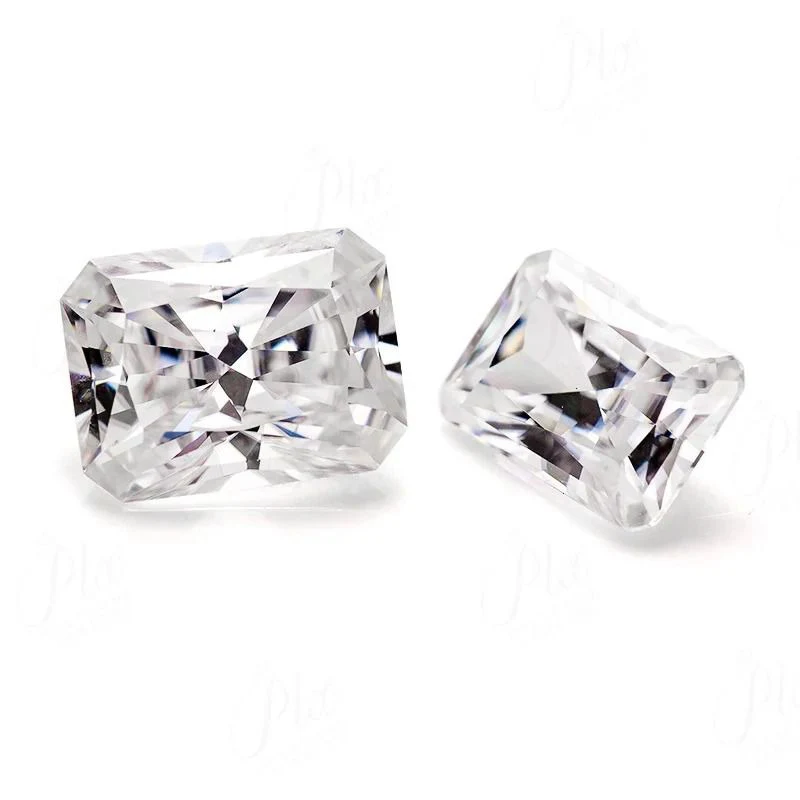
Two diamonds, same carat, same color, same clarity, and one is noticeably brighter. The price gap between them comes down to cut grade, and specifically the difference between an Ideal (or Excellent) and a Very Good cut. For buyers shopping in the 0.7 to 1.5 carat bridal range, this is the grade that delivers the most visible change per dollar. Understanding it lets retailers recommend the right stone instead of just the cheapest.
What cut grade actually measures
Cut grade is not shape; it is the precision of crown angle, pavilion angle, table percentage, and total depth that controls whether light returns to the eye. GIA grades round brilliants Excellent, Very Good, Good, Fair, Poor. AGS uses a 0-to-10 numbering with Ideal at 0. The arithmetic is optical: light entering the table should bounce off the pavilion facets and exit back through the top. Shallow pavilions leak light out the bottom; deep pavilions leak it out the side. The full framework is on the GIA diamond cut guide.
Ideal / Excellent: what you pay for
An Ideal or Excellent cut returns roughly 80 percent or more of incoming light to the viewer. The stone looks brighter, has sharper contrast between bright and dark facets (scintillation), and shows a balanced arrow or hearts pattern in reflector photography. The cost of an Ideal cut is that the cutter wastes more rough to hit the angles, so the finished stone is smaller per carat of rough and prices higher per carat. For a solitaire that will be viewed loose, this is where the sparkle lives. Pair with what drives sparkle.
Very Good: the value tier most buyers should consider
A Very Good cut returns most of the light but loses a small percentage off the top. In a solitaire setting, most customers cannot tell the difference between Very Good and Excellent in normal indoor light, but the price difference is often 10 to 18 percent per carat. The trade-off shows up most in larger stones: at 1.5ct and above, a Very Good cut can look slightly less lively than an Excellent. At 1ct and below, the gap is tiny. This is the tier that gives buyers either a larger carat, a higher color, or a better clarity for the same budget. See building a realistic budget and carat vs finger size.
What to skip: Good, Fair, Poor
Below Very Good, the light leakage becomes visible. A fish-eye (shallow pavilion) or nail-head (deep pavilion) stone looks dead in a store window regardless of how clean the clarity is. Wholesale buyers who stock lower-grade stones usually do so for side stones or budget pieces, never for a center solitaire. For context on how cut interacts with the other Cs, see the 4Cs explained and cut differences by shape.
Is Very Good cut good enough for an engagement ring?
Yes, especially under 1.2ct. The difference between Very Good and Excellent is visible to a trained eye under a loupe, not to a wedding guest across a table. Most bridal buyers are happier with a larger, cleaner Very Good stone than a smaller, lower-clarity Excellent stone.
Does Ideal cut mean hearts and arrows?
Hearts-and-arrows is a specific super-ideal symmetry phenomenon, not a required label for an Excellent cut. Many Excellent cuts do not show a perfect H&A pattern, and many H&A stones are graded Excellent. Treat H&A as a marketing bonus, not a grade.
Why is my Ideal diamond not sparkling in the office?
Because office lighting is diffuse. Cut grade rewards bright directional light. Under spotlights, sunlight, or candlelight the Ideal cut separates from a Very Good. If the stone looks dull in every light, suspect a dirty setting or a hidden light leak.
Do fancy shapes have cut grades?
GIA grades round brilliants rigorously. For ovals, pears, cushions, and emerald cuts, GIA often leaves the cut field as a proportion diagram rather than an Excellent-to-Poor label. Buy those shapes from proportion diagrams and face-up video, not from a single grade.
The price-per-percent-of-light argument
A useful wholesale framing is to price by the amount of light returned rather than by the grade label. A Very Good cut returns about 75 percent of incoming light; an Excellent returns 82 percent or more. That 7 percent gap in light return comes with a 10 to 18 percent price premium. At 1ct, the customer cannot see the 7 percent in normal light. At 2ct and above, the larger facet table makes the brightness difference more obvious. This is the threshold where we recommend stepping up to Excellent. Below it, Very Good is the rational buy for almost every bridal customer.
Choosing the right cut tier per stone size is how a buyer ends up with a ring they still love in five years. If you are a retailer sourcing calibrated rounds in Excellent and Very Good with proportion sheets and reflector photos, our wholesale team can pull loose stone lists filtered by cut grade, table percentage, and depth. Request a loose stone list.
Frequently Asked Questions
Is moissanite a good diamond alternative for retail buyers?
Yes for price-sensitive customers who want brilliance and hardness. Moissanite ranks 9.25 on the Mohs scale, holds up to daily wear and costs a fraction of a natural diamond of the same size, so it resells fast in bridal and fashion lines.
What is the minimum order for wholesale moissanite?
MOQ starts at 50 pieces per design for stock items. Custom cuts and private-label settings usually start at 100–300 pieces depending on the mold.
Do you provide certificates with moissanite stones?
Yes. Every parcel ships with GRA or IGI documentation listing carat weight, color grade and cut. We recommend passing the certificate to your end customer for trust.
How long does sample and bulk production take?
Samples ship in 3–5 days. Bulk runs take 15–20 days under 500 pieces, and 25–30 days for custom work.


