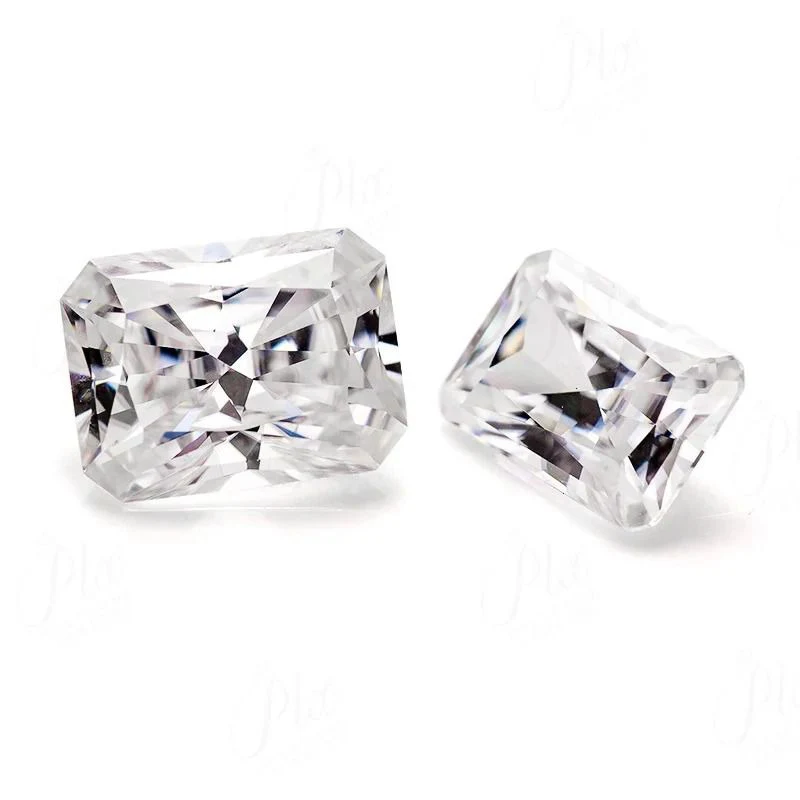
Most buyers shopping for a first solitaire memorize the cut grade (per GIA's diamond grading standards) and stop there. They ask for "Excellent cut," compare carat and color, and never glance at the two rows lower on the grading report labeled Symmetry and Polish. That is a shame, because those two rows quietly explain why two diamonds with identical cut grades can still sparkle differently.
This guide walks through what each grade measures, when it changes the stone you see, and when the difference is only something a grader with a 10x loupe will ever notice.
What is symmetry?
Symmetry describes how accurately the facets on a diamond line up. A well-symmetryed stone has a centered table, equal-length star facets, matching pavilion angles on opposite sides, and a culet that sits exactly where it should. A poorly symmetryed stone can look "winky," meaning its reflection shifts side to side as you tilt it, or it can leak light through misaligned angles.
Common symmetry issues a grader notes include:
- An off-center table or culet
- Misaligned crown or pavilion facets
- Windy or uneven girdle outline
- Extra facets that break the intended pattern
- "Fish eye" or "nail head" effects from very shallow or deep proportions
None of these usually change a stone's carat weight, but they do change how cleanly light returns to your eye. Read more about how these pieces fit together in our cut grade explainer.
What is polish?
Polish is about the surface finish of the facets themselves. After a diamond is shaped, it is polished on a spinning lap with diamond powder. A rushed or careless polish leaves fine parallel lines (called polishing lines), tiny abrasions, burn marks, or even faint scratches across facet surfaces. Under magnification these scatter light and soften that crisp "window" look a well-polished stone has.
Polish damage from manufacturing is different from scratches picked up during wear. The lab grade reflects the factory finish, not the condition of a ring that has been on someone's finger for ten years.
The grading scale
The major labs rate both symmetry and polish on the same five-point scale: Excellent, Very Good, Good, Fair, and Poor. In practice, almost every modern commercial stone sold online lands somewhere between Excellent and Good. You rarely see Fair or Poor outside of deep-discount listings or antique cuts.
A stone graded "Excellent cut / Excellent symmetry / Excellent polish" is commonly called a triple-Excellent or triple-Ex stone. It carries a real but modest price premium. For context on how cut itself is judged, our piece on ideal cut proportions covers the numbers behind the grade.
When the grade is visible to you
Be honest about your own viewing habits. You will look at your ring from arm's length, in daylight and under indoor lighting, not under a gemological microscope. At that distance:
- The jump from Good to Very Good symmetry is usually invisible.
- The jump from Very Good to Excellent is occasionally visible on larger stones (1.5 carats and up), mostly as slightly more "crisp" reflections.
- A Fair or Poor grade can show up as winking, a fuzzy outline, or uneven brightness between the two sides of the stone.
Polish differences between Excellent and Very Good are genuinely hard to see without loupe magnification. The bigger risk to avoid is not a one-step drop in polish, but a stone with documented major symmetry faults paired with a weak cut grade.
How to shop smart
You do not need to pay triple-Ex premiums on every ring. A practical strategy:
- Prioritize cut grade first. An Excellent cut with Very Good symmetry out-sparkles a Good cut with Excellent symmetry every time.
- Step symmetry down one grade on smaller stones. Below about 1 carat, the naked-eye difference between Excellent and Very Good symmetry is essentially nil.
- Ask for real video, not just the report. A 360-degree video in bright light reveals winking and dark patches that paperwork hides.
- Do not pay up for triple-Ex on a stone with noticeable inclusions. Spend the savings on a cleaner or larger stone instead.
The symmetry and polish rows on your certificate are not the place to over-optimize. They are the place to avoid a bad deal. As long as both grades sit at Very Good or above, and the cut grade is Excellent or Ideal, you are buying a well-made stone. The rest is marketing premium, not sparkle.
Symmetry matters more on fancy shapes
Round brilliants hide minor symmetry issues because of their circular symmetry. Oval, pear, and marquise cuts show asymmetry far more readily: a slightly off-center table on an oval looks lopsided, while the same fault on a round is barely noticeable. If you are buying an elongated shape, push symmetry up to Excellent rather than saving on it.
Reading the rows on your report
On a typical grading report, symmetry and polish appear as single word grades next to the diamond's proportions. There is no detailed scorecard, just the grade. If the report also notes "laser drilling" or "fracture filling," treat that as a separate disclosure worth investigating — our guide to natural inclusions explains what an untreated stone actually contains, and why those natural marks are worth keeping.
One final caution: never trust a seller who argues that symmetry "doesn't matter." It matters less than cut grade, but a clearly winking stone is a clearly winking stone. Ask for video, compare two stones side by side, and trust your eyes on the one you can actually see.
Frequently Asked Questions
Is moissanite a good diamond alternative for retail buyers?
Yes for price-sensitive customers who want brilliance and hardness. Moissanite ranks 9.25 on the Mohs scale, holds up to daily wear and costs a fraction of a natural diamond of the same size, so it resells fast in bridal and fashion lines.
What is the minimum order for wholesale moissanite?
MOQ starts at 50 pieces per design for stock items. Custom cuts and private-label settings usually start at 100–300 pieces depending on the mold.
Do you provide certificates with moissanite stones?
Yes. Every parcel ships with GRA or IGI documentation listing carat weight, color grade and cut. We recommend passing the certificate to your end customer for trust.
How long does sample and bulk production take?
Samples ship in 3–5 days. Bulk runs take 15–20 days under 500 pieces, and 25–30 days for custom work.


