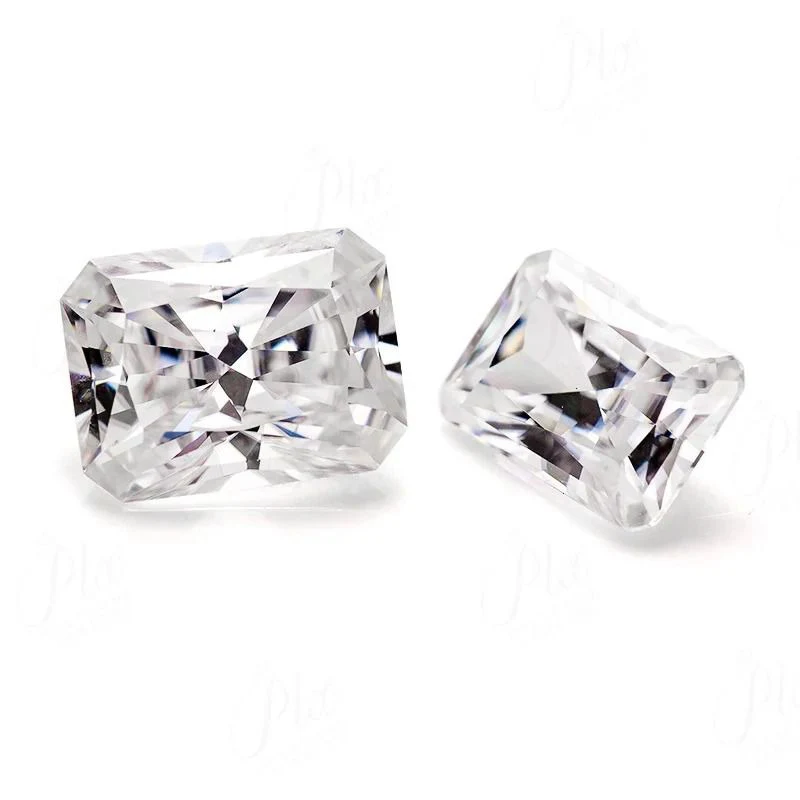
Faint blue fluorescence will make my H diamond look like a K, right? Not exactly. Fluorescence is the 4C that online forums get the most wrong, and it is also the one that, handled honestly, can be a buying advantage rather than a defect. Buyers either treat it as a dealbreaker or ignore it completely. The useful middle ground is what retailers should be explaining.
What fluorescence actually is
Roughly 25 to 35 percent of diamonds show some reaction to long-wave UV light, usually a soft blue glow. GIA grades it as None, Faint, Medium, Strong, or Very Strong. The effect is visible under UV (blacklight, strong sunlight on a cloudy day) and usually invisible under normal indoor light. It is caused by trace boron or nitrogen in the crystal, and it is not a flaw. The full grading scale and the science are on the GIA diamond fluorescence page.
The two real effects buyers should know
The popular wisdom splits into two cases. First, a faint or medium blue fluorescence can make a warmer-colored diamond (I, J, K) look slightly whiter in daylight because the blue cancels a touch of yellow. This is why some J stones with medium fluorescence sell well. Second, in very rare cases, a very strong fluorescence on a high-color diamond (D, E, F) can give the stone a hazy or oily look under bright sun. This is uncommon, but it is the effect that gives fluorescence its bad name. The hazy stones are the ones to avoid, not every fluorescent stone.
How fluorescence affects price
The market prices fluorescence in predictable bands. Faint fluorescence is usually invisible to the price. Medium fluorescence on G-J stones is roughly price-neutral and can even be a small plus. Strong or very strong fluorescence on D-F stones carries a 5 to 15 percent discount because of the small haze risk. For wholesale buyers, that discount on a J stone with medium blue is often the margin. Pair with what D-to-J grades look like and the full color scale.
What to tell a nervous buyer
Do not oversell fluorescence as a feature. Acknowledge the rare haze case, then ask what color grade the buyer is looking at. For D-F stones, skip Strong and Very Strong. For I-J-K stones, faint or medium blue is neutral-to-helpful. Always look at the stone in person or on video under both indoor and bright outdoor light before committing. For how cut and color interact, see cut tier trade-offs and what drives sparkle.
Does fluorescence make a diamond fake?
No. Natural diamonds fluoresce; lab-grown diamonds also fluoresce, sometimes in different colors. Fluorescence is not a diamond-vs-lab-grown test. The IGI and GIA reports separate origin from fluorescence on purpose.
Should I buy a diamond with strong fluorescence?
For G-J stones, strong blue fluorescence is often fine and cheaper. For D-F stones, it carries a small haze risk that is visible under bright sun. Most buyers are safer skipping Very Strong regardless of color.
Will fluorescence wear off over time?
No. Fluorescence is a crystal property. It does not fade, change, or degrade. If the stone looks hazy in ten years, that is dirt or damage, not fluorescence.
Can I see fluorescence under a jeweler's UV lamp?
Yes, and that is exactly the right way to check. Ask the bench to run the stone under long-wave UV. A soft even blue is normal. A blotchy, cloudy blue is the one to walk away from.
The UV-check workflow at the bench
When a stone has medium or stronger fluorescence on the report, the bench check takes two minutes. Hold the stone under a long-wave UV lamp in a dark room. A soft, even blue glow across the table is normal. A blotchy milky haze, or a stone that looks cloudy even when the UV is off, is the one to send back. Most fluorescent stones pass this check. The small percentage that do not are the ones that drove the old reputation, and they are the ones the discount already prices in. Documenting the UV check on the stone sheet protects the retailer from a customer who bought on price alone.
One point online forums miss: fluorescence and milky diamonds are not the same thing. A diamond can be milky or cloudy for other reasons, including a heavy concentration of tiny clouds or graining that the fluorescence note does not capture. If a stone looks hazy in indoor light on its own, the cause is almost always clarity-related inclusions, not fluorescence. The two show up on the report in different fields, and a trained grader separates them.
Explaining fluorescence honestly removes a common objection and opens up discounted stone pools that buyers would otherwise skip. If you are a retailer sourcing calibrated rounds with fluorescence noted on the report and want side-by-side daylight and UV photos for each stone, our wholesale team can filter inventory by color grade and fluorescence level before shipment. Request a filtered stone list.
Frequently Asked Questions
Is moissanite a good diamond alternative for retail buyers?
Yes for price-sensitive customers who want brilliance and hardness. Moissanite ranks 9.25 on the Mohs scale, holds up to daily wear and costs a fraction of a natural diamond of the same size, so it resells fast in bridal and fashion lines.
What is the minimum order for wholesale moissanite?
MOQ starts at 50 pieces per design for stock items. Custom cuts and private-label settings usually start at 100–300 pieces depending on the mold.
Do you provide certificates with moissanite stones?
Yes. Every parcel ships with GRA or IGI documentation listing carat weight, color grade and cut. We recommend passing the certificate to your end customer for trust.
How long does sample and bulk production take?
Samples ship in 3–5 days. Bulk runs take 15–20 days under 500 pieces, and 25–30 days for custom work.


