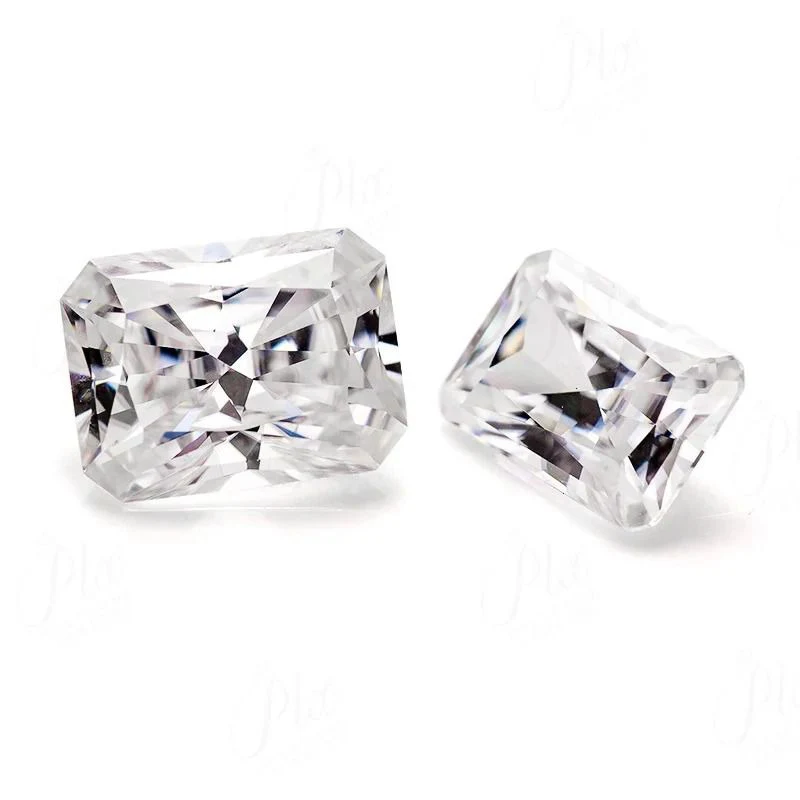
A buyer holding two loose 1.00ct round brilliants against a white cuff, one graded F and one graded J, will usually pay a large gap for the first while barely being able to name the second. That gap is the single easiest place for a retail buyer to overspend and the easiest place for a wholesale buyer to mis-stock. The GIA color scale runs from D (colorless) to Z (light yellow or brown), but the visible change is not linear across the whole range. Here is what each band does to price and to face-up appearance.
How the scale is actually graded
GIA grades diamond color by comparing the stone face-down against a set of master stones under controlled neutral lighting. The grade is not a measure of yellow tint on a sliding dial; it is a match to a master set, which is why two labs can return half-grade differences on borderline stones. D, E, and F are the colorless band. G, H, I, and J are near-colorless. K through M show a faint tint, N through R a noticeable one, and S to Z a clearly visible body color that reads yellow or brown to anyone. The scale is documented on the GIA diamond color page. For a second read on the same system, see the IGI grading reference.
What each band costs on a 1ct round
On a comparable Excellent-cut 1.00ct round, the premium compounds as you climb. A D typically sits about 18 to 25 percent above an H of the same clarity. An E or F adds 8 to 15 percent over H. G and H are usually within 3 to 6 percent of each other. I and J discount H by roughly 8 to 15 percent, and K onward drops 20 to 35 percent. The reason the curve bends at G-H is that this is where mounted color stops showing to the naked eye. Once a stone sits in a yellow or rose gold solitaire, the warm metal masks any faint tint below the girdle, so a J in yellow gold reads the same as an H to most buyers. On a hand under normal store lighting, the difference between a G and a J in warm metal is essentially invisible.
Where the eye actually stops caring
The threshold most shoppers cannot cross is J, not D. Face-up in a white gold or platinum setting, a G or H shows no yellow to an untrained eye at normal viewing distance. Move to I or J and the tint only appears when the stone is tilted and compared side-on against a white sheet. This is why the value sweet spot for bridal stock is G to I: you capture the looks-colorless promise without paying the D-E-F tax. If your client wears warm metal, J is a defensible sell and a much better price-per-carat. Pair this with what buyers actually see from D to J and how color and clarity grades stack against each other.
The D-to-Z trap buyers fall into
The mistake is leading with a D or E in a low-sol melee or a halo where the surrounding stones pull the eye. In a halo, a center stone above G wastes money because the small surrounding diamonds average the tint out anyway. The reverse trap is buying a K in a platinum solitaire for a buyer who will compare it to a friend's H. Stocking rule: colorless grades (D-F) earn their price only in solitaires over 1.2ct set in white metal; near-colorless (G-J) cover the rest. For the budget side of the decision, read setting a realistic engagement-ring budget.
Is a D color diamond worth the money?
Only for a larger stone (roughly 1.5ct and up) sold face-up in white metal, where a detail-oriented buyer will compare it against a master. Under 1ct, the jump from H to D is invisible when mounted and costs roughly a fifth more per carat.
Does diamond color change when set in yellow gold?
The stone grade does not change, but the perceived tint does. Warm yellow or rose gold masks body color, so a J in a yellow gold solitaire reads whiter than the same J in platinum, where the cool metal makes any yellow stand out.
What is the best color grade for value?
H or I for white-metal solitaires, and J for yellow or rose gold. These grades read colorless to most buyers mounted, while saving 10 to 20 percent over the colorless band.
Do fancy yellow diamonds use the same D-Z scale?
No. The D-Z scale grades absence of color. Fancy yellows are graded separately for saturation and tone, where deeper color commands a premium instead of a discount.
If you are a jeweler or designer building a bridal color mix, our wholesale team can pull matched D-to-J side-by-side photos before a sheet ships. Request a color-grade comparison sheet.
Frequently Asked Questions
Is moissanite a good diamond alternative for retail buyers?
Yes for price-sensitive customers who want brilliance and hardness. Moissanite ranks 9.25 on the Mohs scale, holds up to daily wear and costs a fraction of a natural diamond of the same size, so it resells fast in bridal and fashion lines.
What is the minimum order for wholesale moissanite?
MOQ starts at 50 pieces per design for stock items. Custom cuts and private-label settings usually start at 100–300 pieces depending on the mold.
Do you provide certificates with moissanite stones?
Yes. Every parcel ships with GRA or IGI documentation listing carat weight, color grade and cut. We recommend passing the certificate to your end customer for trust.
How long does sample and bulk production take?
Samples ship in 3–5 days. Bulk runs take 15–20 days under 500 pieces, and 25–30 days for custom work.


