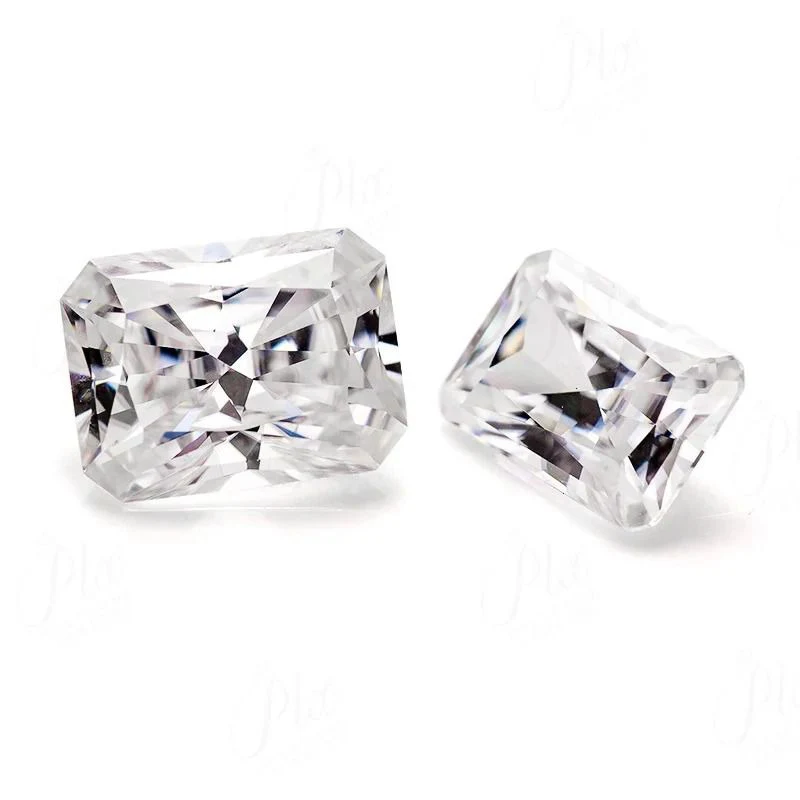
A buyer reads a listing that says "G, VS2" and assumes both letters describe the same thing. They do not. G is a color grade; VS2 is a clarity grade. Mixing the two up is one of the most common mistakes in diamond buying, and it changes what you should expect to see face-up.
Two scales, one report
Diamond reports separate two qualities. Color measures how yellow or brown a diamond appears, graded from D (colorless) to Z (light color). Clarity measures inclusions, graded under 10x magnification from Flawless to I3. G, VS and SI come from different scales. The full framework is on GIA's 4Cs page.
What a G color grade means
The color scale runs D, E, F (colorless), then G, H, I, J (near-colorless). G sits at the very top of the near-colorless tier. A G diamond shows almost no body color face-up when set in white gold or platinum, making it the sweet spot where quality meets value. In yellow gold, a G or even an H reads beautifully because the warm metal masks the slight tint. Stepping down to H or I saves money, but going below J can show visible yellow.
What VS and SI clarity grades mean
Clarity grades from high to low: FL, IF, VVS1, VVS2, VS1, VS2, SI1, SI2, I1, I2, I3. VS stands for "very slightly included," and SI for "slightly included." A VS1 or VS2 has tiny inclusions that are hard to see under 10x magnification and usually invisible to the naked eye. SI1 inclusions are slightly easier for a grader to spot, and many SI1 stones are still eye-clean. SI2 is where inclusions start to risk visibility, especially in larger stones. Wholesale buyers zoom into the inclusion plot rather than trusting the letter alone.
Why the confusion matters
A "G, VS1" diamond is high on color and mid-high on clarity, which is a strong combination. A buyer who thinks "G" also describes clarity may overpay, or one who thinks "SI" describes color may worry a stone is yellow when it is not. Always read the report as two separate lines: Color on one, Clarity on the other. For the broader framework, see the 4Cs explained, and compare how cut changes the look in emerald vs round cut.
Buying sweet spots
For a balanced budget, trade buyers often choose G color with VS2 or SI1 clarity in a round brilliant. The round's faceting hides both slight color and small inclusions. In an open emerald cut, step up to G color and VS clarity because the large table shows both. Pair the chosen stone with the right metal from yellow, rose and white gold.
FAQs
Is G a good diamond color?
Yes. G is the top of the near-colorless range and looks white face-up in white gold or platinum. It is the most common value sweet spot for well-cut stones.
Are VS and SI color or clarity grades?
Both are clarity grades. VS means very slightly included and SI means slightly included. They describe internal inclusions seen under magnification, not body color.
Is SI1 eye-clean?
Often yes, but not always. SI1 stones should be checked on the inclusion plot or in person; an inclusion under the girdle is hidden by prongs, while one in the table shows.
What is the difference between VS1 and VS2?
Both are very slightly included. VS1 inclusions are slightly smaller or better hidden than VS2, but to the naked eye the two are usually indistinguishable.
How the setting metal shifts perceived color
The letter on the report is measured loose, without a setting. Once the ring is mounted, the metal changes how the color reads. White gold and platinum make a diamond show its true color, so a G or H stone looks its whitest in a white-metal setting. Yellow gold warms the whole ring, which means an H or I stone often reads as clean near-colorless because the gold masks the slight tint. This is why a client can step down a color grade in a yellow gold ring and save money without a visible difference.
Clarity is affected less by metal, but it is affected by the cut. A well-cut round brilliant scatters light and hides small VS and SI inclusions, while an emerald cut with its open table shows them clearly. Use these two levers together: choose the shape and metal first, then pick the color and clarity grade that fit the budget. The report letters are a starting point, not the final word on how the finished ring will look. A G, VS2 in a round white-gold mount and a G, VS2 in an emerald-cut yellow-gold mount are two very different rings despite sharing the same two letters.
HOLYCOME supplies graded diamonds and lab-grown stones with full color and clarity reports. Request a parcel filtered to your target color and clarity grades for your next production run.
Frequently Asked Questions
Is moissanite a good diamond alternative for retail buyers?
Yes for price-sensitive customers who want brilliance and hardness. Moissanite ranks 9.25 on the Mohs scale, holds up to daily wear and costs a fraction of a natural diamond of the same size, so it resells fast in bridal and fashion lines.
What is the minimum order for wholesale moissanite?
MOQ starts at 50 pieces per design for stock items. Custom cuts and private-label settings usually start at 100–300 pieces depending on the mold.
Do you provide certificates with moissanite stones?
Yes. Every parcel ships with GRA or IGI documentation listing carat weight, color grade and cut. We recommend passing the certificate to your end customer for trust.
How long does sample and bulk production take?
Samples ship in 3–5 days. Bulk runs take 15–20 days under 500 pieces, and 25–30 days for custom work.


