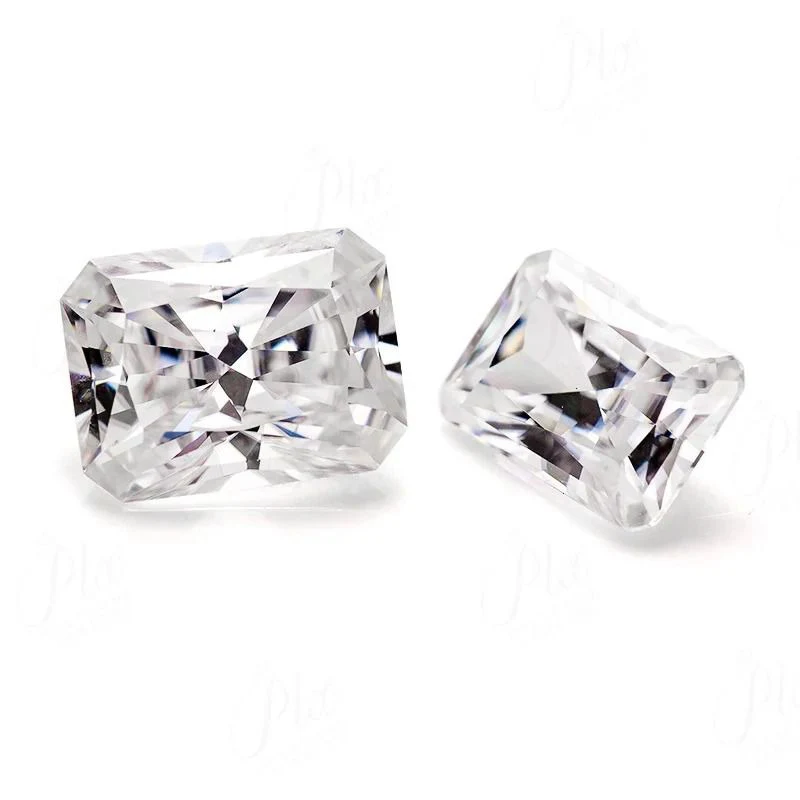
A customer walks in asking for a 2-carat look on a 1-carat budget. The salesperson who knows shapes can deliver it. The salesperson who only knows carat weight will quote a 2ct natural diamond they cannot afford and lose the sale. For wholesale accounts, the job is to match the customer visual target (how big the ring looks on the hand) to a carat number that fits the budget. Carat is weight, not diameter, and the shape choice changes the face-up size by as much as 20 percent. Here is the comparison that closes the sale.
Carat is weight, not size
One carat is 0.20 grams. A 1ct round brilliant measures about 6.5mm across the table. A 1ct oval measures about 8.0 by 6.0mm. A 1ct cushion measures about 5.5 by 5.5mm. That is the same weight, three different face-up sizes. Carat weight is documented on the GIA carat-weight. Customers who only ask for 1ct are buying a number, not a look. The job is to translate the look into a weight and a shape.
Which shapes face up largest
Ovals, marquises, and pears spread weight horizontally and look biggest on a finger. A 1.5ct oval looks as large on the hand as a 2ct round. Emerald and cushion cuts sit in the middle. Asscher and princess cuts concentrate weight in depth, so they look smaller than their carat number suggests. If the customer wants maximum visual size per dollar, oval and pear are the right shapes. If they want a classic look, the round is the honest size and they should budget for it. See 1ct versus 2ct on the hand and carat size versus finger size.
Why shallow cuts inflate carat without size
Some stones are cut shallow to retain weight. A shallow pavilion lets light leak out the bottom, so the stone looks dead from the side, but it carries a higher carat number. A 1.2ct stone cut shallow may look the same size as a 1.0ct well-cut round, while costing 15 percent more. Check the depth percentage on the report: ideal rounds sit at 59 to 62 percent depth. Anything over 64 percent is a deep, small-looking stone. Anything under 57 percent is shallow and leaks light. The carat number on the report is honest; the proportions tell you what it actually looks like. For cut context, see emerald versus round cut.
Setting tricks that amplify apparent size
Three setting choices make a stone look larger than its weight. A halo of small stones around the center adds a millimeter of visible diameter. A thin band (1.8 to 2mm) leaves more visual room for the stone. A cathedral setting lifts the stone off the finger so it catches light from below. These tricks are honest, and they are the reason a 1ct oval in a halo reads as a 2ct ring on the hand. For setting comparison, see three-stone versus solitaire and what size fits which budget.
Why buyers fixate on the number
Customers walk in asking for 2ct because that is the number they saw on a Pinterest board. The job of the salesperson is to translate that number into a look they can afford. A 1.5ct oval in a thin cathedral halo reads as a 2ct ring on the hand and leaves budget for a nicer cut and color. Pushing the customer to a 2ct round at the same budget means accepting a lower color grade and a deeper cut, which the customer will notice within a month. The mm comparison chart is the prop that makes the sale.
Does carat weight affect sparkle?
Indirectly. Larger stones have bigger facets and can show broader flashes if cut well. Smaller stones usually look brighter because the facets are tighter. Cut quality matters more than size.
What is spread?
Spread is the face-up diameter of the stone in millimeters. A well-cut 1ct stone has good spread; a deep-cut 1ct stone has weak spread for its weight.
Is a 1.5ct round the same size as a 1.5ct oval?
No. The oval looks roughly 15 to 20 percent larger on the finger because it spreads weight along the length. The round is a more compact circle.
Does finger size change how big a stone looks?
Yes. A 1ct stone on a size 5 finger looks larger than the same stone on a size 8. Always photo the stone on a finger close to the customer actual size.
What is the most popular carat sold?
In bridal, 1.0 to 1.5ct is the sweet spot for solitaire rings. Above 2ct, the price curve bends sharply upward and the customer profile changes.
If you are a retailer pulling calibrated stock and want side-by-side mm sheets across shapes, our wholesale team can send a size comparison chart with photos on common finger sizes. Request the size chart.
Frequently Asked Questions
How do I verify a factory before placing a bulk order?
Request a production video, business license, export records and a paid sample run. A factory that accepts a 50-piece test order is usually a real manufacturer.
What payment terms do you offer?
30% T/T deposit with the balance against the bill of lading. This protects both sides on first orders and can move to net terms after a track record.
What is your normal reject rate?
3–5% under 10x loupe inspection for cast and set pieces. Defective units are replaced free in the next shipment.
Where is the factory located?
Wuzhou, Guangxi, China—the core lab-grown and moissanite manufacturing cluster. Shipments go via Guangzhou or Shenzhen ports.


