A repair bench returned a ring with a fractured centre stone and a note that the stone had been heated during a prong re-tip. The stone was a CVD-grown diamond with visible strain under crossed polars. The heat did not cause the fracture on its own, but it did not help either.
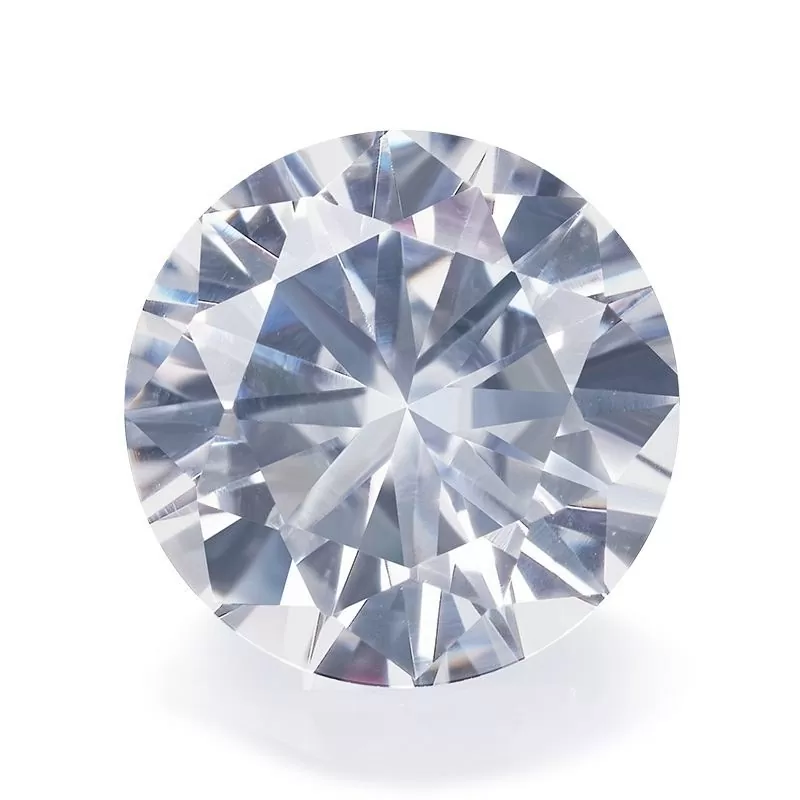
This is the practical side of the CVD versus HPHT question. The two methods produce the same material chemically, and they behave differently in a workshop. Buyers who treat the distinction as a marketing detail tend to learn it at the repair bench.
What actually differs between the two methods
Both CVD and HPHT produce diamond. The differences that matter to a wholesale buyer are growth conditions, resulting strain, trace elements, and how the stone responds to heat and UV.
| Property | CVD | HPHT | Why it matters |
|---|---|---|---|
| Typical type | Type IIa | Type IIa or IIb | Detection and colour behaviour |
| Strain pattern | Often visible under polarised light | Less common, growth-direction related | Heat risk during repair |
| Trace elements | Low nitrogen, possible silicon | Metal flux inclusions possible | Clarity grade interpretation |
| UV response | Usually inert | Boron-related blue possible | Counter-top testing by retailers |
| Colour range | Narrower, D to near colourless | Wider, including fancy | Assortment planning |
The table is the reason a single "lab-grown" label is insufficient for inventory planning. Two parcels at the same grade can carry different workshop behaviour.
Strain: the hidden variable in fancy shapes
Strain is internal stress left in the crystal by growth conditions. In a round brilliant with a symmetrical cut, strain is usually invisible and harmless. In a step cut with a wide table, strain can show as a hazy band under polarised light.
Where strain becomes a defect
It becomes a defect when the cutting exposes it, or when heat is applied nearby. A step-cut emerald shape with a visible strain band will not sell at the price the grade implies, because the haze reads as a clarity problem to a customer.
What to ask the supplier
For fancy shapes above 1 ct, ask whether the stone has been checked under crossed polars and whether any strain is visible. A supplier who can answer that has a grading bench. One who cannot is selling on paper grade only.
- Round brilliants: strain rarely matters visually
- Step cuts and emerald cuts: ask for a polarised check
- Stones above 2 ct: strain check is worth the small cost
Fluorescence and the retail counter
HPHT material can carry boron, and boron produces blue fluorescence under short-wave UV. In a jewellery store with a UV lamp at the counter, a blue glow on a "colourless" stone invites a question the salesperson may not be ready to answer.
For natural diamonds, blue fluorescence is a known and often discounted characteristic. For lab-grown, the same visual response is read by some customers as evidence of treatment. The commercial risk sits with the retailer, not the wholesaler, but the wholesaler carries the return.
Testing your own lots
A short-wave UV lamp costs less than a single returned stone. Screen every HPHT parcel before shipping to a retail-facing customer, and note the result on the packing list.
Colour range and assortment logic
HPHT growth covers a wider colour range, including near-colourless and some fancy colours after treatment. CVD tends toward the D to H band with less variation.
When a wider range helps
A programme that sells matched pairs or graduated layouts benefits from a wider colour range, because matching is easier when the available pool is large. A programme that sells single stones at a fixed grade benefits from a narrow range, because every stone can be sold at the headline price.
Matching across a parcel
Mixed-method parcels are harder to match than single-method parcels. If your product requires pairs or three-stone layouts, buy from one method and one growth run where possible, and state the tolerance in millimetres and colour grades.
Repair and service implications
Service policy is where growth method turns into a cost line. Three rules keep it manageable.
- Remove the stone before torch work on any CVD stone with visible strain
- Never assume a lab-grown stone can be heated like a natural stone of the same grade
- Record the growth method on the repair ticket, not just the carat and grade
The third rule is the cheapest. A repair ticket without the growth method forces the bench to guess, and guessing is what produces the fractured stone in the first paragraph.
Resizing and setting
Resizing a ring does not usually heat the stone if the shank is worked away from the setting. Setting a stone does apply local heat, and a strain-bearing CVD stone is more sensitive there than an HPHT stone of the same clarity.
Detection and disclosure
Laboratories distinguish CVD from HPHT using instruments that read growth patterns, trace elements and strain. A jeweller cannot do this at the counter, which is why the paperwork carries the burden.
Disclosure practice for wholesale: state lab-grown, state the method where the report states it, and state the laboratory. Where a report does not name the method, say so rather than guessing.
What the FTC position requires
The FTC Jewelry Guides require clear and conspicuous disclosure that a stone is lab-grown, and they caution against terms that imply a natural origin. The guides are the reference point most US retailers build their own policy on, so matching their vocabulary keeps your paperwork compatible with your customer's compliance file.
What our supply terms look like
We quote lab-grown parcels with the growth method named per lot, the sieve range for melee, and the colour and clarity split in percentages. Minimum order is one parcel for loose stones and 50 pieces per design for finished jewelry, with three to five days for stock and fifteen to twenty days for bulk under 500 pieces.
Samples are paid in full, and bulk runs on a 30 percent deposit with the balance before shipment by T/T, PayPal or Western Union. For any lot above 1 ct per stone, we include a polarised-light note on strain in the packing documents.
Cost comparison by product segment
Growth method changes cost in two places: the stone price and the workshop handling. The second is the one that gets left out of a cost sheet.
Studs and simple settings
A matched pair of studs needs two stones of the same colour and size. HPHT melee quotes more easily match because the colour pool is wider, so pairing labour is lower. On a 200-pair order, the pairing saving can exceed 1 USD per pair.
Halo and pavé programmes
High stone counts favour a single growth run with consistent colour. Mixing CVD and HPHT in one halo produces a visible colour break that customers notice under daylight, and the rework cost is per ring rather than per stone.
Large centre stones
Above 2 ct, CVD dominates the supply because the growth process scales to larger plates. That concentration means fewer alternatives, so the price negotiation is about the specific stone rather than the method.
- Studs and pairs: HPHT melee, match by colour pool
- Halo and pavé: one run, one method, stated tolerance
- Centre stones above 2 ct: CVD, stone-by-stone quote
- Fancy colour: HPHT or post-growth treatment, disclose it
Detecting method in your own stock
You do not need a laboratory to build a working suspicion. Three bench observations flag a stone for a proper check.
Crossed polarisers show strain as a bright pattern in CVD material. A short-wave UV lamp shows boron-related blue in some HPHT stones. A microscope reveals flux inclusions, which point to HPHT, or fine growth striations, which point to CVD.
None of these is proof. They are triage. A stone that fails triage goes to a laboratory before it enters a customer-facing order.
Record the triage result on the lot sheet. A supplier that tracks its own triage results can warn a buyer before shipping a stone that will raise a question at the retail counter, and that warning is worth more than a discount.
Frequently Asked Questions
Which method is cheaper at wholesale?
HPHT melee is often cheaper per carat at small sizes, while CVD can be competitive at larger sizes. Price the lot on usable carat and workshop cost, not on the headline per-carat figure.
Can the two methods be mixed in one parcel?
They can, and suppliers sometimes do. Ask for the method split by percentage, because a mixed parcel behaves unpredictably in matching and in repair.
Does growth method change the certificate wording?
Some laboratories state the method, others state only lab-grown. Read the report before you write your listing, so your product page does not claim more than the document supports.
Is one method more durable?
Both are diamond and both are durable in wear. The difference shows up in heat sensitivity and strain, which are workshop conditions rather than consumer conditions.
Next step
Ask for a lot sheet with the method split, sieve range and strain note. Our stone desk quotes against your setting style, and the guide index covers how grade and cut interact with design.


