A brand planned a spring launch around a custom elongated cushion. The drawing was approved in December, the deposit was sent in January, and the first stones arrived in March with a crown height 0.4 mm shallower than the drawing. The launch moved to May, and the re-cut cost more than the original tooling.
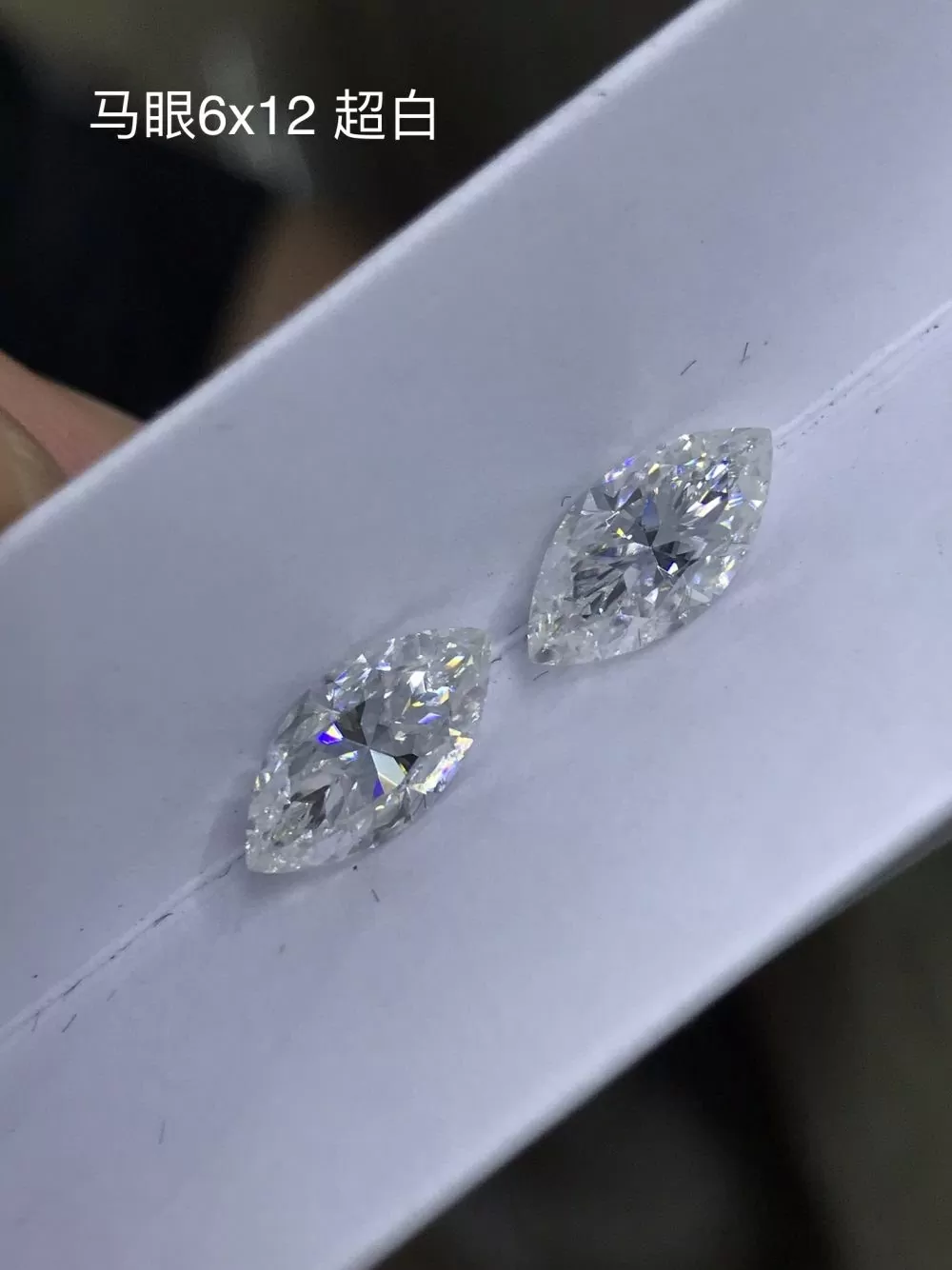
Custom cutting is a two-stage process with an approval gate in the middle. Brands that treat it as one order lose the season; brands that plan around the gate usually hit the date.
The real timeline
The clock starts when the drawing and the deposit are both approved, not when the enquiry is sent. Everything before that is specification work and it has its own duration.
| Stage | Duration | What happens |
|---|---|---|
| Specification and drawing | 3-7 days | Dimensions, carat range, setting check |
| Quotation and deposit | 2-5 days | Price, minimum, payment |
| Sample cutting | ~20 days | One to three stones to the drawing |
| Sample approval | 3-7 days | Photo and physical check |
| Bulk cutting | 25-30 days | Full run to the approved sample |
| Calibration and packing | 3-5 days | Sorting, count, packing list |
| Shipping | 4-8 days | Courier to destination |
Add the durations and a realistic door-to-door cycle is 57 to 80 days. A brand that plans on 45 days is planning on the bulk stage alone.
Where the time actually goes
Cutting itself is not the long pole. Setup, tooling and the sample approval are. A new shape requires a fixture and a proportion trial, and that trial happens once regardless of order size, which is why a 50-piece run and a 500-piece run have similar lead times.
The approval gate and what to check
The sample is the only cheap moment to catch an error. Five checks cover almost every failure mode.
- Measure the sample against the drawing in millimetres, not by eye
- Photograph it face-up and side-on against graph paper
- Weigh it and compare with the target carat range
- Set it in a production setting and check the seat and the girdle
- Grade the colour against your master set under daylight
The fourth check is the one most brands skip, and it is the one that matters most. A stone that matches the drawing but does not sit in the setting is a stone that has to be re-cut or the setting redesigned.
Approve in writing with a reference photo
Approve with a sentence that references the photo, the measurements and the setting test. A verbal approval leaves the bulk run open to interpretation, and interpretation is what produces a 0.4 mm discrepancy.
What drives cost above a standard shape
Custom cutting carries four extra costs, and understanding them makes a quote negotiable.
| Cost | Cause | How to reduce it |
|---|---|---|
| Tooling setup | New fixture per shape | Reuse an existing shape family |
| Lower yield | Proportion trial wastes rough | Widen the carat tolerance |
| Small run | Fixed cost over fewer pieces | Raise the minimum quantity |
| Calibration | Re-cut to band | Accept a wider band where the setting allows |
The most effective lever is shape family. A custom oval that sits within an existing oval's proportion envelope can reuse tooling, and that removes the setup cost from the quote entirely.
Typical premium
Expect 20 to 40 percent above a standard shape at the same carat and colour. At the lower end, the shape is close to a standard family and the run is large. At the upper end, the shape is genuinely new and the run is under 100 pieces.
Planning a launch around the cycle
Work backwards from the launch date, not forwards from the enquiry date.
The backward plan
- Launch date minus shipping: goods must leave 8 days before
- Minus packing: cutting must finish 13 days before
- Minus bulk: sample must be approved 43 days before
- Minus sample: drawing and deposit must be settled 63 days before
That is a nine-week run-up for a custom shape with a bulk order. A brand launching in spring needs the drawing settled before the winter holidays.
Buffers that are worth the cost
Add five days to the bulk stage for a first-time shape, and add a second sample if the setting is new. A second sample costs a few hundred dollars and protects a launch date worth far more.
Setting compatibility: the check that saves a run
A custom stone is cut for a setting, and a setting is made for a stone. When the two are developed separately, the mismatch appears at the bench rather than at the drawing.
Girdle thickness and seat depth
A prong setting needs enough girdle to hold without chipping. A bezel needs a girdle that fits the bezel wall within about 0.05 mm. A custom cut with a thin girdle will fail a bezel even if it matches the drawing perfectly.
State the girdle requirement in the drawing. Medium girdle suitable for bezel is a sentence that prevents a re-cut.
Pavilion depth and clearance
A deep pavilion needs a setting with enough clearance. A shallow pavilion can sit loose in a setting designed for a standard depth. Both problems are invisible in a face-up photograph, which is why the sample-in-setting test exists.
The sample-in-setting test
Set the sample in a production setting before approving bulk. The test costs one setting and catches the mismatch that a drawing review cannot. It is the single most valuable check in the custom cycle.
Shipping and packing for custom stones
Custom stones are low volume and high value per piece, which changes packing requirements.
- Individual wrapping for every stone above 0.5 ct
- Dimensions and carat recorded per stone on the packing list
- A photograph of each stone before packing, matched to the report number
- Declared value consistent with the invoice for customs
The photograph matters because a custom run has no reference sample in the buyer's hand. A stone that arrives different from the approved sample is a dispute that a per-stone photograph settles quickly, and without it the dispute becomes a comparison of memories rather than a comparison of measurements.
Common failure modes
Four mistakes account for most custom cutting delays.
Approving from a photograph only
A photograph flattens proportion. A stone that looks correct in a face-up image can be visibly shallow in profile, and profile is what shows in a side-view setting.
Specifying carat instead of dimensions
A carat target without a dimension target lets the cutter trade proportion for weight. Specify the length, width and depth, and give carat as a range.
Changing the setting after the sample
A setting change after approval forces a re-cut or a compromise. Lock the setting before the sample is cut, and treat any later change as a new sample.
Ignoring calibration in the plan
Calibration adds three to five days and can reduce the finished weight. A plan that budgets for cutting but not calibration arrives short of stones.
What our custom terms look like
We quote custom cutting from a drawing or CAD file with dimensions, colour grade and setting. Sample runs take about 20 days, and the following bulk run takes 25 to 30 days, both measured from approved drawing and deposit.
Minimum order for a custom shape is 50 pieces, and we supply a photograph of the first stone against graph paper plus the measured dimensions before the run continues. Payment is a 30 percent deposit with the balance before shipment, by T/T, PayPal or Western Union.
If the sample fails the dimension check, we re-cut at our cost before the bulk stage. That is the reason the sample gate exists.
For repeat shapes, we keep the approved drawing and fixture on file, which removes the setup stage from the next order and shortens the cycle to the bulk duration alone. Brands that plan a second season around the same shape should ask for the drawing to be retained, and should confirm that the retained file includes the girdle and pavilion notes rather than only the outline. The outline alone allows a cutter to hit the shape while missing the girdle and depth requirements that the setting depends on.
Frequently Asked Questions
Can I get one custom stone rather than a run?
Yes, as a sample order. Expect the sample price to carry the full setup cost, which makes a single stone expensive relative to a run.
Do you cut to a CAD file?
We work from CAD or a dimensioned drawing. A CAD file without dimensions is a picture, not a specification.
What tolerance is realistic on dimensions?
Plus or minus 0.1 mm on length and width, and plus or minus 0.15 mm on depth for a first run. Tighter tolerances are possible with calibration and cost more.
Can the sample be the first piece of the bulk order?
Sometimes. Ask before the run, because a sample cut on a trial fixture is not always produced on the bulk fixture.
Next step
Send the drawing, the setting and the target date, and we will return a schedule with the approval gate marked. Start with our stone desk, or read the guide index for setting and metal context.


