A retailer swapped a supplier because of exchanges. Half of the men's bands came back one size too small, and the cause was not the sizing chart: the bands were comfort fit, the customers had ordered their standard size, and the curved interior made the same marked size feel loose.
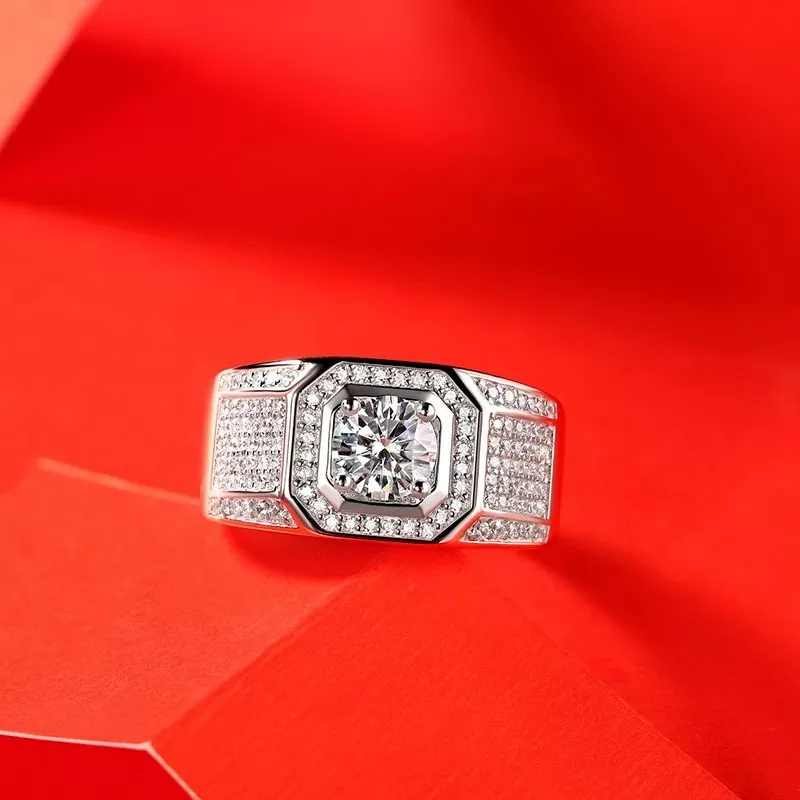
Comfort fit is a profile decision that changes sizing, weight, cost and the exchange rate. It is worth understanding before a range is specified rather than after the first season's returns.
What the two profiles are
The difference is entirely on the inside of the band. The outside can look identical.
Standard fit
A flat interior with a defined edge at each side. The band contacts the finger along a flat surface, and the edges sit against the skin. It is the traditional profile and it is still common in thin bands.
Comfort fit
A curved interior that is deeper in the middle and tapers to the edges. The band contacts the finger along a curve, and the edges sit away from the skin. It is the dominant profile in wider bands and in the United States market.
How comfort fit changes the feel
Two effects matter, and both are mechanical rather than cosmetic.
Less contact, easier removal
A curved interior touches less of the finger, so the band slides on and off more easily. For a customer with knuckles wider than the finger base, that difference decides whether the band can be worn at all.
Weight distribution
Comfort fit removes metal from the interior, so a band of the same outside width weighs less. A 6 mm comfort fit band can weigh noticeably less than the standard fit equivalent, which affects both the feel and the metal cost.
| Property | Standard fit | Comfort fit |
|---|---|---|
| Interior | Flat | Curved |
| Contact area | Higher | Lower |
| Metal weight | Higher | Lower |
| Feel at marked size | Snug | Looser |
| Edge against skin | Yes | No |
The sizing consequence
This is where the exchanges come from. A comfort fit band at a marked size feels about half a size larger than a standard band at the same mark.
The half size rule
A customer moving from a standard fit band to a comfort fit band usually needs half a size smaller in comfort fit. A retailer that states the rule at the counter avoids most of the exchange volume.
Wide bands need a different rule again
Above 6 mm, band width itself makes a band feel tighter, because the wider surface covers more of the finger. A 8 mm comfort fit band may need the same marked size as a 4 mm standard band, not half a size smaller.
- Thin band, standard to comfort: half size down
- Wide band, standard to comfort: same size or half down
- Very wide band, any profile: half to full size up from the thin equivalent
Cost and weight
Comfort fit removes metal and adds machining. The two effects partly cancel, and the net difference depends on width.
On a thin band
The metal removed is small and the machining is quick, so the cost difference is minor. On a 2 mm band, comfort fit is often not offered because the benefit is small.
On a wide band
The metal removed is larger and the interior takes longer to finish, so the cost difference is visible. On a 8 mm band, the weight saving can be several tenths of a gram, which matters in a metal-priced product.
Which profile to stock
The answer depends on the width and the market rather than on preference.
Men's bands above 6 mm
Comfort fit is close to standard in this segment. Stocking standard fit in a wide men's band is a decision to lose the customers who tried a comfort fit band elsewhere and liked it.
Women's bands under 3 mm
Standard fit remains common and the comfort benefit is small. Stocking comfort fit here is optional and it is usually a price question rather than a feel question.
Stone set bands
Comfort fit is compatible with stone setting, and the interior curve does not affect the setting. The sizing rule still applies, and it applies more strongly because a stone band is harder to resize.
Finishing and its interaction with profile
The interior finish matters more on comfort fit, because the curve is visible when the band is off the finger and it is felt continuously when worn.
Polish versus matte interior
A polished interior slides easily and shows scratches. A matte interior grips slightly and hides scratches. For a comfort fit band, a light matte interior is the practical choice on a working band.
Edge treatment
The edge is where a comfort fit band differs most visibly. A rounded edge on the outside matches the interior curve and reads as one design; a sharp outside edge with a curved interior reads as two profiles stitched together.
Communicating the difference to a customer
Most customers cannot describe the difference and can feel it immediately. Three sentences at the counter do the work.
- The inside is curved, so it touches less of the finger
- It feels about half a size larger, so we size you half down
- It is easier to take off, which matters if your knuckle is wider
The third sentence is the one that sells the profile, because it names a problem the customer already has.
What our wedding band terms include
We supply both profiles in 2 to 8 mm, in silver and gold tone, with the profile stated on the packing list. Comfort fit is standard on widths of 6 mm and above and available on request below that.
Minimum order is 50 pieces per design, and sizes can be mixed to reach it. Stock ships in three to five days and bulk in fifteen to twenty days under 500 pieces. Payment is a 30 percent deposit with the balance before shipment, by T/T, PayPal or Western Union. A sizing card with the half size rule ships with every order.
Manufacturing tolerance and its effect on feel
A comfort fit band is machined, and the interior curve has a tolerance. Two bands marked the same size from different suppliers can feel different if their interior depth differs.
The interior depth
The curve depth is typically 0.4 to 0.8 mm at the centre, tapering to the edges. A deeper curve feels looser, so a band with a 0.8 mm depth at a given size feels larger than one with 0.4 mm.
Edge profile consistency
A comfort fit edge should taper smoothly. A step at the edge, sometimes called a shelf, is the result of a machining shortcut and it feels like an edge against the finger, which removes the benefit the customer paid for.
Where tolerance shows
In the exchange rate, not on the bench. A batch that runs deep in the interior produces returns a half size down, and a batch that runs shallow produces returns a half size up. Both are tolerance problems and both look like sizing problems at the counter.
Returns data worth tracking
Three numbers on a wedding band programme tell you whether the profile is working, and none of them are in a standard sales report.
Exchange rate by size direction
Exchanges up versus exchanges down. A programme with more down than up is running deep interiors or selling comfort fit against a standard fit sizing habit.
Exchange rate by width
Wide bands exchange more than thin ones, partly because width itself changes the fit. Comparing a 6 mm exchange rate against a 2 mm one separates a profile problem from a range problem.
Resize versus replace
An exchange that is resized costs less than one that is replaced. A policy that resizes first keeps the cost down and keeps the customer in the same piece, which is usually what they want.
| Metric | What it signals |
|---|---|
| Exchanges mostly down | Interior too deep or sizing advise too large |
| Exchanges mostly up | Interior too shallow or width too wide |
| Exchanges concentrated in one width | Width and profile interaction |
| High replace rate | Resize policy too restrictive |
Frequently Asked Questions
Does comfort fit wear differently?
The outside wears the same. The inside wears less because it contacts less, which is one reason a comfort fit band keeps its interior finish longer.
Is comfort fit suitable for a stone set band?
Yes, and the setting is unaffected. The sizing implication is stronger because resizing a stone set band is more expensive, so the half size rule is worth applying carefully.
Can I mix profiles in one order?
Yes. The profile is a line item on the packing list, and mixing does not affect the MOQ as long as each design reaches the minimum or the total does.
Which profile photographs better?
They photograph the same from outside. The difference shows in a hand shot or a video, which is why a product page should show the interior if it sells comfort fit.
Next step
Tell us the widths in your range and we will confirm which profiles to stock and the sizing card to print. Our wholesale desk handles both, and the guide index covers core range planning.


