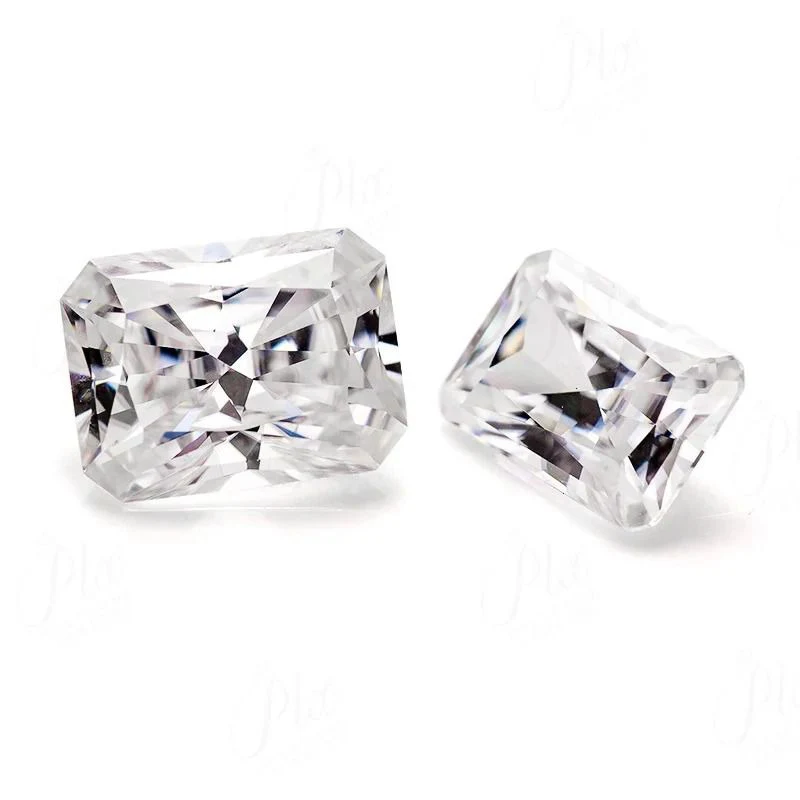
Scroll any discount diamond site and you will see stones priced far below market: a 1.5-carat-looking solitaire for what a real 0.9-carat untreated stone costs. Read the fine print and you will find the word "enhanced" or "treated." These are clarity (per GIA's diamond grading standards)-enhanced diamonds, and they are one of the most misunderstood products in fine jewelry.
This guide explains what the treatment actually does, where the savings come from, and why most buyers are better off skipping them.
The two common treatments
"Clarity enhancement" usually means one of two processes, and they are very different in how permanent they are.
Laser drilling
A laser bores a microscopic tunnel from the surface to a dark internal crystal, then acid is flushed through to lighten or remove the inclusion. The tunnel is tiny and usually hidden under a facet edge. Laser drilling is considered relatively stable: it does not reverse with heat or cleaning, and it must always be disclosed on the lab report.
Fracture filling
This is the one to watch. A liquid glass-like filler (often a leaded glass or similar resin) is injected into a surface-reaching feather or crack. The filler has a refractive index close to diamond, so the crack disappears from view. The stone suddenly jumps in perceived clarity. But the filler is a foreign material sitting inside the diamond, and it behaves nothing like diamond.
Why enhanced stones are cheap
A fracture-filled stone started life as a low-clarity diamond — often an I1 or I2 with visible feathers. The treatment masked the flaw rather than removed it. Because the underlying clarity is poor, the rough was cheap, and the finished stone sells at a steep discount to an untreated equivalent. Savings of 40 to 60 percent are common.
The real risks
The filler is the weak point. It does not survive normal jeweler work or aggressive cleaning:
- Heat. Re-tipping prongs, soldering near the setting, or re-sizing can melt or discolor the filler instantly, revealing the feather underneath.
- Ultrasonic and steam cleaners. The vibration and heat can dislodge the filler or pull it out of the crack.
- Discoloration over time. Some fillers develop a brownish or orange halo, or show flashy interference colors when viewed at certain angles.
- Re-polishing or re-cutting. Impossible without destroying the treatment.
Practically, this means you cannot have the ring serviced normally. Every time a jeweler heats the setting, you risk undoing years of "invisibility."
How labs treat them
Major independent labs do not grade fracture-filled diamonds on the standard color and clarity scale. Instead, they issue a report that clearly describes the treatment. If a listing claims a "GIA" or equivalent grade on a stone that is secretly fracture-filled, that is a red flag. Always ask whether the stone is 100 percent natural and untreated, and get the answer in writing. Our guide to comparing diamond certificates explains how to read exactly what a report is (and is not) certifying.
Resale and insurance
Here is where enhanced stones fall apart. Because the treatment is cosmetic and fragile, there is almost no secondary market. A fracture-filled diamond is worth roughly the value of the gold and setting, not the stone. Insurers may also decline cover or require a special endorsement, since the "clarity" can vanish after one repair. For contrast, read our piece on resale realities of treated and alternative stones.
Better alternatives
If the budget is the reason you are looking at enhanced stones, you have smarter options:
- Buy an untreated eye-clean SI1 or SI2. It costs less than a VVS and will survive a lifetime of normal care.
- Drop a fraction of carat and move up to a better cut. Cut matters more for sparkle than a perfect clarity grade.
- Consider a lab-grown untreated diamond. It is chemically identical, comes with full grading reports, and carries no fragile filler.
Clarity enhancement is not a scam when properly disclosed — but it is a compromise that quietly limits how you can wear, clean, repair, and eventually sell the ring. For an engagement ring that should last decades, buying untreated and choosing a slightly lower clarity grade you can actually live with is almost always the stronger move.
Questions to ask before buying
If a stone's price makes you pause, ask the seller directly:
- "Is this diamond 100 percent natural, untreated, and unenhanced?"
- "Does it come with a standard grading report, not a treatment-specific report?"
- "Will you put 'untreated' in writing on the invoice?"
A reputable seller answers all three without hesitation. Phrases like "it looks the same," "you'd never tell," or "it's a great deal" are signs to walk away.
Laser drilling is a grayer area
Laser-drilled stones sit between fully natural and fracture-filled. The treatment is permanent, properly disclosed, and accepted in the trade, but it still carries a price discount versus an untreated equivalent. Whether that discount is worth it depends on the stone — and on your plans. If you ever intend to sell the ring, untreated is always easier to sell, because the next buyer faces the same doubts you would. For more on how treated and alternative stones hold value, our guide to resale realities is a useful companion read.
Frequently Asked Questions
Is moissanite a good diamond alternative for retail buyers?
Yes for price-sensitive customers who want brilliance and hardness. Moissanite ranks 9.25 on the Mohs scale, holds up to daily wear and costs a fraction of a natural diamond of the same size, so it resells fast in bridal and fashion lines.
What is the minimum order for wholesale moissanite?
MOQ starts at 50 pieces per design for stock items. Custom cuts and private-label settings usually start at 100–300 pieces depending on the mold.
Do you provide certificates with moissanite stones?
Yes. Every parcel ships with GRA or IGI documentation listing carat weight, color grade and cut. We recommend passing the certificate to your end customer for trust.
How long does sample and bulk production take?
Samples ship in 3–5 days. Bulk runs take 15–20 days under 500 pieces, and 25–30 days for custom work.


