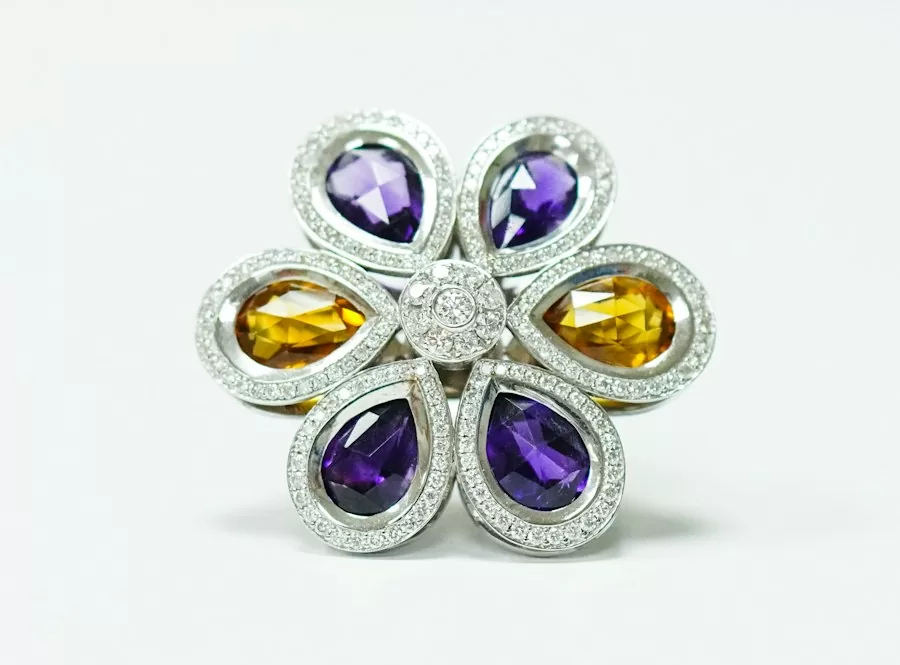
A bespoke wedding ring is a ring designed and made for you rather than chosen from a showroom tray. The process is more structured than most buyers expect, and once you know the stages, it is much easier to plan around a wedding date. The best bespoke work feels collaborative, not mysterious.
Stage one: consultation
You start by talking through what you want. The jeweller will ask about metal, width, profile, finish, any stones, and the story behind the ring. Bring references, a photo of the engagement ring if the band must match it, and a realistic budget. This stage is also where the jeweller flags what is and is not feasible; a super-thin band with a heavy stone, for example, will be corrected early.
What to bring to the first meeting
A little preparation makes the first consultation far more productive. Bring: screenshots or saved photos of rings you like (and dislike), the engagement ring or a photo of it, a note on your daily life (manual work, gym, gardening), and your metal and budget preferences. If you are reusing a family stone or heirloom, bring that too, because its size and shape will drive the whole setting design. Compare the basics first with our wedding ring metal guide so you arrive already narrowed down.
Stage two: design and model
Next comes a design, usually presented as a sketch, a 3D CAD rendering, or a carved wax model. This is the moment to check proportions on your own hand. CAD lets the jeweller show the ring from every angle and adjust in minutes. A wax model can be tried on as a physical piece. Our wedding ring width guide is useful here, because the width on a screen rarely reads the same as on a finger.
Stage three: approval and casting
Once you approve the design, the model is cast in your chosen metal. This is the point of no cheap return: the wax or CAD master is destroyed in the casting process. Confirm the design, the metal weight and the stone choice in writing before casting begins. If you are using an existing stone from another piece, this is also when it is handed over, and a written receipt for it should be issued.
Stage four: making and finishing
The cast ring is then cleaned up, sized, set if it carries stones, and given its chosen finish. Hand finishing is where bespoke work shows: the edges are softened, the interior is polished for comfort, and any engraving is applied. For how long this whole sequence takes relative to a wedding, our wedding ring ordering timeline sets realistic lead times, and our engraving ideas list gives you something to choose at this stage.
Stage five: final fitting and aftercare
You collect the ring, check the fit, and walk through aftercare. Bespoke rings usually come with the maker's own guarantee and a record of the design, which makes future sizing and repairs straightforward. Keep the original CAD files if the jeweller offers them; they are useful insurance against loss decades later.
Questions to ask the maker
A short set of questions separates an experienced maker from a rushed one. Ask: how many design revisions are included before casting? What is the lead time, and what happens if the wedding date moves? Who owns the CAD files after delivery? Is sizing and first resizing included? And how do you handle an heirloom stone during the work? The answers reveal how much of the process is genuinely collaborative.
Reusing heirloom stones or metal
Bespoke is also the route for breathing new life into a family piece. An heirloom diamond can be lifted from an old setting and reset into your chosen band, and old gold can be melted and alloyed into a new ring, though most makers prefer to add fresh gold to keep the band strong. Bring the original piece to the first consultation so the maker can assess the stone and the metal before quoting.
How much does bespoke cost?
Bespoke usually costs more than a catalogue band of the same metal, because you are paying for design time and hand making. The premium is often smaller than people expect, especially for a plain band where the design work is modest. If budget is tight, many couples start with a semi-bespoke route: a catalogue band personalised with engraving or a finish tweak. For a sense of what plain bands cost at different karats, see 9ct vs 18ct wedding ring metal.
The advantage of bespoke is not that it is unique for its own sake. It is that every measurement, width and finish is chosen around your hand and your life, which is why a well-made bespoke band tends to be the one you barely notice wearing.
The Wikipedia entry on engagement rings gives an independent overview of engagement ring traditions and settings.
Related Reading
- Gold vs Platinum Weight: The Density Numbers Buyers Ask About
- Everyday Rings: Which Metal Lasts the Longest
- Platinum vs Sterling Silver Wears
Frequently Asked Questions
What ring sizes can you supply in bulk?
US sizes 5–12 including half sizes. Send a size breakdown with your order and we cast to that curve; comfort-fit inner bands reduce resize requests.
Can I order a mixed size run instead of one size?
Yes. Mixed runs are standard for wholesale: specify quantity per size and we pack and label by size at no extra labor cost.
What is the MOQ for custom ring designs?
50 pieces per design for existing molds; 100–300 pieces when a new mold or CAD model is required.
How should I price rings for retail margin?
Most partners use a 3–4x markup on FOB cost for sterling and 2.5–3x for moissanite solos, which keeps landed cost under 30% of retail.


