A retailer bought forty tungsten bands in one size, sold eleven, and discovered that the returns could not be resized. The category that promised durability delivered a stock problem, and the margin went into replacements.
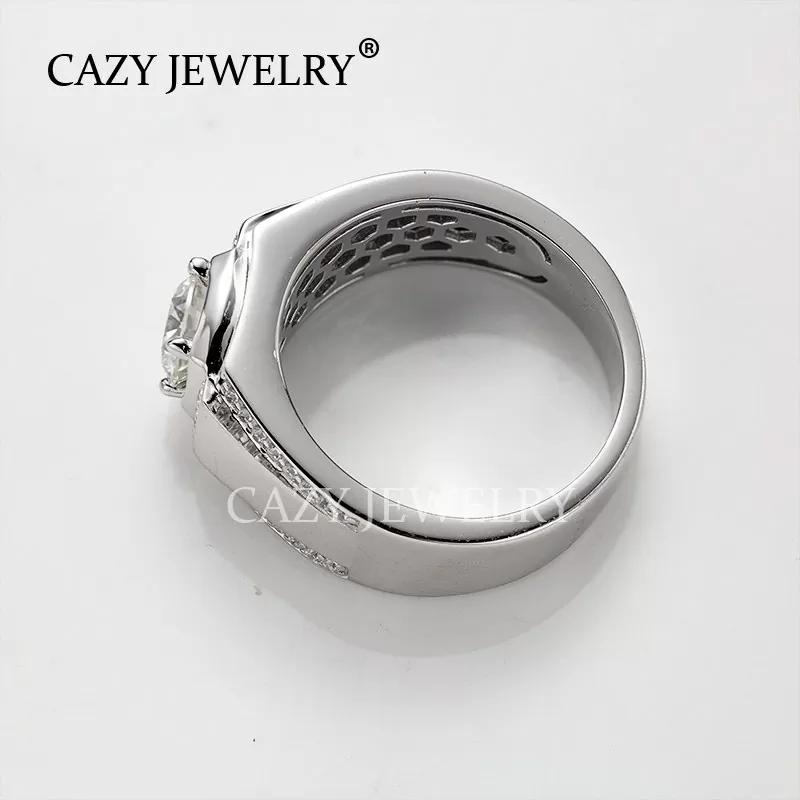
Alternative metal bands sell on durability, weight and price, and they carry one hard constraint that changes how a range is planned: they cannot be resized. That constraint drives the sizing decision, the stock ratio and the service policy.
The metals and what each does
Four metals dominate the category, and they differ in weight, hardness, finish and workability.
| Metal | Weight | Finish options | Workability |
|---|---|---|---|
| Titanium | Light | Polished, brushed, blasted | Machinable |
| Tungsten carbide | Heavy | Polished, coated | Not adjustable |
| Cobalt chrome | Medium | Polished, satin | Limited |
| Stainless steel | Medium | Polished, brushed | Machinable |
The choice is usually made on feel rather than on specification. Titanium feels light and disappears on the hand, tungsten feels substantial, and cobalt sits between the two.
Titanium
Titanium is light, corrosion resistant and hypoallergenic in most cases. It machines well, which is why it can carry a bevelled edge, a groove or a step that other metals cannot. Its limitation is that it cannot be sized by the usual bench methods.
Tungsten carbide
Tungsten is extremely hard and it holds a polish longer than any other metal in the category. It is also brittle under impact, and a ring that cracks cannot be repaired. The weight and the polish are what sell it.
Cobalt chrome
Cobalt chrome sits close to white gold in appearance and it is more workable than tungsten. It is the metal a customer chooses when they want a white look without a plated finish.
Stainless steel
Steel is the value option. It is workable, it takes a good polish, and it costs less than the other three. It is also the metal most likely to be compared against silver on price.
Why these bands cannot be resized
The bench methods used for silver and gold rely on the metal's ability to be cut, soldered and polished. Alternative metals resist one or more of those steps.
No soldering
Titanium and tungsten do not accept the solder used in jewelry repair, and the heat needed would damage the piece. A resize requires a new piece rather than a joint.
Hardness and machining
Tungsten is hard enough that machining it requires diamond tooling, and the cost of a single resize exceeds the cost of a replacement band. That is why the trade treats these as non-resizable rather than as difficult to resize.
The sizing consequence
A wrong size becomes a replacement. That shifts the risk from the bench to the counter, and it makes the sizing step the most important part of the sale.
- Measure twice, on the correct finger, at the right time of day
- Offer a size set rather than a single size in stock
- State the no-resize term before the sale, not after
- Keep a replacement policy with a stated window
Finishing and its limits
Each metal accepts a different range of finishes, and the finish decides both the look and the wear pattern.
Brushed and blasted
A brushed finish hides scratches and reads as a working band. A blasted finish is softer and it collects skin oils, which darkens it over time. Both are common on titanium and steel.
Polished
A polished finish shows scratches first and holds a mirror longer on tungsten than on titanium. On a hard metal, the polish lasts because the surface resists abrasion.
Coating
A black or gold coating on tungsten is a coating, not a colour in the metal. It wears at the edges and it cannot be restored, so a coated band has a service life that the base metal does not.
Plating and coating decisions
Plating is optional on titanium and steel and it is often decorative on tungsten. The decision affects the warranty more than the price.
When plating is unnecessary
A titanium or steel band in its natural colour needs no plating, and that removes a whole category of claim. It is the simplest warranty position in the range.
When coating is the product
A black tungsten band sells because of the coating. The coating is the wear point, so the warranty should cover a stated period and then stop rather than promising indefinite colour.
Sizing the range
A non-resizable category needs a different stock shape from a silver range.
Depth in sizes, not in designs
Four designs across six sizes beats twelve designs in one size. A customer who cannot get their size cannot buy, and the size is the constraint rather than the design.
Men's width as the anchor
The category sells mostly at 6 to 8 mm, so the range should anchor there and treat narrower widths as a secondary line. A range built on 4 mm misses the customer this category serves.
| Stock shape | Result |
|---|---|
| 4 designs x 6 sizes | Serves walk-in buyers |
| 12 designs x 1 size | Converts to an order and a wait |
Comparing against silver on price
Alternative metal bands compete with silver on price and on the promise of durability. The comparison needs to be made honestly, because a customer who buys on the wrong promise returns.
Where alternative metal wins
Weight, scratch resistance and the absence of tarnish. A titanium band does not need replating, does not tarnish and does not scratch as easily as silver.
Where silver wins
Resizability, repairability and the ability to be re-polished. A silver band can be sized, replated and restored, which an alternative metal band cannot.
The honest pitch
Sell alternative metal on the no-maintenance promise and sell silver on the service promise. A customer who understands the trade-off chooses correctly and returns less often.
Weight and the feel of a metal
Weight is the attribute customers notice first and describe least accurately. A band that is too light feels insubstantial and one that is too heavy feels intrusive, and neither reaction shows up on a specification sheet.
Titanium's lightness
A titanium band at 6 mm weighs roughly half a comparable silver band. Most customers who choose it describe it as comfortable rather than as light, because the absence of weight is the point of the purchase.
Tungsten's weight
A tungsten band at the same width can weigh close to twice a silver band. Some customers want that weight, especially customers who have worn a thin band and want something substantial. Others find it tiring after a full day.
How to present the difference
Have both metals in the same width on the counter and let the customer hold them. The comparison settles the choice in seconds, and no specification sheet does the same job.
Warranty wording for coated pieces
A coated band needs a warranty that stops where the coating stops. Two clauses do the work.
Cover the coating for a stated period
Twelve months is the usual term. A coating that fails at an edge within that window is a defect, and a coating that wears after two years of daily wear is normal use. A warranty that covers coating wear forever is a warranty that pays for the customer's habits.
Exclude impact
Tungsten is brittle, and a cracked band is not a coating failure. Excluding impact damage keeps the terms honest and keeps the replacement policy affordable, and it is the clause most often left out.
What our terms look like for this category
We supply alternative metal bands in titanium, tungsten, cobalt and steel, in widths from 4 to 8 mm, with brushed, polished and blasted finishes. Coated options are quoted with a stated coating warranty.
Minimum order is 50 pieces per design, and sizes can be mixed within a design so a first order can be a size set rather than a single size. Stock ships in three to five days and bulk in fifteen to twenty days under 500 pieces. Payment is a 30 percent deposit with the balance before shipment, by T/T, PayPal or Western Union. Because the pieces cannot be resized, we ship a sizing gauge with the first order.
Frequently Asked Questions
Is tungsten heavier than gold?
Tungsten carbide is denser than 14K gold and noticeably heavier in the hand. Some customers want that weight and some find it uncomfortable, which is why the band should be tried on rather than chosen from a photo.
Can an alternative metal band be engraved?
Titanium and steel can be laser engraved. Tungsten resists conventional marking and needs a specific process, so the engraving option should be confirmed per metal rather than assumed across the range.
Do these bands cause skin reactions?
Titanium and cobalt are generally well tolerated, and steel varies with the alloy. A nickel-containing steel is the one to watch, and a supplier should state the alloy rather than describing the metal as steel.
What happens if the size is wrong?
The band is replaced rather than resized. A replacement policy with a stated window and a stated condition is the practical answer, and it should be written into the supply agreement.
Next step
Tell us the widths and metals you want to test and we will quote a size set rather than a single size. Our wholesale desk handles the sizing gauge and the replacement terms, and the guide index covers comfort fit and band widths.


