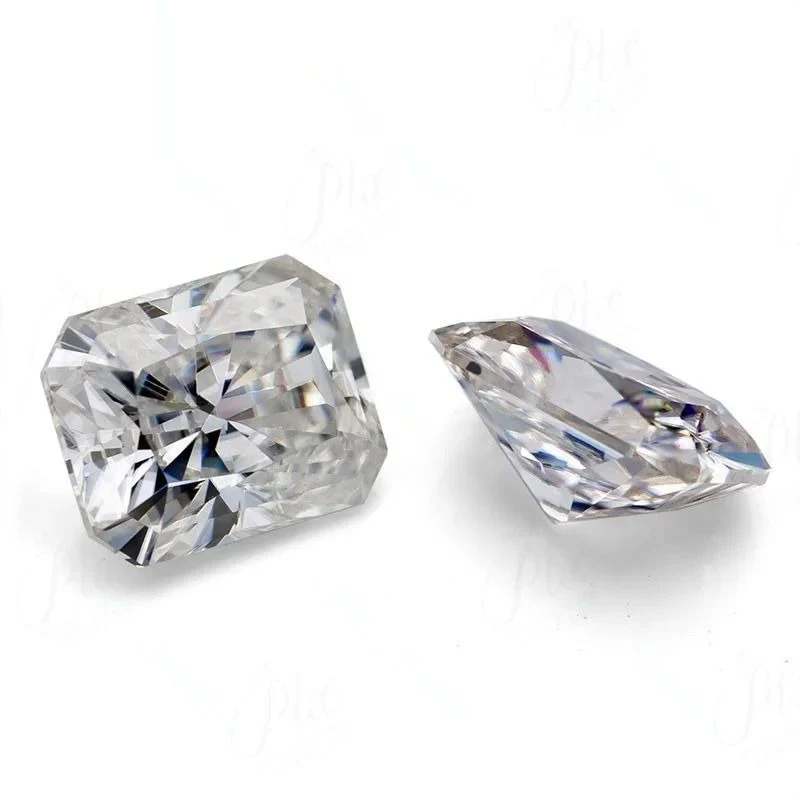
One of the first questions anyone considering moissanite asks is: will it eventually turn yellow, cloud up, or look "old"? It is a fair worry. Cheap simulants like cubic zirconia do cloud and scuff within a couple of years, and buyers reasonably assume every diamond alternative follows the same arc.
The short answer: moissanite itself does not change color. What changes is how it looks, and that is almost always fixable. Let's separate the real issues from the myths.
The chemistry is stable
Moissanite is silicon carbide, a hard, inert crystal with a Mohs hardness of 9.25. Only diamond (10) and a handful of rare stones are harder. It does not oxidize, tarnish, or chemically degrade the way silver does, and it does not develop the internal cracks or clouding that cheap glass or CZ picks up over time.
Modern moissanite is also manufactured to consistent color grades, typically offered in near-colorless grades comparable to the D through F range on the diamond scale. Our moissanite color grades guide explains how those grades map to the familiar diamond scale.
Where the "turns yellow" myth comes from
A few real-world observations get misread as the stone aging:
- Early-generation moissanite. Moissanite sold in the 2000s often carried a faint grayish or greenish tint, especially in larger sizes. Buyers comparing old stock to new near-colorless stones describe it as "yellowing," but the stone never changed — their memory of it did.
- The setting, not the stone. White gold rings are rhodium-plated. When that plating wears off after a few years, the underlying warm alloy shows through and the whole ring looks yellower. The moissanite gets blamed unfairly. This is exactly why our rhodium plating guide exists.
- Oil and film buildup. Hand lotion, soap, sunscreen, and skin oils coat the facets. A dirty moissanite looks dull, slightly hazy, and — against a whitened finger — can read as faintly off-color. It is grime, not aging.
How to keep it looking new
The fix for 90 percent of "my moissanite looks different" complaints is a proper clean:
- Soak the ring in warm water with a little mild dish soap for 20 minutes.
- Gently brush behind the stone with a soft toothbrush — that is where film hides.
- Rinse under warm water, with the drain covered.
- Dry with a lint-free cloth.
Moissanite itself is generally safe in an ultrasonic cleaner, but check the setting first: prong-secured rings, pave stones, and any glued accents should avoid ultrasonic vibration. For the details on when to use what, our ultrasonic versus steam guide lays it out.
What actually can go wrong
Moissanite is tough but not indestructible:
- Chipping. A sharp, direct blow on an edge can chip any hard crystal, including moissanite. Its toughness is good but slightly below diamond's.
- Scratching. At 9.25 on the Mohs scale, almost nothing in daily life scratches it except diamond itself. Storing a loose moissanite next to a diamond ring can leave fine marks.
- Heat during repairs. Moissanite has specific heat sensitivities during soldering or prong work. Always tell your jeweler the stone is moissanite before any heating — our heat sensitivity explainer covers why.
The bottom line
A well-made moissanite ring bought today will look essentially the same in ten years as it does on day one, provided you clean it and re-plate the white gold setting when needed. The "aging" people describe is almost always two things: a setting losing its bright white finish, and a layer of invisible hand lotion on the facets.
None of that means the stone itself has failed. For a realistic picture of how moissanite holds up to daily wear, our everyday-wear durability guide is the place to start.
What about UV exposure and sunlight?
Some moissanite batches show a faint reaction under ultraviolet light — a soft glow or a brief color shift when exposed to strong sun. This effect fades within minutes and leaves no permanent change. It is nothing like the irreversible damage some treated gems suffer, and it does not accumulate over time. If your ring looks subtly different in direct midday sun versus indoor light, that is normal optical behavior, not aging.
If you think your stone has changed
When a moissanite owner says "my stone looks different now," work through this order:
- Clean it. Most "cloudiness" is film.
- Check the setting. Rhodium wear on white gold changes the surrounding tone.
- Compare it under a jeweler's loupe. No internal cracks or new inclusions should appear.
- If after all three the stone still looks off, have a jeweler inspect the prongs for damage that lets light escape oddly.
The honest long-term track record of jewelry-grade moissanite is short — the material has only been worn in rings since the late 1990s. But every ring still in service looks optically identical to when it was sold. That is the evidence so far, and it is encouraging.
The Wikipedia article on rhodium explains why rhodium plating is applied to white gold and silver jewellery.
Frequently Asked Questions
Is moissanite a good diamond alternative for retail buyers?
Yes for price-sensitive customers who want brilliance and hardness. Moissanite ranks 9.25 on the Mohs scale, holds up to daily wear and costs a fraction of a natural diamond of the same size, so it resells fast in bridal and fashion lines.
What is the minimum order for wholesale moissanite?
MOQ starts at 50 pieces per design for stock items. Custom cuts and private-label settings usually start at 100–300 pieces depending on the mold.
Do you provide certificates with moissanite stones?
Yes. Every parcel ships with GRA or IGI documentation listing carat weight, color grade and cut. We recommend passing the certificate to your end customer for trust.
How long does sample and bulk production take?
Samples ship in 3–5 days. Bulk runs take 15–20 days under 500 pieces, and 25–30 days for custom work.


